How to Choose a Dining Table: Shape, Size, Material and Lighting
A practical guide to choosing a dining table: measure the space, pick a shape and size that fit your room and household, choose a material for real life, plan the chairs and lighting, and preview tables on a photo of your own room with AI.
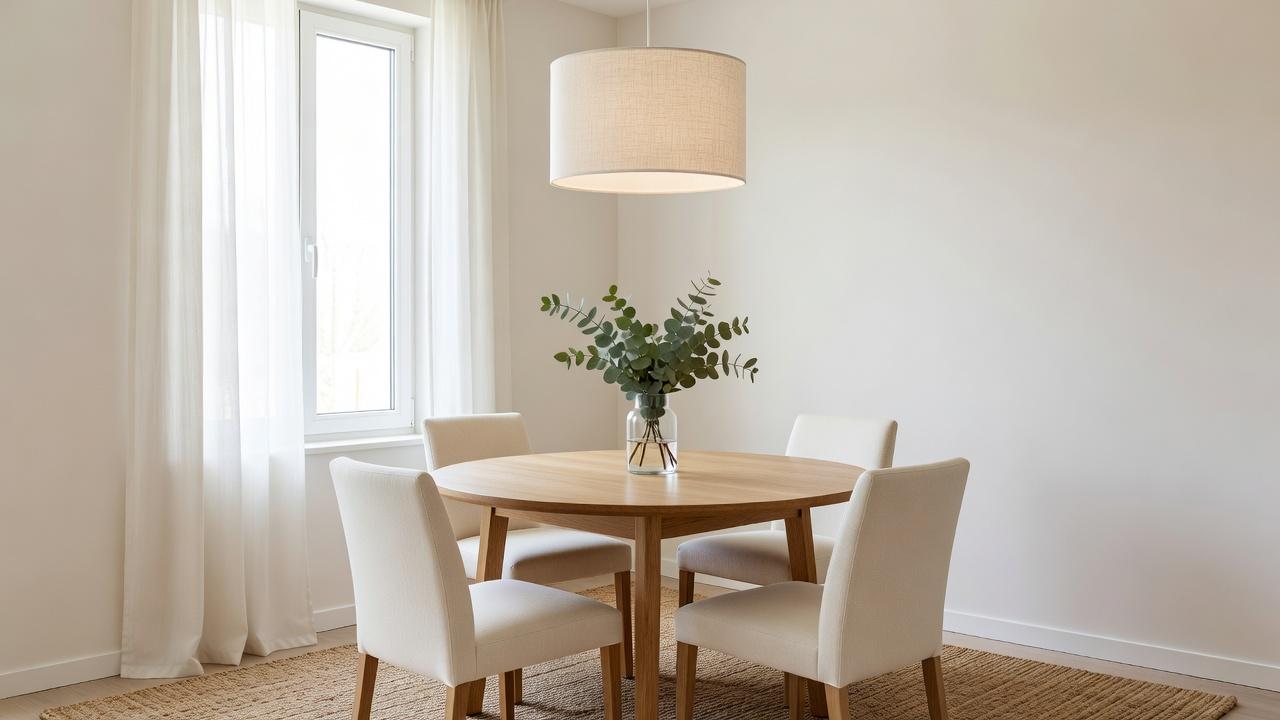
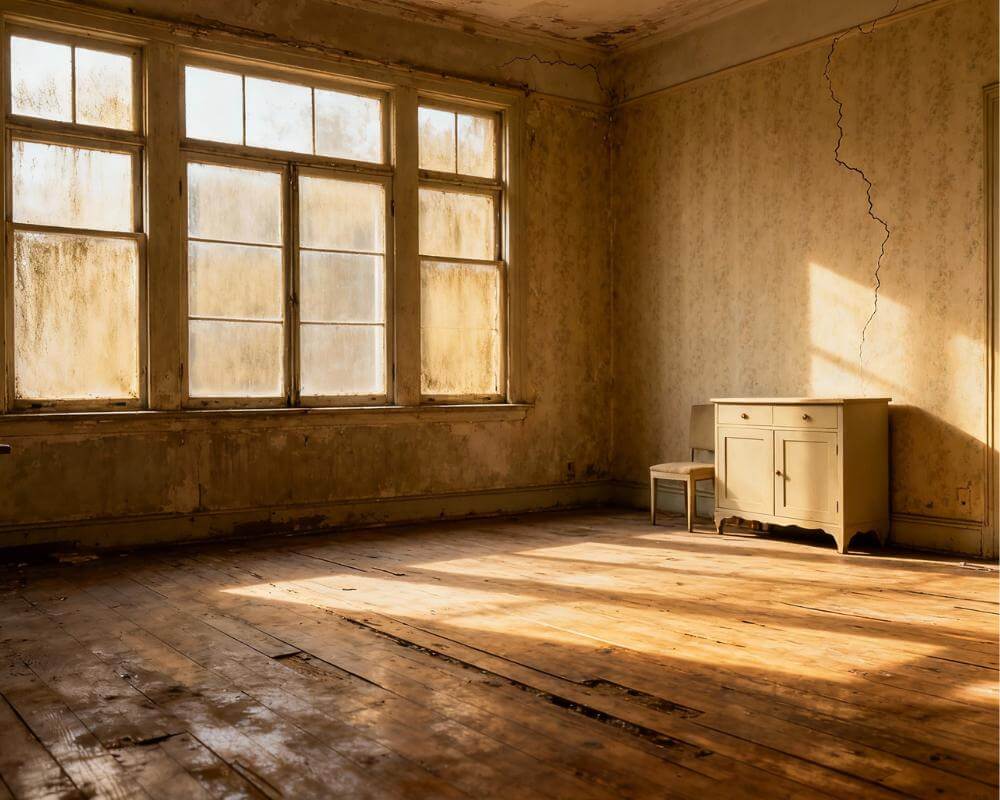
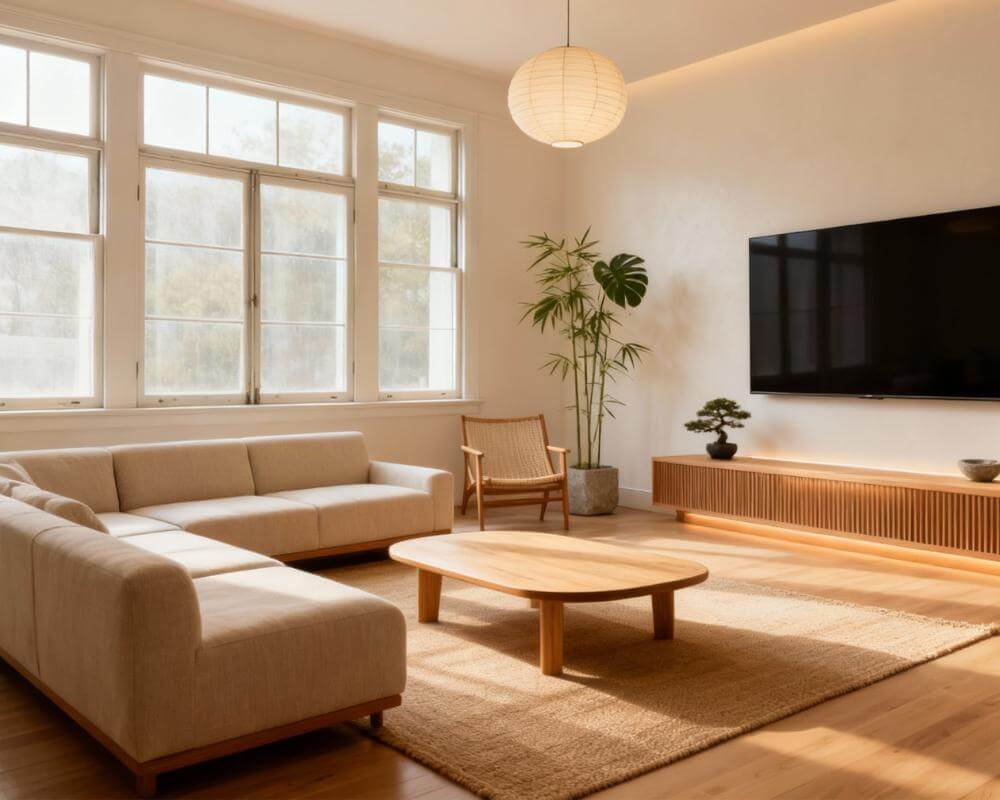
A dining table is the hardest-working piece of furniture in most homes. It hosts breakfast, homework, laptops, birthday dinners and the occasional jigsaw puzzle, and it usually sits at the centre of the room. It is also easy to get wrong: a table that is too big leaves no room to pull out a chair, one that is too small never seats everyone, and a beautiful top can be ruined by a ring from the first hot mug. Choosing a dining table comes down to a handful of practical questions about space, shape, size, material and lighting. DecorAI is an AI interior design app that lets users transform photos of existing rooms into realistic redesign concepts. With it you can see a table in your own dining area before you order it.
This guide explains how to measure the room, choose a shape, work out the right size, pick a material for real life, plan the lighting and chairs, and preview your shortlist with DecorAI.
Key Takeaways
- Plan the floor first. Leave roughly 36 inches (90 cm) between the table edge and the nearest wall or furniture so chairs can be pulled out and people can walk behind them.
- Let the room choose the shape. Round tables suit square rooms and small groups, while rectangular tables suit long rooms and larger households.
- Count seats honestly. A common rule of thumb is about 24 inches (60 cm) of table edge per person. Check it against how many people you really host.
- Choose the top for daily use. Sealed wood, laminate and stone-effect surfaces each behave differently with heat, scratches and spills.
- Preview before you buy. DecorAI generates designs from your own room photo in usually under 10 seconds, and offers three free generations per day without requiring an account or credit card.
- Try DecorAI on a photo of your dining area.
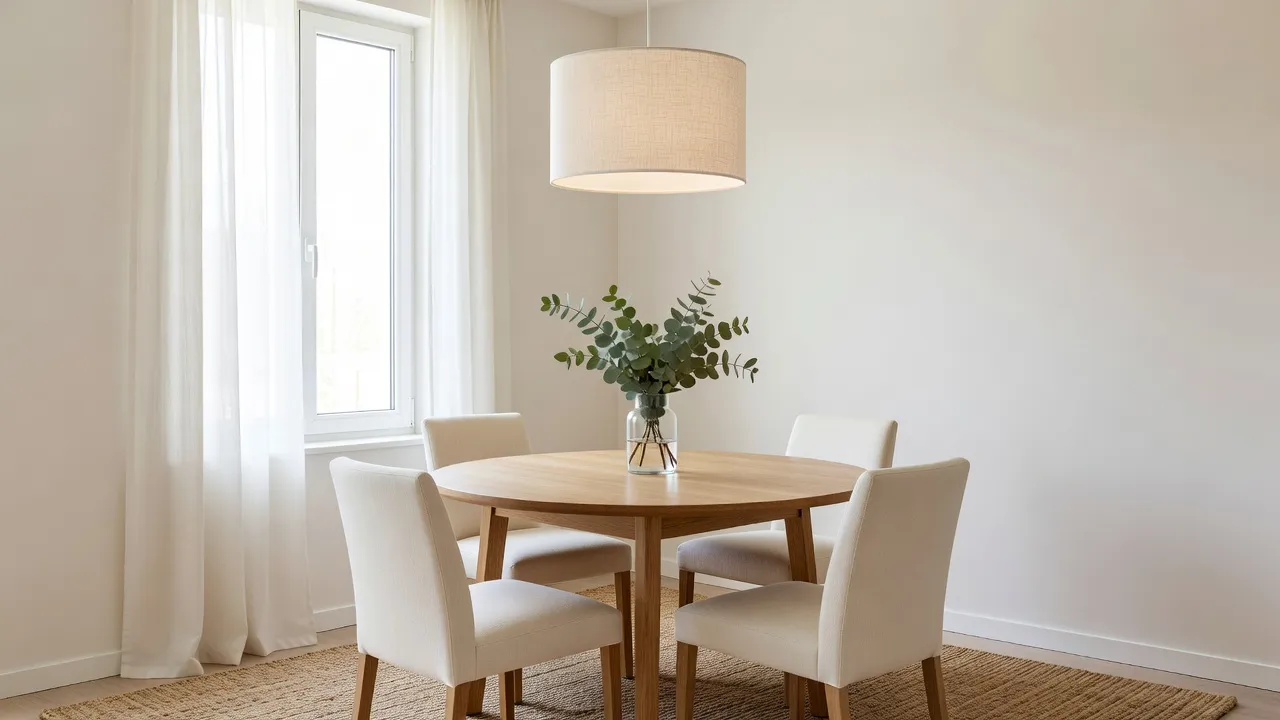
How Much Space Do I Need Around a Dining Table?
More than the table itself. A table only works if people can sit down, stand up and move around it comfortably, so the room around it matters as much as the top.
- Tape the footprint. Outline the table on the floor with painter's tape, then add about 36 inches (90 cm) on every side where people will sit. Live with the outline for a day.
- Check the walkways. If a door, hallway or kitchen route passes behind a chair, allow about 44 inches (110 cm) so someone can walk through while others are seated. Check this against your own layout.
- Mind the doors and the sideboard. Open doors, cupboards and radiators should still work with the chairs in place.
- Measure the way in. Check doorways, corners and stairs, especially for a one-piece top.
If your dining area is part of a larger room, it also helps to define it with a rug and a light. Our guide to zoning an open-plan room with AI explains how.
Which Table Shape Is Best for My Room?
Shape changes how a room feels and how many people can fit. Here is how the common options behave.
- Round. No corners to bump, easy conversation and a gentle shape in a square room. A pedestal base lets you squeeze in an extra chair. Large round tables, however, put the centre out of reach.
- Rectangular. The most flexible shape for longer rooms and bigger groups. It can sit against a wall when you are not hosting.
- Square. Good for four people in a square room, but awkward to extend.
- Oval. A rectangle with softer ends. It suits narrow rooms where you want curves without losing length.
- Extendable. A leaf or drop-leaf table stays small day to day and grows for guests. It is a smart choice for apartments.
Pick the shape that matches the proportions of the room. A long, narrow space wants a rectangle or oval. A square room is the classic home for a round table.
What Size Dining Table Do I Need?
Start with the number of people you seat most evenings, then add a little for guests. These figures are general design rules of thumb, so adjust them to your own household.
- Allow about 24 inches (60 cm) per person along the table edge. Less feels cramped, and a few more inches feels generous.
- Think in widths. A depth of roughly 36 inches (90 cm) allows two place settings face to face with space for serving dishes.
- Consider height. Standard dining tables are about 29 to 30 inches (73 to 76 cm) high. Chair seats are usually 17 to 19 inches (43 to 48 cm), which leaves a comfortable gap for legs.
- Leave a gap at the ends. Rectangular tables look best when they sit a little narrower than the room, not wall to wall.
Always check the actual measurements on the product page, and compare them with the taped footprint on your floor. If you are furnishing a whole room, our guide to AI dining room design shows layouts for different room sizes.
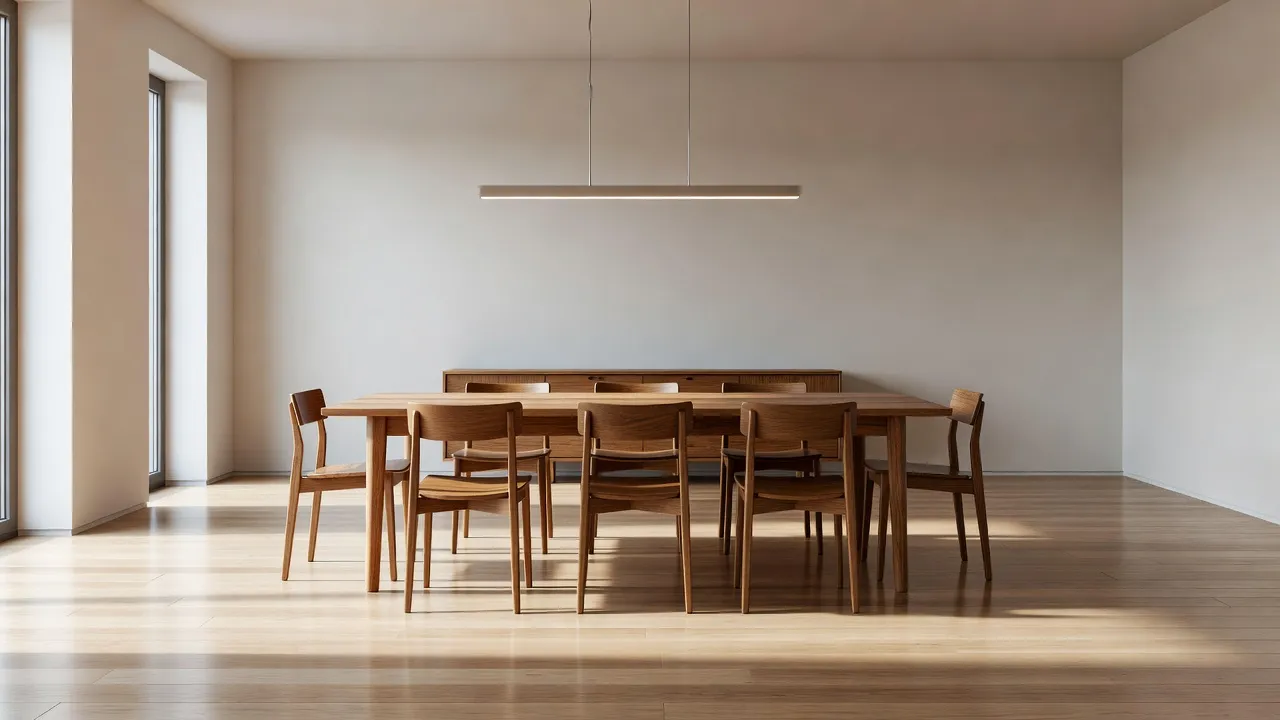
What Material Is Best for a Dining Table?
The top takes the most abuse in the house, so match the material to the way you live.
- Solid wood. Warm, repairable and long-lasting. It can be sanded and refinished, but it shows scratches and marks if the finish is thin.
- Wood veneer. Gives the look of wood at a lower weight and cost. Check the quality of the edges.
- Laminate and melamine. Hard-wearing and easy to wipe, and available in many finishes. Good for busy family homes.
- Stone and stone-effect tops. Striking and cool to the touch. Real stone can stain or chip, and it is heavy, so check floor and doorway access.
- Glass. Keeps a room feeling open, but it shows fingerprints and can feel cold.
- Metal and mixed bases. Slim legs keep a small room light. Check that the base does not get in the way of knees and chairs.
Ask for a sample of the finish and look at it in your own light. The same oak can look pale in a shop and orange beside a warm wall.
How Do I Pair Chairs, Benches and a Table?
The chairs decide how comfortable the table is, and they are half of the look.
- Check the clearance. Chairs with arms need to slide under the tabletop. Measure the underside before you buy.
- Match weight, not set. A mix of chairs and a bench looks relaxed. Keep one repeated element, such as a wood tone or a metal finish.
- Think about comfort. Upholstered seats suit long dinners, while wood or moulded seats are easier to clean.
- Use a bench in tight spots. Placing a bench against a wall saves space and seats more people. Our breakfast nook guide shows built-in benches in small corners.
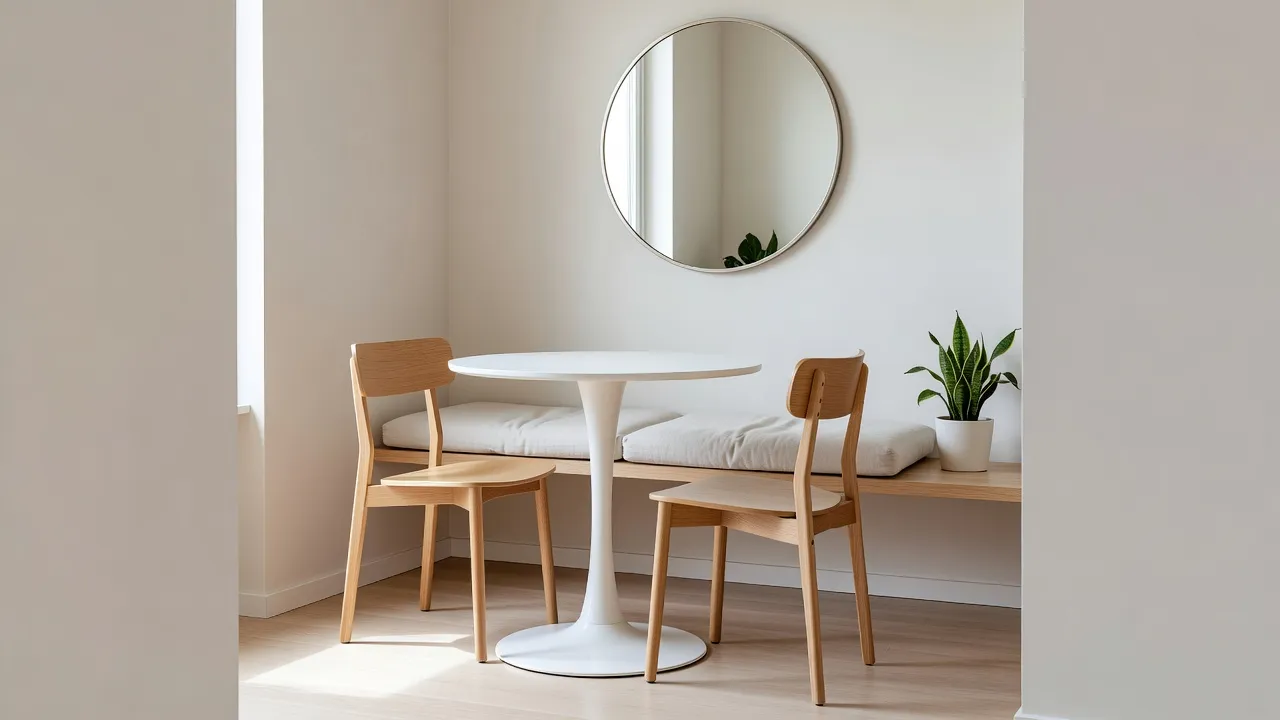
See a Dining Table in Your Room Before You Buy
Upload a photo of your dining area and try different table shapes, finishes and chair styles. Compare the options in seconds before you order anything.


How Should I Light a Dining Table?
Lighting sets the mood of the whole meal. A well-placed light also visually anchors the table in the room.
- Hang a pendant over the centre. A common guide is to place the bottom of the fixture about 30 to 36 inches (75 to 90 cm) above the tabletop, so it lights the table without blocking views across it.
- Size it to the table. A pendant roughly one half to two thirds the width of the table looks balanced. Long tables suit a linear fixture or two matching pendants.
- Use a dimmer. One fitting can serve breakfast and candlelit dinners.
- Add a rug. A rug should extend far enough that chair legs stay on it when pulled out, usually about 24 inches (60 cm) beyond the table edge. Our rug visualizer guide helps you compare sizes and patterns.
For more on layered light, read our guide to AI lighting design.
How Can I Preview a Dining Table With AI?
A dining table is a large, costly purchase, and it is hard to judge from a showroom floor. DecorAI lets you test the idea on your own room.
- Photograph the dining area. Stand in a corner or doorway so you can see the table position and the walkways, keep the camera level and use daylight. Our photo guide for AI design explains how.
- Try styles and colours. Choose the room type and a style, then compare two or three versions. DecorAI offers 60+ interior design styles and 40+ colour schemes.
- Edit only the table. Use the Inpainting editor to paint over the table and describe the change, such as a round oak table with a pedestal base. The rest of the photo stays the same.
- Test a specific table. If you have a model in mind, Furniture Import places an item from a product photo into your room.
- Starting from an empty room? See our guide to furnishing an empty room with AI to try a whole layout first.
Treat every result as a visual concept rather than a measured plan. A preview helps you judge shape, finish and proportion, but check the table's dimensions against your real room before you order.
What Mistakes Should I Avoid?
- Buying a table that is too big. If you cannot pull a chair out and walk behind it, the table will never feel comfortable.
- Ignoring the legs. A pedestal or a trestle base can be kinder to knees than four corner legs, especially when you add a bench.
- Choosing by photo alone. Check the thickness, the finish and the height, and ask for a sample.
- Forgetting the light. A good table under a bad light never looks right.
- Skipping the rug check. A rug that is too small catches chair legs.
Dining Table FAQ
How do I choose a dining table for a small room?
Choose a round or pedestal table, or an extendable one that stays compact day to day. A bench against the wall saves space, and slim legs keep the floor visible.
How big should a dining table be for six people?
As a rule of thumb, allow about 24 inches (60 cm) of table edge per person, so a rectangular table around 72 inches (180 cm) long is a common choice for six. Always measure your own room first.
Is a round or rectangular dining table better?
Neither is better in general. Round tables suit square rooms and smaller groups, while rectangular tables suit long rooms and larger groups.
Can AI help me choose a dining table?
Yes. DecorAI takes a photo of your actual room and generates redesign concepts in different styles and layouts, so you can compare options before you buy. It is a visual preview, not a measured plan.
Is it free to try DecorAI on my room?
DecorAI offers three free generations per day without requiring an account or credit card. Free generations are unlocked by watching a short rewarded video advertisement.
Conclusion
The right dining table fits the room with space to spare, suits its proportions, seats the people you really host, uses a top that survives your household and hangs under a light that sets the mood. Start by taping the footprint, shortlist a shape and two sizes, and compare finishes before you commit. Before you buy, upload a photo of your room to DecorAI, try your shortlist and keep the table that looks right in your own light. For more ideas, explore the full DecorAI feature directory.
Visualize Your Dream Home Instantly
Don't just read about it. Experience the power of AI interior design with DecorAI's free tool.
Start Designing for FreeWritten by
DecorAI Team
Editorial Team