AI Interior Design for Small Spaces: Maximize Your Studio or Apartment in 2025
Discover how AI interior design tools help maximize small spaces. Expert tips for studio apartments, tiny bedrooms, and compact living rooms. Transform cramped spaces into functional, stylish homes.
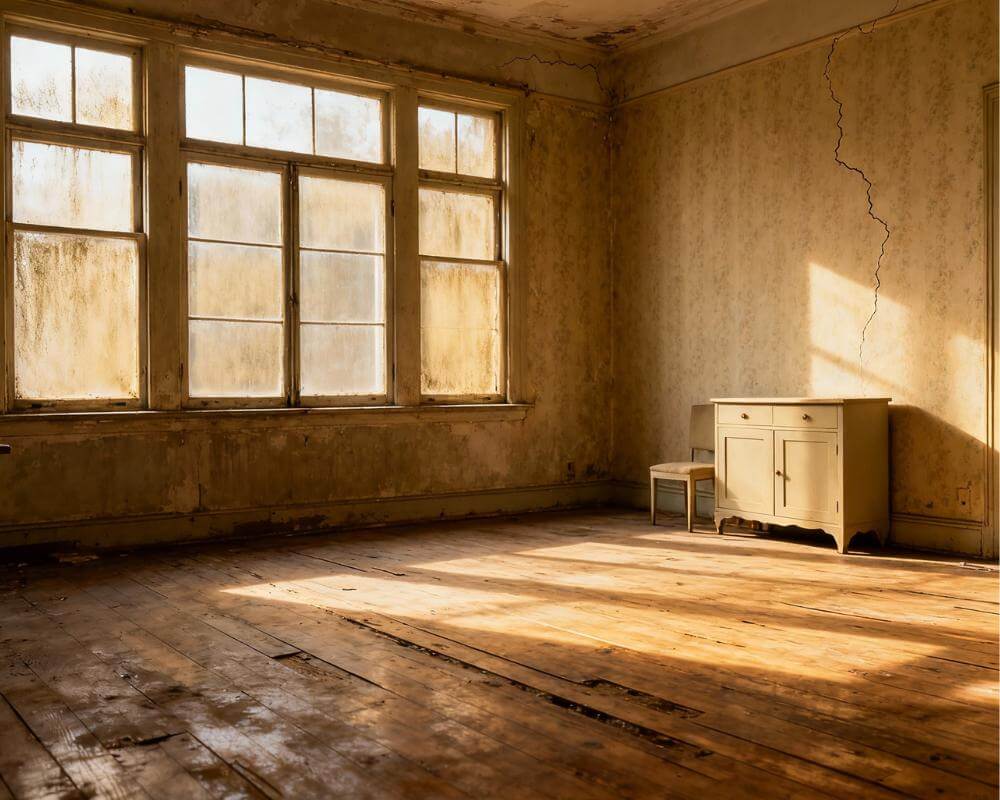
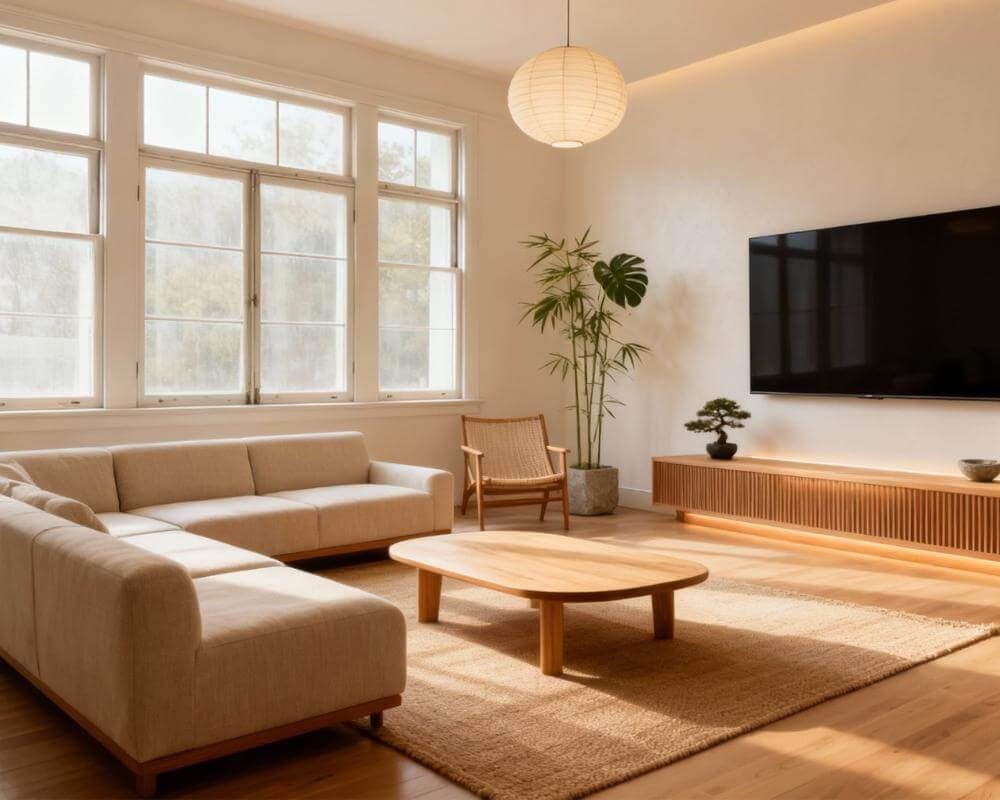
Living in a small space doesn't mean living with small style. In fact, AI interior design for small spaces has become one of the most powerful tools for urban dwellers, first-time renters, and anyone looking to maximize every square foot. When you're working with 400-800 square feet, every design decision matters—and AI helps you get it right before moving a single piece of furniture.
Whether you're furnishing a studio apartment, optimizing a tiny bedroom, or making a compact living room feel spacious, this guide shows you exactly how to use AI small room design tools to create functional, beautiful spaces that feel much larger than they are.
Why Small Spaces Need AI Design More Than Ever
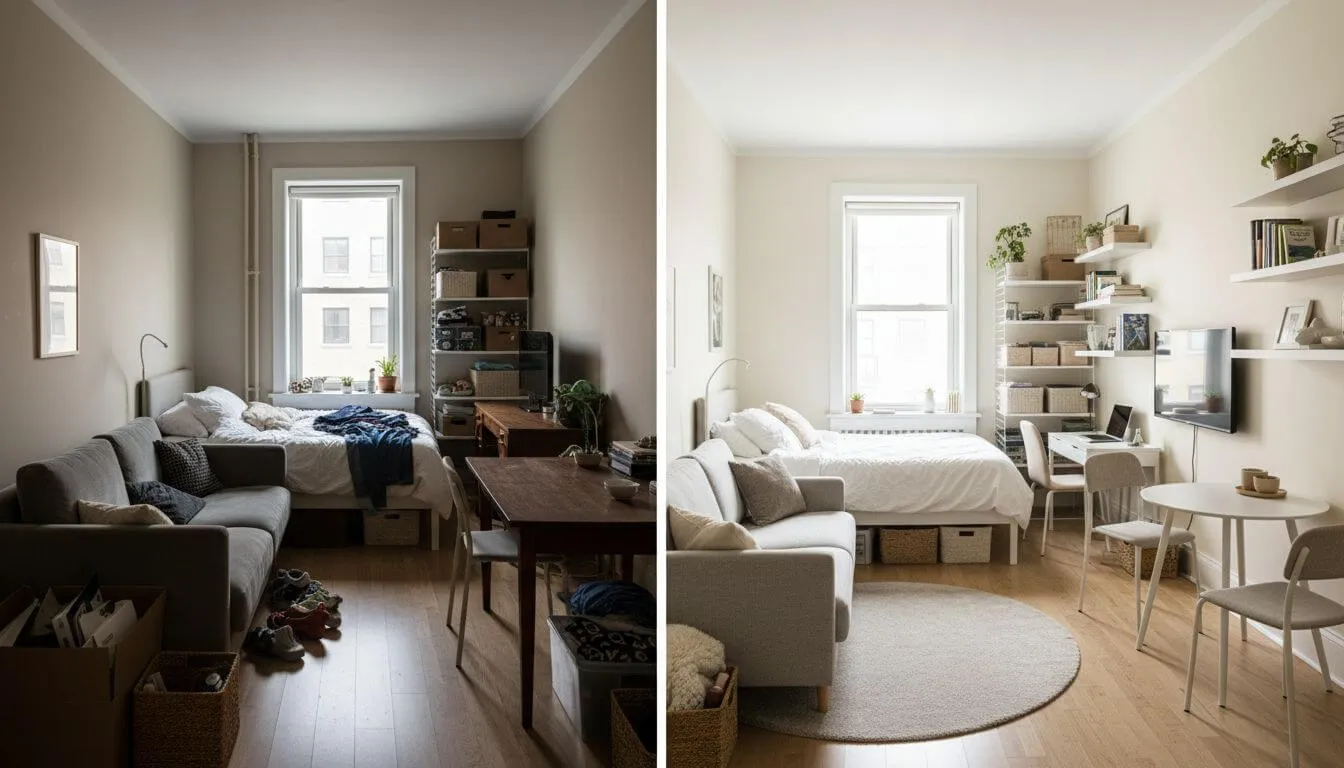
Small space design is fundamentally different from designing larger rooms. In a spacious living room, a slightly oversized sofa is a minor inconvenience. In a 300-square-foot studio, it's a disaster that blocks traffic flow and makes the space feel claustrophobic.
AI apartment design tools excel at small spaces because they can:
- Visualize Scale Accurately: See exactly how furniture fits before buying
- Test Multiple Layouts: Compare 20 different arrangements in minutes
- Optimize Traffic Flow: Ensure walkways and functional zones work together
- Prevent Costly Mistakes: Avoid buying furniture that's too big or doesn't fit
- Maximize Storage: Identify vertical space and hidden storage opportunities
According to the U.S. Census Bureau's American Housing Survey, the average American apartment is getting smaller while rents continue to rise. Making the most of limited square footage isn't just a design preference—it's an economic necessity.
The Unique Challenges of Small Space Design
Before diving into AI studio apartment design solutions, let's understand the specific challenges that make small spaces tricky:
1. Scale and Proportion Issues
Standard furniture is designed for average-sized rooms. A "normal" sofa might be 84 inches long—which works in a 15x20 living room but overwhelms a 10x12 space. AI small room design helps you visualize scaled-down alternatives.
2. Multi-Functional Requirements
In a studio apartment, your living room is also your bedroom, office, and dining room. Each zone needs to function independently while sharing limited floor space.
3. Storage Constraints
Small spaces rarely have adequate closets. Design must incorporate storage solutions without sacrificing livability or making the space feel cluttered.
4. Light and Airiness
Darker, cramped spaces feel even smaller. Design choices must maximize natural light and create visual breathing room.
5. Rental Restrictions
Many small-space dwellers are renters who can't make permanent changes. Solutions need to work without painting walls or installing built-ins.
How AI Interior Design Solves Small Space Problems
Here's how AI design small spaces tools address each challenge:
Visual Scale Testing
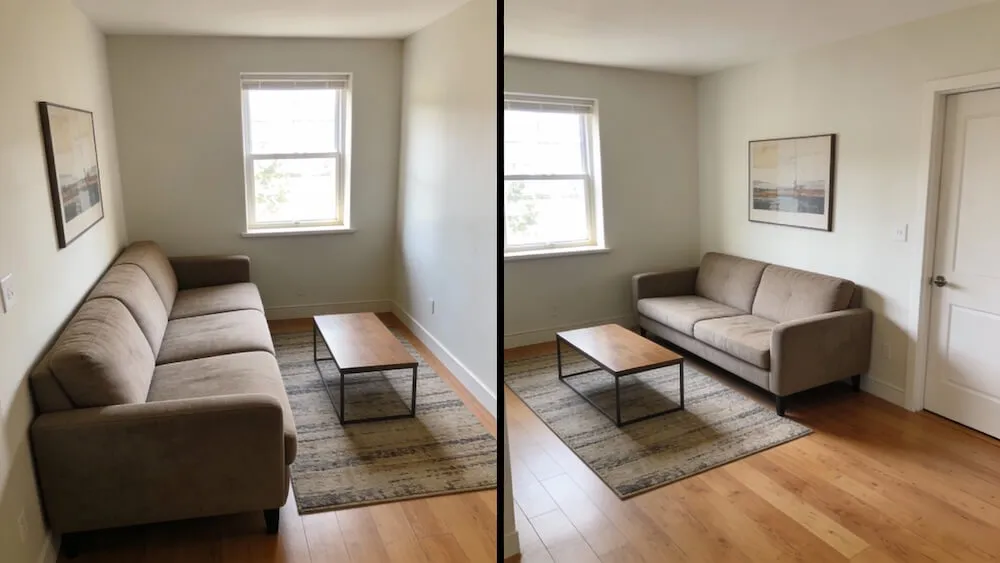
Upload a photo of your small room and instantly see how different furniture pieces look. AI apartment design tools render furniture in accurate perspective, so you can see whether that 72-inch sofa actually fits—or if you need the 60-inch apartment-sized version.
Layout Optimization
Generate multiple layout options and compare them side-by-side. Test whether a floating bed or a corner configuration opens up more floor space. AI small room design lets you experiment freely without heavy lifting.
Color and Light Simulation
See how paint colors, furniture tones, and lighting choices affect the perceived size of your space. Light walls, mirrors, and strategic lighting can make small rooms feel 30% larger—and AI shows you exactly how.
Zone Planning
Visualize how to divide a studio into sleeping, working, and living zones using rugs, furniture placement, and visual dividers—all without building walls.
AI Design Guide: Studio Apartments (350-550 sq ft)
Studio apartments are the ultimate small-space challenge. Here's how to use AI studio apartment design to maximize your space:
Define Your Zones
Every studio needs at least three functional zones:
- Sleep Zone: Bed or murphy bed area
- Living Zone: Seating for relaxing and entertaining
- Work Zone: Desk or work surface
Use your AI apartment design tool to test different zone configurations. The most common successful layouts include:
- Linear Layout: Zones arranged in a row along the longest wall
- L-Shape Layout: Bed in one corner, living area in the L
- Central Anchor: Sofa in the middle dividing sleep and living areas
Furniture Selection for Studios
Visualize these small-space furniture strategies with AI:
- Apartment-Sized Sofas: 60-72 inches instead of 84+ inches
- Daybeds: Double as seating during the day
- Nesting Tables: Expand when needed, stack when not
- Wall-Mounted Desks: Fold down when not in use
- Storage Ottomans: Seating + hidden storage
Studio Storage Solutions
AI design small spaces can help visualize vertical storage opportunities:
- Tall bookcases that draw the eye up
- Over-door organizers
- Under-bed storage drawers
- Floating shelves above furniture
- Kitchen cart as additional counter + storage
AI Design Guide: Small Bedrooms (Under 120 sq ft)
Tiny bedrooms—common in urban apartments and older homes—present unique challenges. Here's how AI small room design helps:
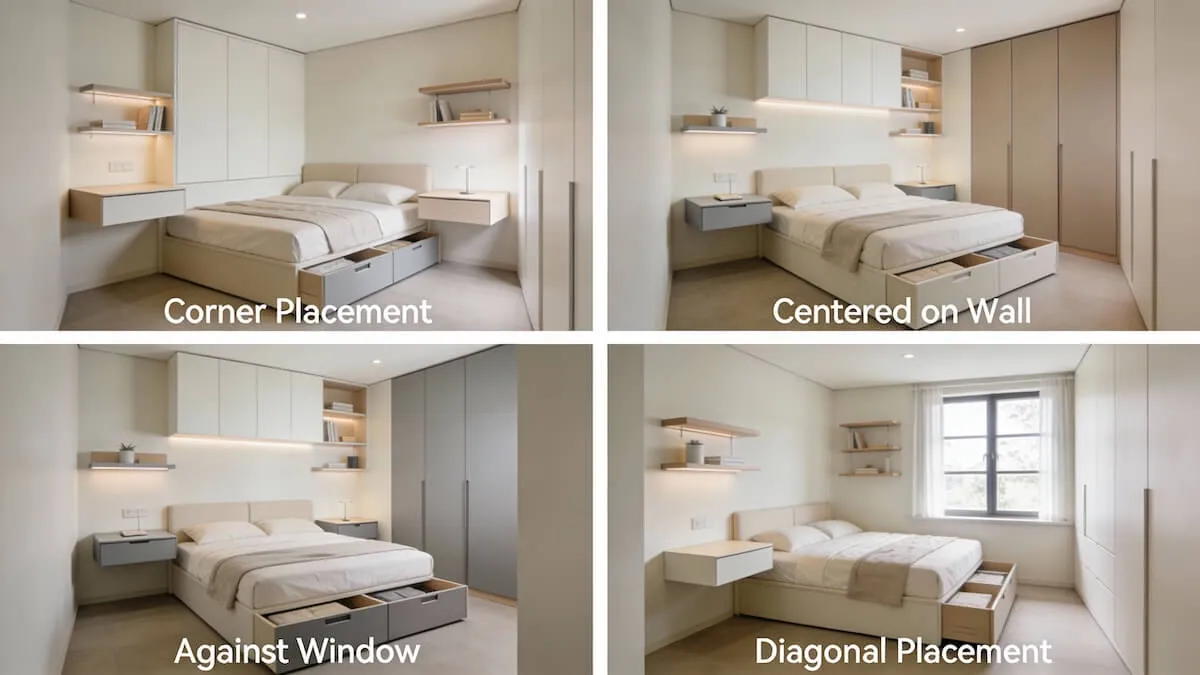
Bed Placement Strategies
The bed dominates a small bedroom. Test these configurations with AI:
- Corner Placement: Opens floor space on two sides
- Centered on Main Wall: Traditional, balanced look
- Against Window: Frees wall space for storage
- Diagonal: Surprisingly effective in square rooms
For more bedroom inspiration, see our AI bedroom design guide.
Small Bedroom Furniture Ideas
Use AI apartment design to visualize:
- Platform Beds with Storage: Drawers underneath eliminate need for dresser
- Floating Nightstands: Wall-mounted = more floor space
- Narrow Dressers: Tall and thin beats wide and short
- Mirror Closet Doors: Reflect light and create depth
Color Strategies for Small Bedrooms
Test these paint and textile colors with your AI small room design tool:
- Light, Cool Colors: White, soft gray, pale blue expand space visually
- Monochromatic Schemes: Same tone throughout creates flow
- Strategic Dark Accents: One deep wall can add depth
- Light Bedding: White or cream bedding reflects light
AI Design Guide: Compact Living Rooms (Under 200 sq ft)
Small living rooms need to balance comfort with functionality. Here's how AI design small spaces helps:
Seating Configurations
Test these layouts with AI:
- Loveseat + Accent Chair: More flexible than a large sofa
- Sectional in Corner: Maximizes seating, minimizes footprint
- Armless Furniture: Sleeker profile, more visual space
- Floating Arrangement: Pull furniture away from walls
Explore more ideas in our AI living room design guide.
Visual Tricks That Work
AI apartment design can visualize these space-expanding techniques:
- Glass/Acrylic Furniture: Coffee tables that "disappear"
- Leggy Furniture: Visible floor space feels larger
- Large Mirrors: Double perceived room size
- Vertical Stripes: Curtains or wallpaper that add height
- One Large Art Piece: Better than many small frames
Small Kitchen Optimization with AI
Galley kitchens and compact cooking spaces benefit enormously from AI visualization:
Layout Testing
Use AI small room design to test:
- Removing upper cabinet from one wall for open shelving (more airy)
- Extending counter with a narrow bar/breakfast nook
- Rolling cart placement for additional prep space
- Under-cabinet lighting impact
For renovation ideas, see our AI kitchen remodel guide.
Color for Small Kitchens
AI can show you how these choices affect kitchen perception:
- White/Light Cabinets: Reflect light, feel more spacious
- Matching Backsplash and Walls: Continuous visual flow
- Light Countertops: White quartz or light butcher block
- Glass-Front Cabinets: Break up solid cabinet walls
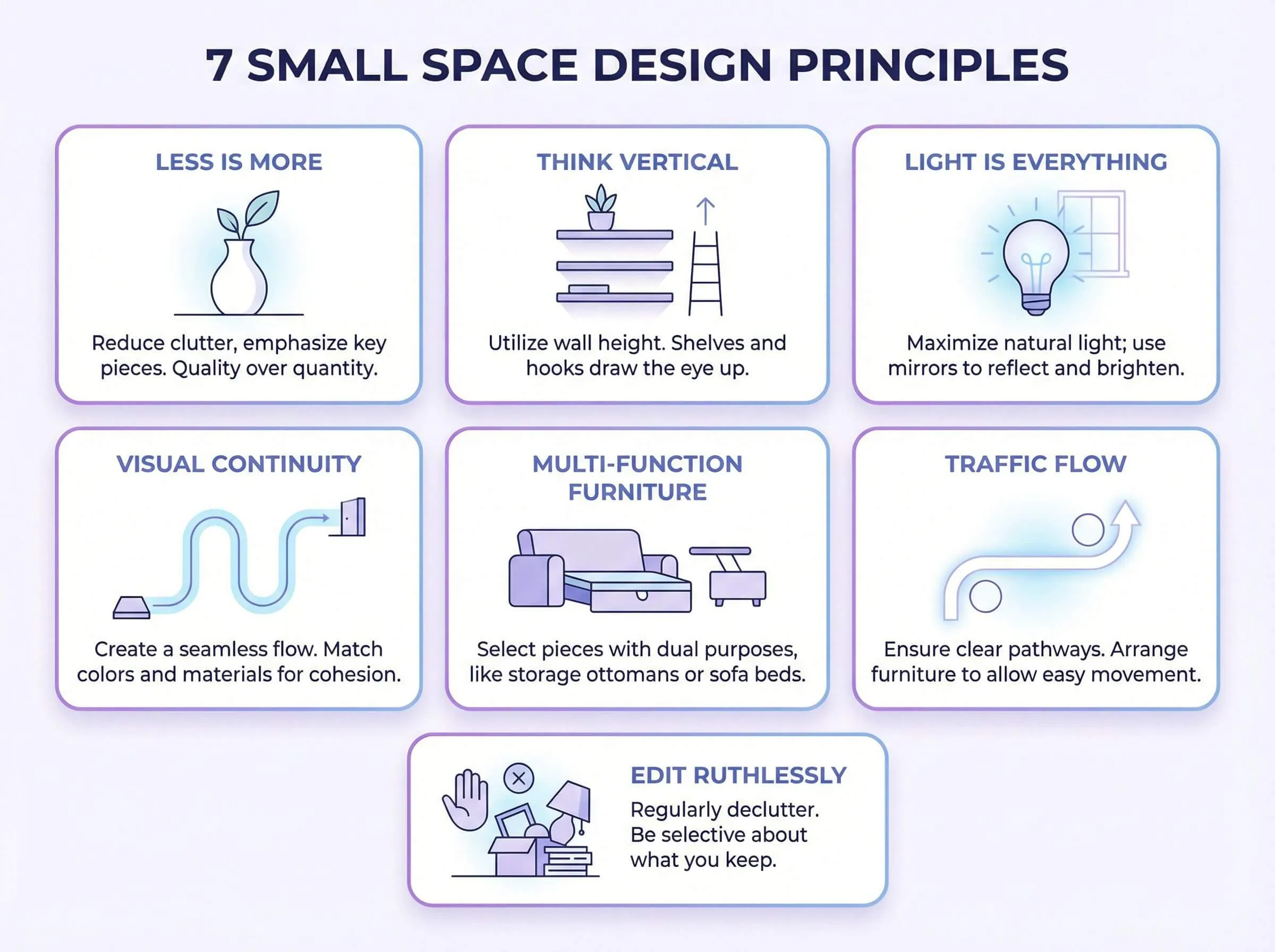
7 Small Space Design Principles to Apply with AI
These universal principles guide every successful AI interior design for small spaces project:
1. Less is More (But Make It Count)
Fewer, better pieces beat many mediocre ones. Use AI to find the perfect statement sofa instead of filling space with forgettable furniture.
2. Think Vertical
Floor space is limited; wall space isn't. AI design small spaces helps visualize tall bookcases, wall-mounted storage, and overhead solutions.
3. Light is Everything
Maximize natural light with light colors, mirrors, and sheer window treatments. AI visualization shows exactly how light paint transforms cramped spaces.
4. Create Visual Continuity
Consistent colors and materials make spaces feel larger. Use AI to test cohesive palettes throughout your small home.
5. Embrace Multi-Function
Every piece should serve at least two purposes. Storage ottoman, dining table that doubles as desk, daybed for seating and sleeping.
6. Mind the Traffic Flow
Clear pathways make small spaces feel manageable. AI helps you maintain 30-36 inch walkways between furniture.
7. Edit Ruthlessly
Small spaces can't hide clutter. Use AI to design a home where everything has a place—then stick to it.
Style Guides for Small Spaces
Certain design styles work better in compact spaces. Here's how to use AI studio apartment design to achieve each look:
Scandinavian
Perfect for small spaces. Light woods, white walls, minimal furniture, and cozy textiles create warmth without clutter. AI can show you how Scandi principles transform your studio.
Japandi
The Japanese-Scandinavian hybrid emphasizes negative space, natural materials, and intentional simplicity. Ideal for AI small room design because every piece is carefully considered.
Modern Minimalist
Clean lines, neutral colors, and only essential furniture. AI visualization helps you achieve the "less but better" aesthetic without feeling sterile.
Mid-Century Modern
Leggy furniture and open silhouettes work surprisingly well in small spaces. Use AI to test classic MCM pieces scaled for compact rooms.
Bohemian (Modified)
Traditional boho can overwhelm small spaces. Use AI to test a "curated boho" approach—select textiles and plants without the visual chaos.
5 Small Space Mistakes AI Helps You Avoid
Mistake 1: Buying Before Visualizing
That couch looks perfect in the showroom—then arrives and blocks your only pathway. AI apartment design lets you see it in YOUR space first.
Mistake 2: Going Too Small
Counterintuitively, too-small furniture can make rooms feel cramped and "dollhouse-like." AI helps you find the right scale—not too big, not too small.
Mistake 3: Pushing Everything Against Walls
Floating furniture away from walls can actually make rooms feel larger. Use AI to test unconventional arrangements.
Mistake 4: Ignoring Vertical Space
AI design small spaces helps you see untapped wall space for shelving, hooks, and storage you might have missed.
Mistake 5: Dark Color Avoidance
While light colors generally open spaces, strategic dark accents add depth. AI lets you test where dark colors work versus where they close in.
Renter-Friendly Small Space Solutions
Most small-space dwellers rent. Here's what AI small room design can help you visualize without violating your lease:
- Removable Wallpaper: Add pattern without permanent change
- Tension Rod Shelving: Floor-to-ceiling storage without drilling
- Area Rugs: Define zones on any flooring
- Freestanding Wardrobes: Extra closet space that moves with you
- Command Hook Solutions: Wall organization without holes
- Mirror Leaning: Large mirrors without wall mounting
For more ideas, explore our room decor AI transformation guide.
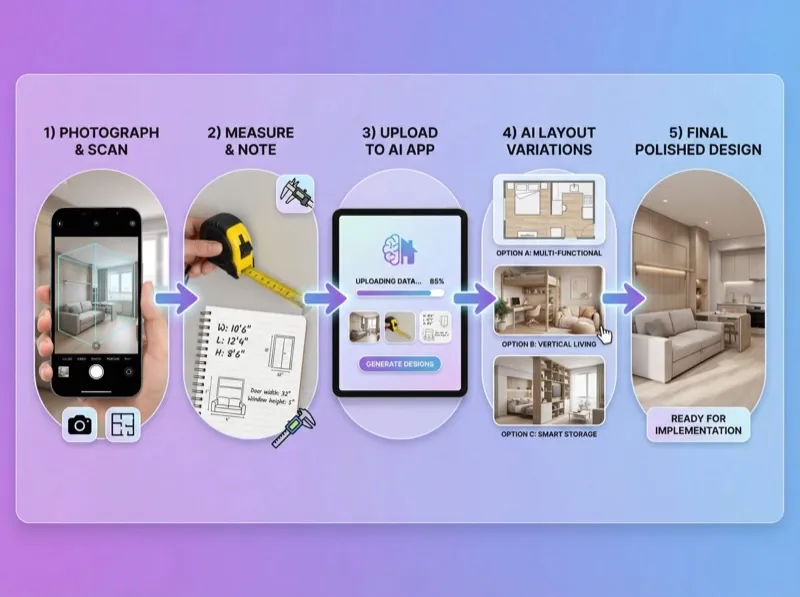
Step-by-Step: Using AI to Design Your Small Space
Here's the optimal workflow for AI interior design for small spaces:
- Photograph Your Space: Capture wide shots from corners to show full room. Include at least one photo from each entrance.
- Measure Everything: Note room dimensions, window locations, door swings, and any architectural features.
- Define Priorities: What activities MUST this space support? Sleep, work, entertaining, cooking?
- Upload to AI Tool: Use DecorAI or similar AI apartment design tool.
- Generate Baseline: Start with your preferred style to see initial possibilities.
- Iterate on Layout: Generate 10-15 variations, focusing on different furniture arrangements.
- Test Specific Pieces: Once layout is decided, visualize specific furniture you're considering.
- Finalize Colors: Test paint colors and textile options on your chosen layout.
- Create Shopping List: Use AI-generated images as reference for actual purchases.
Real Small Space Transformations
Case Study: 380 sq ft NYC Studio
Challenge: A newly graduated professional needed a studio that could handle work-from-home, hosting friends, and comfortable sleep—all in Manhattan's typical tiny footprint.
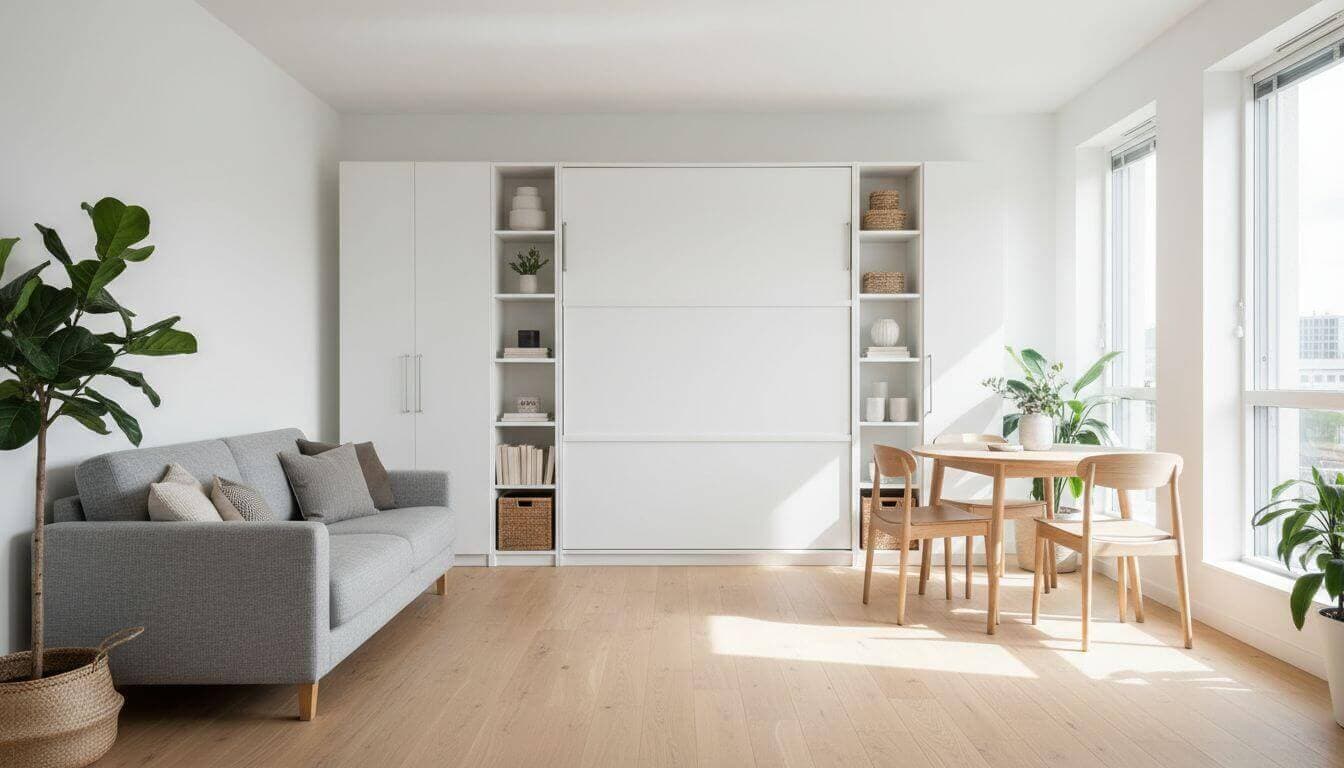
AI Solution: Used AI studio apartment design to test murphy bed vs. daybed configurations. Discovered that a queen murphy bed with a small desk that folds down from the same wall unit maximized usable space.
Result: Created distinct "day mode" and "night mode" for the apartment. During the day: full living room with desk. At night: full bedroom. Total furniture investment guided by AI visualization saved $1,200 in avoided mistakes.
Case Study: 95 sq ft Bedroom
Challenge: A 9x10 bedroom needed to fit a queen bed, nightstands, AND a work desk for a remote worker.
AI Solution: AI small room design revealed that a corner desk behind the bedroom door (a typically dead space) plus floating nightstands freed enough floor space for a queen bed with 2-foot clearance on two sides.
Result: A functional home office that disappears when guests visit, without sacrificing sleep comfort.
Frequently Asked Questions
What size furniture works for small apartments?
For small apartments, look for "apartment-sized" or "condo-sized" furniture. Sofas should be 60-72 inches (not 84+), dining tables should be 48 inches or less, and beds should have storage underneath. AI apartment design helps you visualize exact dimensions in your space.
How do I make a small room look bigger?
Light colors, mirrors, multi-functional furniture, and decluttering all help. AI design small spaces tools let you test each strategy visually. The biggest impact usually comes from paint color and furniture scale.
Can AI design a studio apartment layout?
Yes. AI studio apartment design tools can generate multiple layout options showing how to zone your space for sleeping, living, and working. Upload photos of your empty or furnished studio to see possibilities.
What colors make small rooms feel larger?
Light, cool colors (white, soft gray, pale blue, light sage) reflect light and create spaciousness. Monochromatic schemes also help. Use AI small room design to test specific paint colors in your actual space before committing.
How do I fit a home office in a small apartment?
Consider wall-mounted fold-down desks, closet offices (cloffices), corner desks in bedrooms, or a dining table that doubles as a workspace. AI visualization shows which solution works best for your specific layout.
Is AI interior design free for small spaces?
Many AI interior design tools offer trials or limited free generations. DecorAI offers three free generations every day, reset daily, with each unlocked by a short rewarded video ad and no account or payment card required. For our complete guide, see free AI interior design tools.
Conclusion
Small spaces aren't limitations—they're opportunities for intentional, thoughtful design. Every piece of furniture earns its place. Every color choice matters. Every inch serves a purpose.
AI interior design for small spaces gives you the power to see these decisions before making them. No more guessing if that sofa will fit. No more wondering if white walls will help. No more expensive mistakes.
Whether you're optimizing a studio apartment, maximizing a tiny bedroom, or making a compact living room feel spacious, AI visualization is your most powerful tool. The technology exists to help you live large in small square footage.
Your small space has enormous potential. AI helps you unlock it.
Ready to Transform Your Small Space?
See how your studio or apartment could look with AI-powered design visualization. Free to try.
Design Your Small Space Free
Maximize Every Square Foot
with AI Design
Perfect for studios, apartments, and compact homes. Visualize furniture, layouts, and colors before you commit.


Visualize Your Dream Home Instantly
Don't just read about it. Experience the power of AI interior design with DecorAI's free tool.
Start Designing for FreeWritten by
DecorAI Team
Editorial Team