AI Playroom Design: How to Plan a Playroom That Stays Tidy and Grows With Your Kids
A practical guide to AI playroom design: how to zone a playroom, choose low storage, pick floors and colors, light the space, and preview the whole layout on a photo of your own spare room, basement or bonus room before you buy anything.
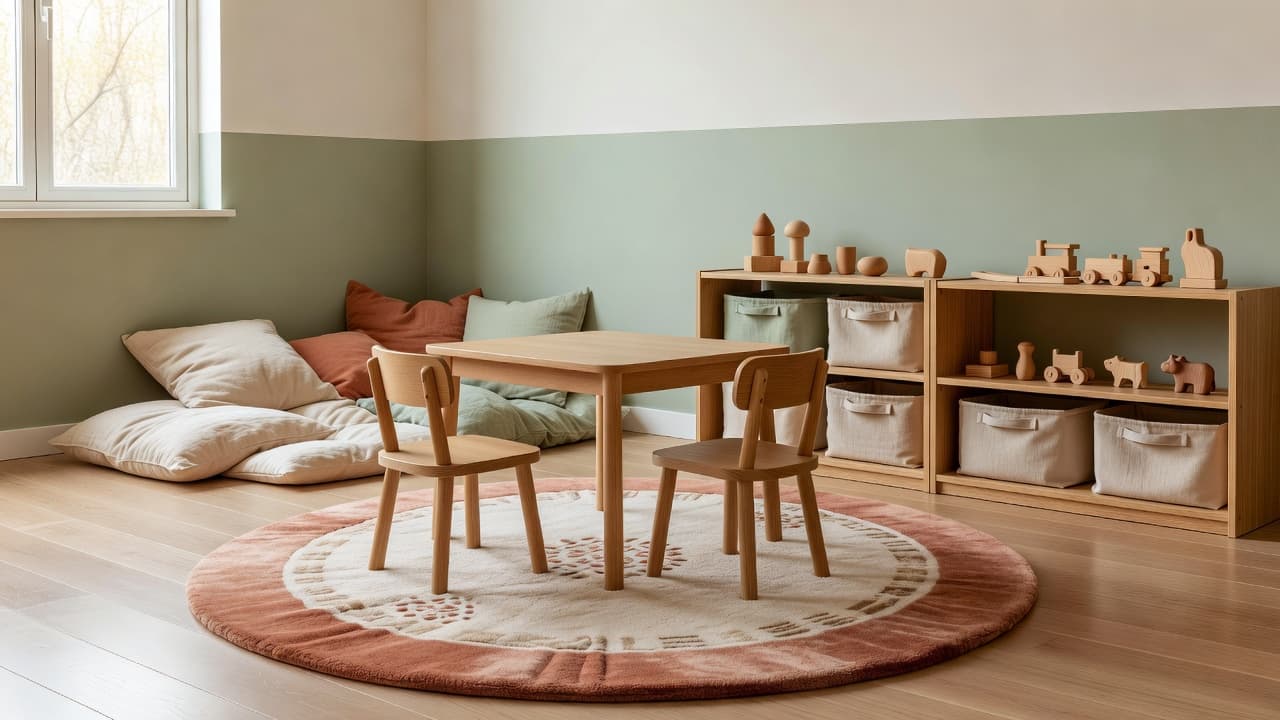
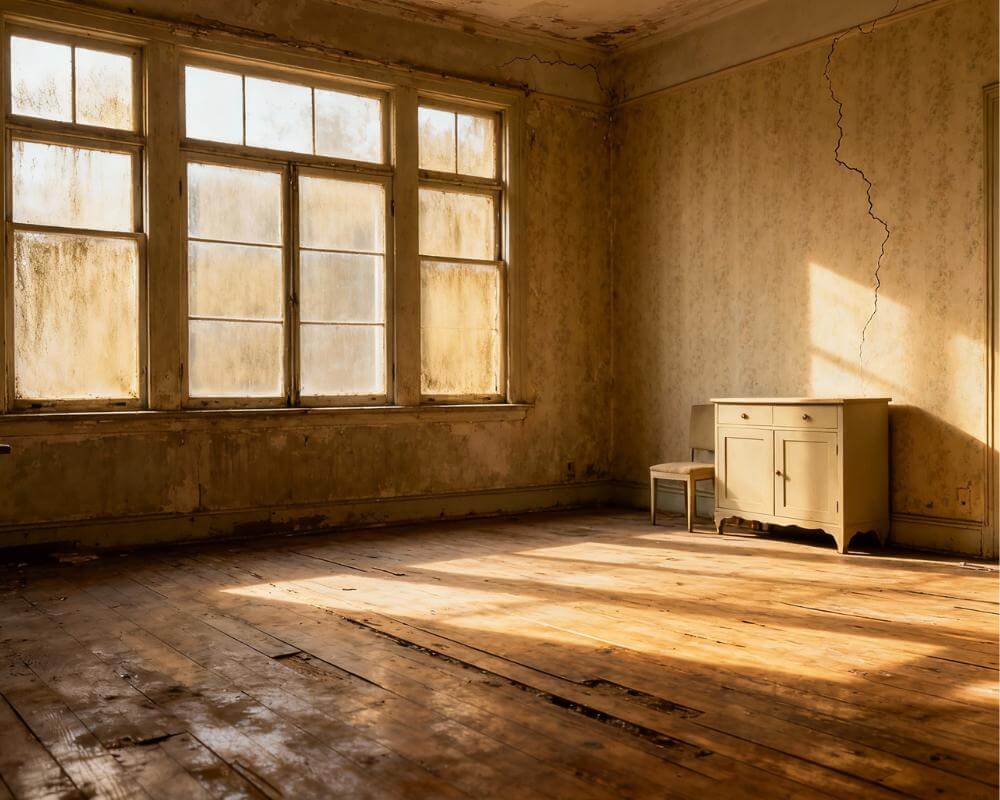
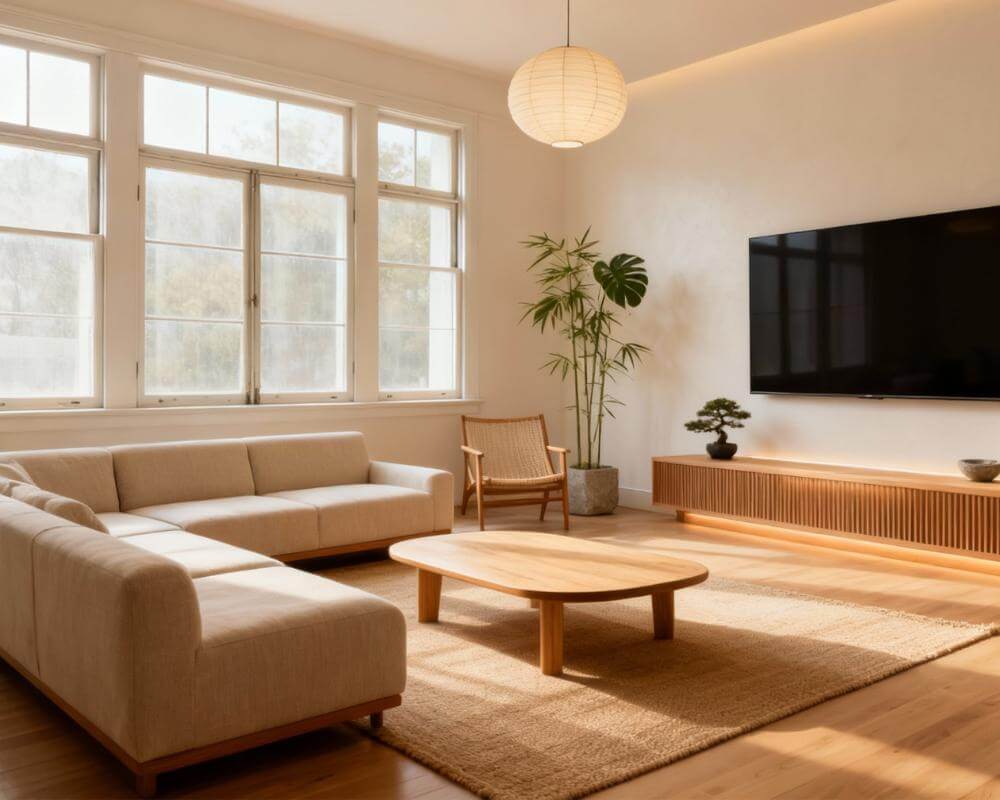
AI playroom design lets you plan the room your kids will actually use before you buy a single bin. Upload a photo of the spare room, basement or bonus room, preview a layout with clear play zones and low storage, and adjust until the space looks calm instead of chaotic. DecorAI is an AI interior design app that lets users transform photos of existing rooms into realistic redesign concepts.
A playroom has a different job from a bedroom. It has to survive daily chaos, let small children reach their own things, and still be something adults can tolerate walking through. The trick is not more toys or fancier furniture; it is a layout that makes tidying easy and play obvious. This guide covers zones, storage, floors, color, lighting and how to grow the room as your children do, plus how to test every idea on your own photo first.
Key Takeaways
- Zone the room by activity. A soft zone, a making zone and a building zone make the room easier to use and easier to reset.
- Store low and open. If a child cannot reach it, they cannot put it away.
- Soft floors matter most. A big rug or play mat defines the main play area and cushions falls.
- Keep the palette calm. Toys bring the color; walls and furniture can stay quiet.
- Design for growth. Choose pieces that work for a toddler now and a ten-year-old later.
- Try DecorAI free to see your playroom redesigned from a single photo.
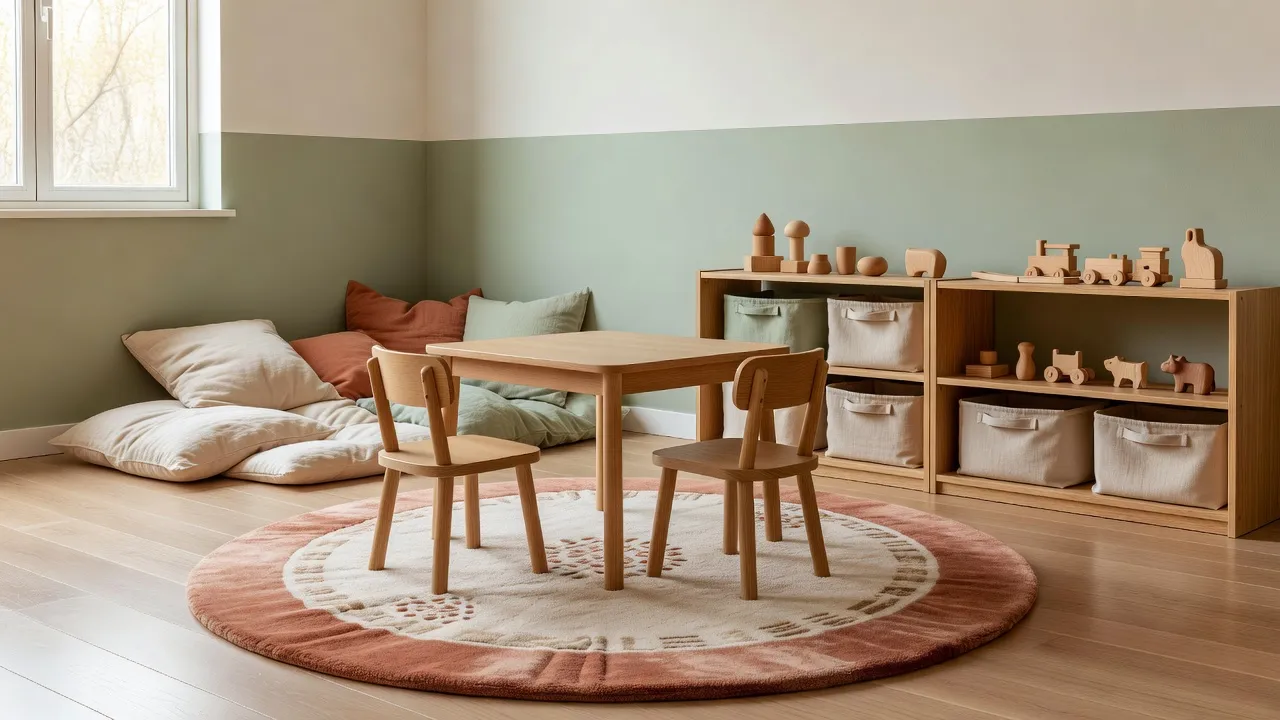
What Makes a Playroom Different From a Kids' Bedroom?
A kids' bedroom is built around sleep, clothes and a bit of play. A playroom is built around play, full stop. That changes almost every decision: more open floor, no bed to work around, storage designed for toys and craft supplies rather than wardrobes, and furniture sized for children rather than adults. If you are planning a room that has to do both jobs, our AI kids room design guide covers shared bedrooms and sleep zones, while this guide focuses on rooms dedicated to play.
Playrooms also tend to live in the awkward rooms of a house: a spare bedroom, a corner of the living space, a bonus room or a basement. That is where a photo-based preview helps most, because those rooms often have odd windows, low ceilings or no obvious layout.
How Do I Zone a Playroom?
Think in three simple zones and give each one a clear edge, usually a rug, a piece of furniture or a change in lighting.
- A soft zone with cushions, a low bench or a reading corner for quiet time and books.
- A making zone with a child-size table or easel for drawing, crafts and puzzles, near a wipeable surface and good light.
- A building zone with open floor and a rug for blocks, trains and imaginative play.
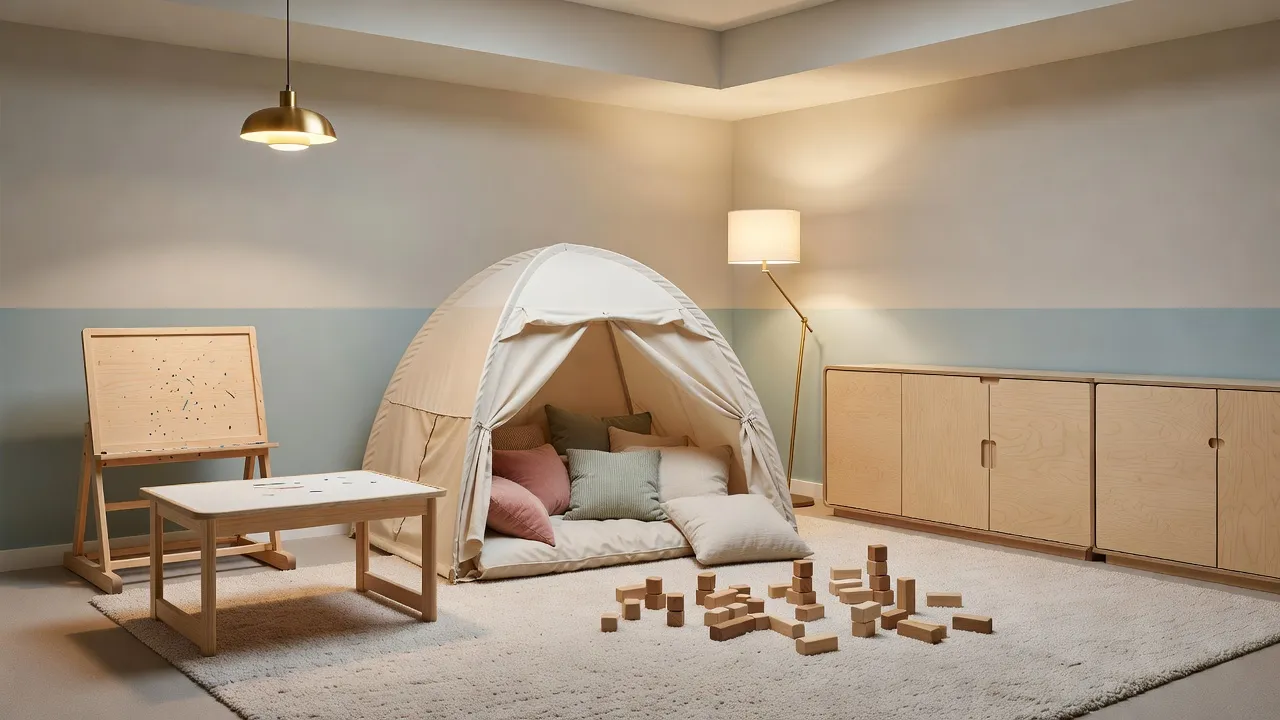
In a small room, zones can overlap: the reading corner can sit at the end of the rug, and the table can double as a building surface. In a large basement or bonus room, spread them out so noisy play does not take over the quiet corner. For more on dividing one big room, see our guide to zoning an open-plan room with AI.
What Is the Best Storage for a Playroom?
The best playroom storage is low, open and easy to understand. Children put things away when the system is obvious and within reach, and they stop when it is not. Aim for a mix of open shelves for the toys you want them to choose, bins for loose items, and a few closed cabinets or lidded boxes for things you would rather not see.
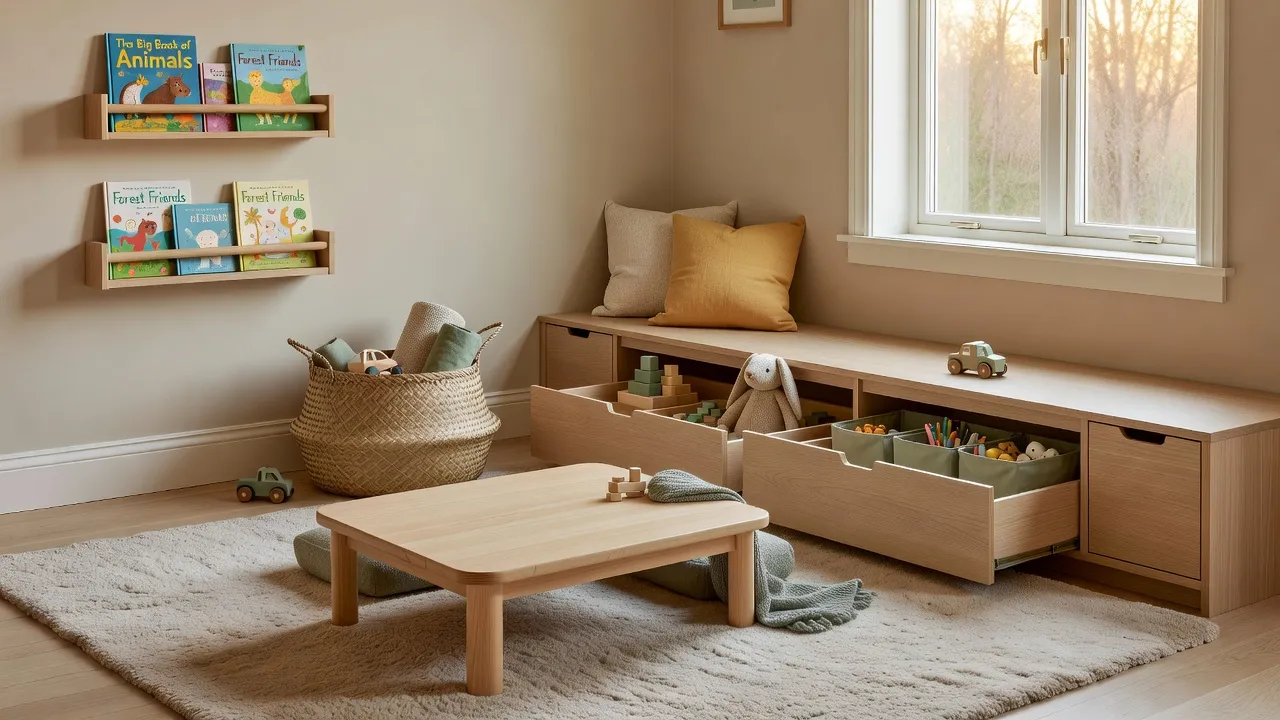
- Low open shelving with fabric or wicker bins keeps toys visible and reachable.
- A bench with drawers under a window gives seating and hidden storage in one piece.
- Wall-mounted book ledges show covers instead of spines and take no floor space.
- A big basket by the door is the fast tidy-up for soft toys and blankets.
- Rotate toys. Keep a portion in a closed cabinet and swap them every few weeks so the room feels fresh without buying more.
Anchor tall shelves and cabinets to the wall for safety, and keep heavy items on the lowest shelves.
See Your Playroom Redesigned — Free
Upload one photo of your spare room, basement or bonus room and watch DecorAI restyle your actual space in seconds, keeping your real windows and layout. Try a new palette, rug or storage wall before you buy a thing.


What Should Go on a Playroom Floor?
Children spend most of their time on the floor, so it is the most important surface in the room. A large rug or foam play mat defines the main play area, softens falls and reduces noise. Choose a low pile that is easy to vacuum and wipe, and look for washable or stain-resistant materials. If you have hard flooring such as wood, vinyl or laminate underneath, a rug pad keeps the rug from sliding. Round rugs soften the lines of a rectangular room and suit a table-and-chairs corner well. Our AI rug visualizer guide explains how to test size and pattern on your own floor before you order.
What Colors Work Best in a Playroom?
Let the toys bring the color. Calm, muted walls such as sage green, warm greige, soft blue or oatmeal create a backdrop that does not compete with books, blocks and art supplies. A two-tone wall, with a deeper color on the lower half, hides scuffs and makes the room feel designed. Add personality with a few accent items such as cushions, a poster or a painted shelf rather than painting every surface bright.
If you would like a ready palette, our AI color palette room design guide shows how to build and compare colors on a photo before you open a can of paint.
How Should I Light a Playroom?
Playrooms need good general light and softer light for winding down. Use bright, even ceiling light for play and craft, and add a lamp or floor lamp in the reading corner. Position the making zone near a window if you can, and use dimmable bulbs so the room can shift from active to calm. In a basement or windowless room, layered lighting does the work that daylight would otherwise do. Our AI lighting design guide explains how to layer fixtures, and our AI basement design guide covers finishing a lower-level playroom.
How Do I Design a Playroom That Grows With My Kids?
Children outgrow toys faster than furniture, so spend on flexible pieces and keep the fast-changing items cheap. Open shelving works for toys now and books or games later. A child-size table can become a homework or craft desk. A bench with drawers can hold toddler toys today and board games tomorrow. Choose neutral walls and a rug that will not look babyish in three years, and let the accessories change with age.
How Do I Plan My Playroom With AI?
- Photograph the room from a corner with the lights on, keeping as much of the floor and walls in frame as you can. Our guide to photographing your room for AI design has framing tips.
- Upload it to DecorAI and choose a calm starting style, such as Scandinavian, Japandi or Modern, from the 60+ designer styles.
- Test one change at a time: wall color first, then the rug, then the storage wall.
- Edit single elements with the AI inpainting editor, for example to swap a shelf or change a cushion color.
- Preview real products with AI furniture import so the table or shelving you plan to buy is the one you see.
- Measure before you buy. An AI preview is for deciding, not for exact dimensions or safety checks.
What Are Common Playroom Mistakes to Avoid?
- Storage that is too high or too deep, which children cannot reach or empty into a pile.
- Too many toys on display, which makes the room feel messy even when tidy.
- No clear zones, so play spreads everywhere and the reset takes forever.
- Bright colors on every surface, which can feel overstimulating.
- Unanchored tall furniture, which is a safety risk.
- Skipping the soft floor, which makes the room noisier and less comfortable.
AI Playroom Design FAQ
How do I design a playroom on a small budget?
Start with a rug, low open shelving and a few fabric bins, then add a paint color you like. Rotate toys instead of buying more, and preview your layout with AI so you only buy what fits.
What should I put in a playroom?
A soft rug or mat, low storage, a child-size table and chairs, a reading corner and good lighting. Everything else is optional.
Can AI redesign my playroom from a photo?
Yes. DecorAI can restyle a photo of your room into a realistic redesign concept so you can compare colors, layouts and storage before spending money.
Do I need an account to try it?
DecorAI offers three free generations per day without requiring an account or credit card, unlocked by watching a short rewarded video advertisement.
How long does a design take?
Designs are usually generated in under 10 seconds and can sometimes be ready in approximately five seconds; peak periods may take longer.
Conclusion
A good playroom is less about decoration and more about making play easy and tidying easier. Zone the room, store low, soften the floor, keep the walls calm and choose pieces that will grow with your children. Because a playroom is built from simple, repeating parts, it is also an easy space to test with AI. Photograph it, try a few versions in DecorAI, measure carefully and then buy with confidence.
Visualize Your Dream Home Instantly
Don't just read about it. Experience the power of AI interior design with DecorAI's free tool.
Start Designing for FreeWritten by
DecorAI Team
Editorial Team