AI Kids Room Design: Layout, Storage, and Color Ideas That Last
A complete guide to AI kids room design: planning a shared or solo bedroom layout, safe and age-appropriate furniture choices, colors and themes that age well, and storage systems kids actually use, plus how to preview the full redesign on a photo of the real room before you buy furniture or paint anything.
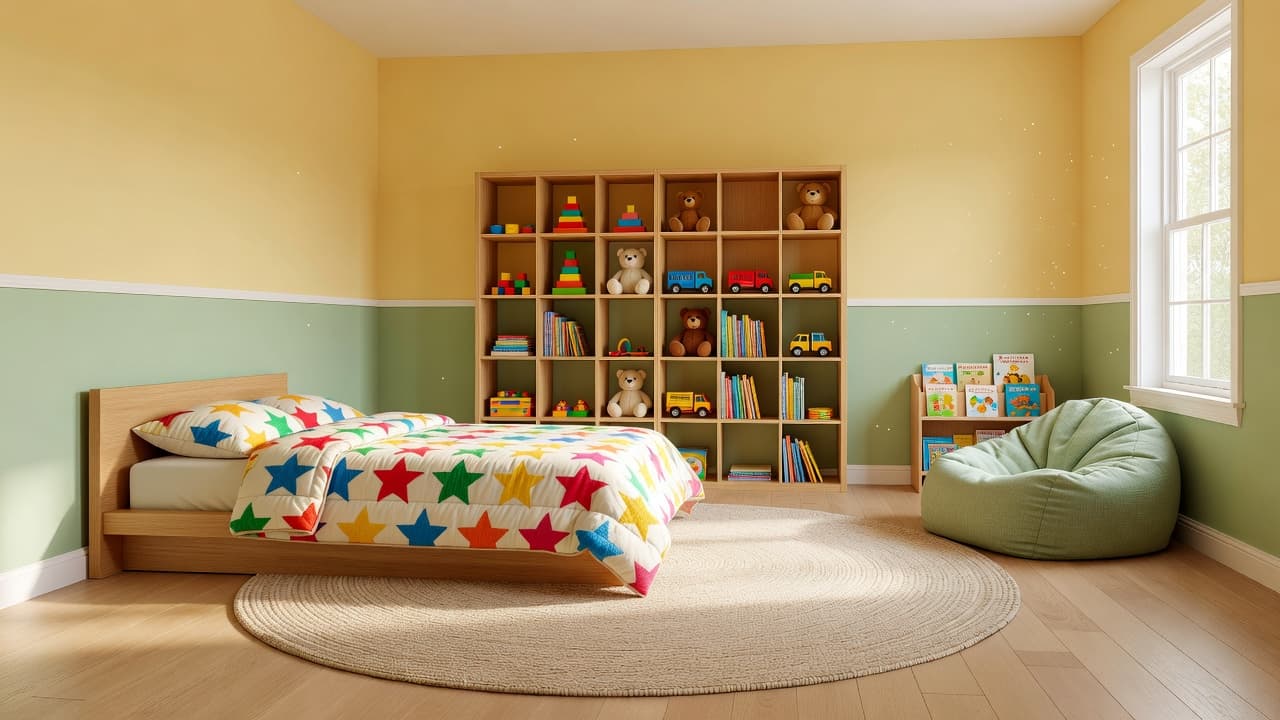
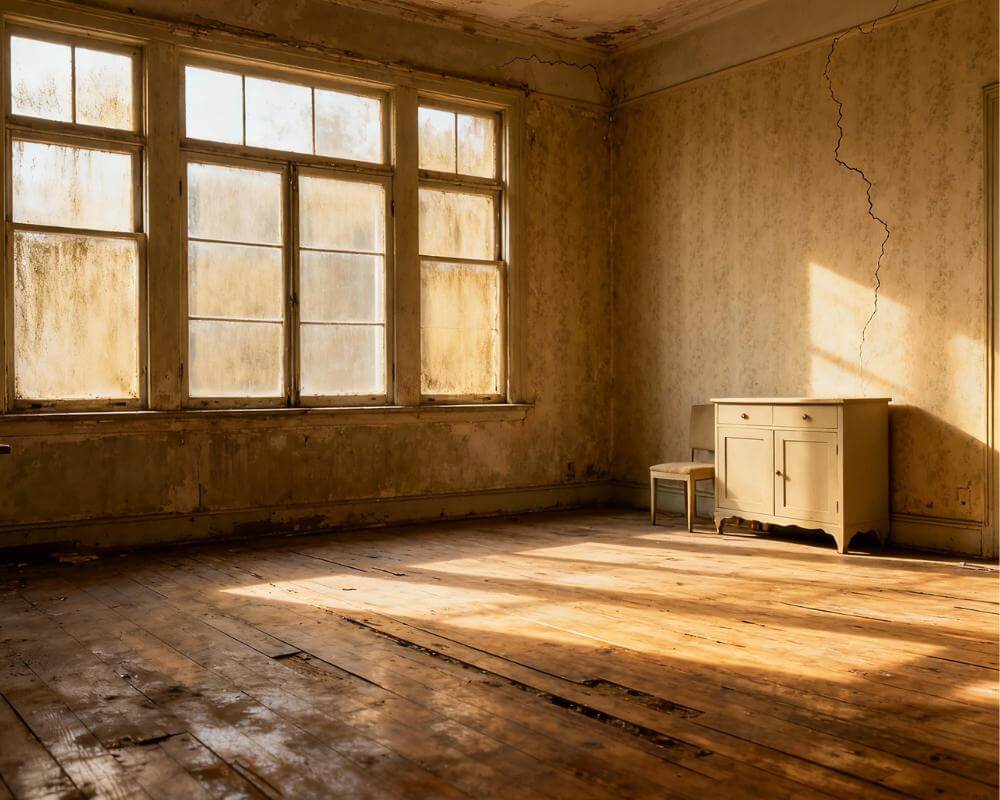
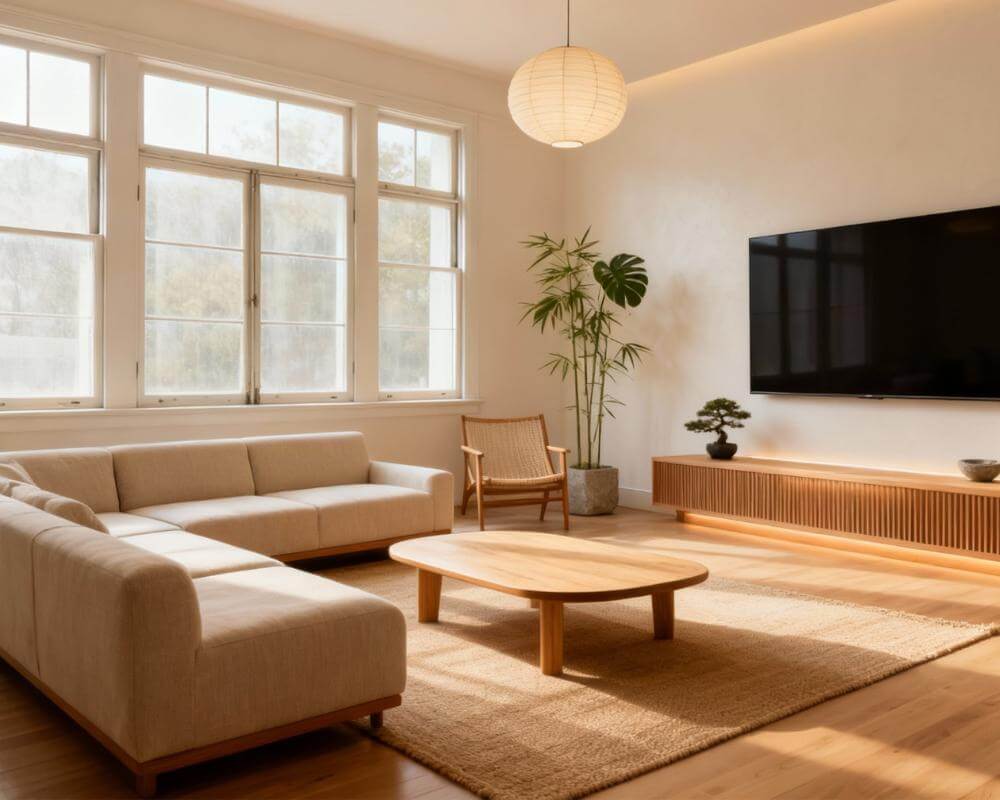
AI kids room design lets you upload a photo of your child's actual bedroom and preview a full redesign — furniture layout, wall color, storage, and theme — rendered directly onto your real space, before you buy a single bunk bed or open a can of paint. A kids' room has to do more work than almost any other room in the house: it needs to sleep, play, study, and store an ever-growing pile of toys and clothes, and it has to keep doing that as your child ages from toddler to tween. With DecorAI, you can test a shared twin-bed layout against a single-bed-plus-play-zone layout on the exact walls of your child's actual room, compare pastel and bold color schemes in your real light, and see how a storage wall would fit before you order anything. This guide covers how AI kids' room design works, planning a shared room versus a solo room, choosing safe and age-appropriate layouts, color and theme decisions that age well, storage systems that actually get used, and the most common kids' room design mistakes.
Key Takeaways
- Design for the child your kid will be in two years, not just today — furniture and layouts that can adapt as they grow save money and disruption later.
- Storage that's low and open gets used; storage that's high and closed usually doesn't — kids put things away in bins and shelves they can reach and see into.
- Shared rooms work best with a clear "zone" for each child — even a small rug or shelf divider gives each kid a sense of their own space.
- Neutral walls with swappable, playful accents age far better than an all-in theme — bedding, art, and rugs are cheap to change; paint and wallpaper are not.
- AI lets you preview layout, color, and storage in your child's actual room before buying furniture that's expensive and awkward to return.
What Is AI Kids Room Design, and How Does It Work?
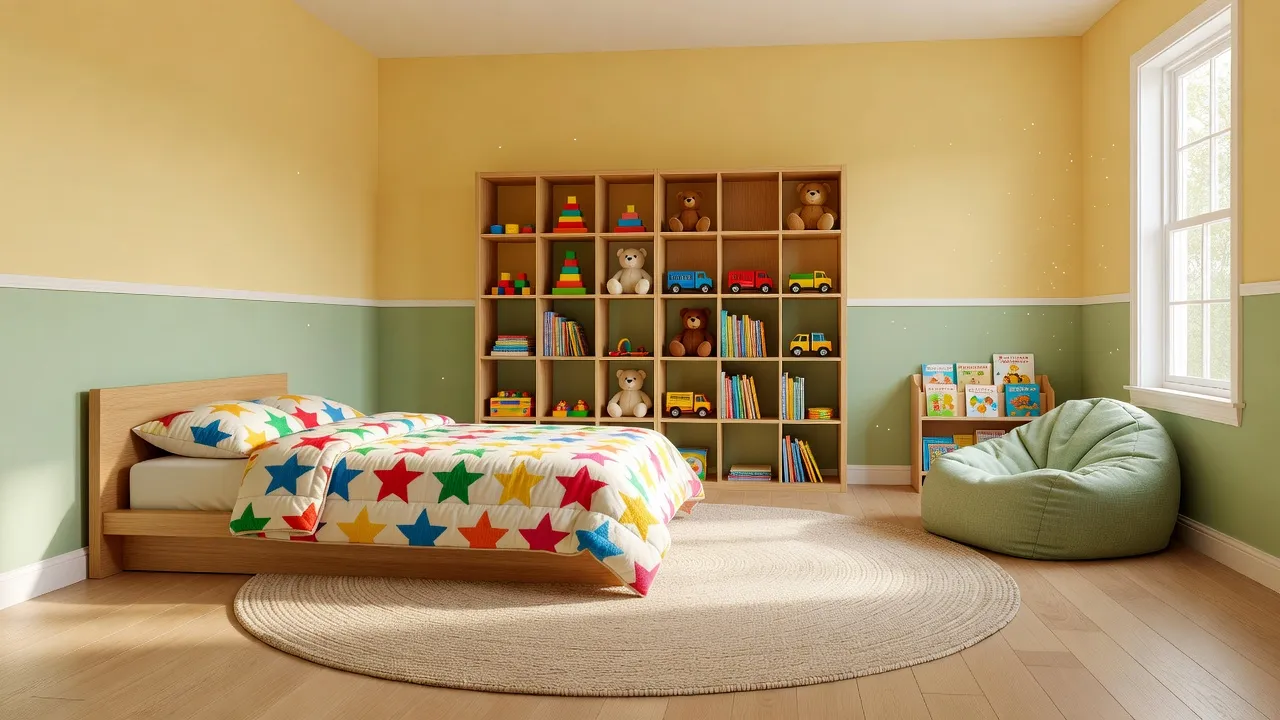
AI kids room design works from a photo of your child's actual bedroom and generates a photorealistic version of that same room with a new layout, color scheme, and furniture arrangement applied at true scale — bed placement, storage, play space, and wall treatments all positioned the way they'd actually sit given your room's real dimensions and existing windows, doors, and closets. This matters more in a kids' room than almost anywhere else in the house, because the room has competing jobs — sleep, play, homework, storage — packed into a space that's often smaller than an adult bedroom, and a layout that looks good in a photo from a furniture catalog rarely accounts for your specific room's proportions or how much floor space your child actually needs to play on.
How Do You Plan a Kids Room Layout Step by Step?
Planning a kids' room well comes down to deciding whether it's a shared or solo space, choosing a layout that leaves real floor space for play, and picking furniture that can adapt as your child grows.
Solo Room: Balancing Sleep, Play, and Storage
In a single-child room, the bed is almost always the anchor, and the goal is keeping it from swallowing the whole floor plan. Pushing the bed against the longest wall, rather than centering it under the window, usually frees up the most usable floor space for a play area or a small desk. A twin or toddler bed against a wall, paired with an open rug zone opposite it, gives a young child a clear "sleep side" and "play side" without needing a large room to do it.
Shared Room: Giving Each Child a Zone
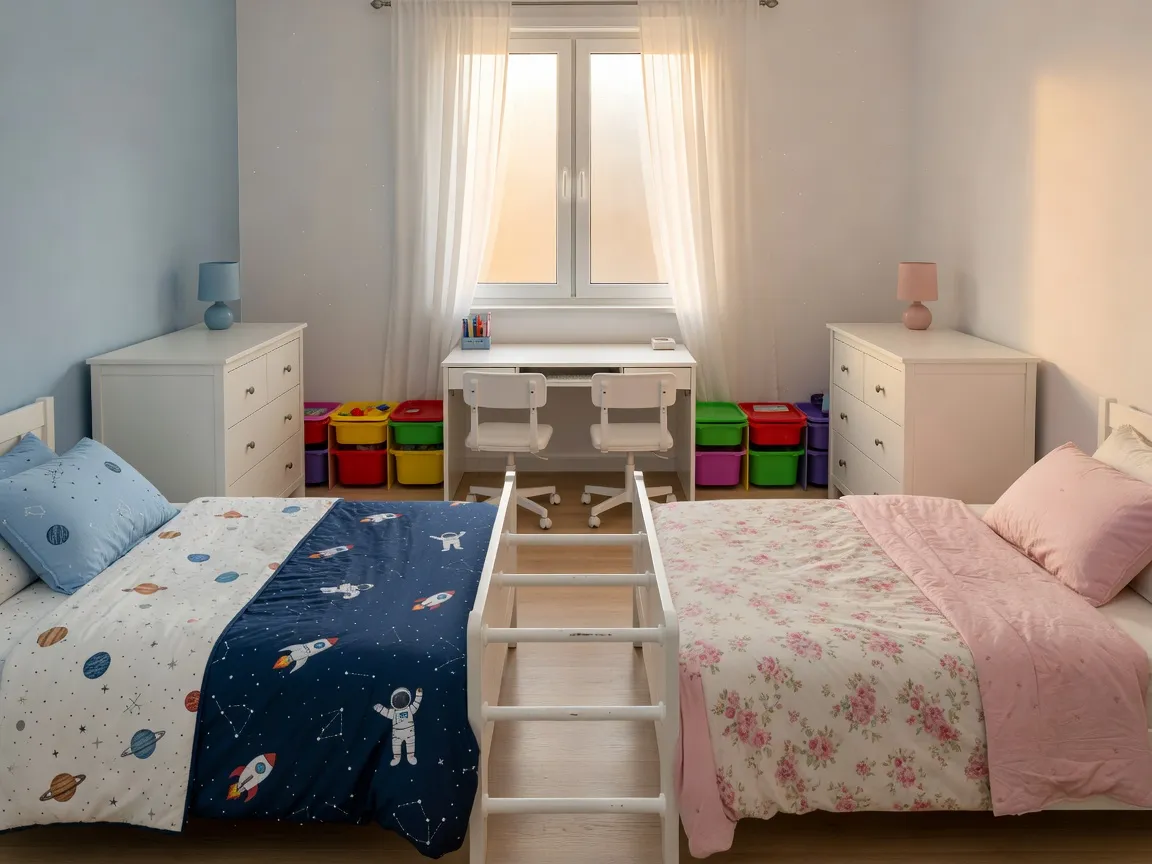
A shared kids' room works best when each child has a clearly defined zone, even in a modest-size room. Twin beds along opposite walls, or a bunk bed against one wall paired with a shared desk along another, both work well — what matters most is that each child has their own labeled storage, their own section of wall for art or a name sign, and ideally a visual divider, even something as simple as a rug edge or a low bookshelf, that marks where one child's space ends and the other's begins. Matching furniture keeps things fair and simple to shop for, but letting each child pick their own bedding color or a single accent detail gives them ownership over their half without a full redesign.
Furniture That Grows With Your Child
A kids' room gets redesigned more often than almost any other room in the house simply because the occupant keeps changing size and interests. Convertible cribs that become toddler beds, adjustable-height desks, and closet systems with movable shelves and rods all extend the useful life of a room by years instead of months. Choosing a neutral bed frame and dresser now, rather than a themed toddler set, is usually the single biggest money-saver over a child's first decade in the room.
What Safety and Layout Rules Matter Most in a Kids Room?
Safety constraints shape a kids' room layout more than style preference does, and they're worth settling before anything else. Furniture that a child could climb, like a dresser or bookshelf, should be anchored to the wall regardless of room layout, and window blind cords need to stay out of reach of a crib or bed. Bunk beds have their own well-documented set of guidelines, generally recommending the top bunk only for children old enough to safely use a ladder and guardrail; checking current product safety guidance, such as that published by the U.S. Consumer Product Safety Commission, is worth doing before buying or arranging bunk furniture. Beyond hard safety rules, many families also lean on Montessori-inspired layout principles — a low floor bed a toddler can get in and out of independently, open shelving at a child's eye level instead of a closed toy chest, and a small mirror mounted low on the wall — all of which tend to double as genuinely good small-space layout choices even outside that specific philosophy.
Design Your Kid's Room — Free
Stop guessing how a bed layout, color, or storage wall will look in your child's actual room. Upload a real photo to DecorAI and preview the redesign before you buy or paint anything.


How Do You Choose Colors and a Theme That Age Well?
The biggest regret in kids' room design isn't picking the wrong color — it's committing too permanently to a theme a child will outgrow within a year or two. Painting an entire room in a licensed character theme, or wallpapering it floor to ceiling in one specific print, both look great on day one and both become an expensive repaint the moment your child's interests move on. A more durable approach is a neutral or soft wall color — warm white, soft sage, muted blue — with the theme carried entirely by bedding, art prints, a rug, and a few accent pieces that are cheap and easy to swap out as tastes change. Our AI color palette for room design guide covers testing wall colors against your room's actual light before committing, which matters even more in a kids' room where the wrong shade is a bigger redo. If you're furnishing a nursery that will eventually transition into a toddler room, our AI nursery design guide covers planning that first transition specifically.
What Storage Actually Gets Used in a Kids Room?
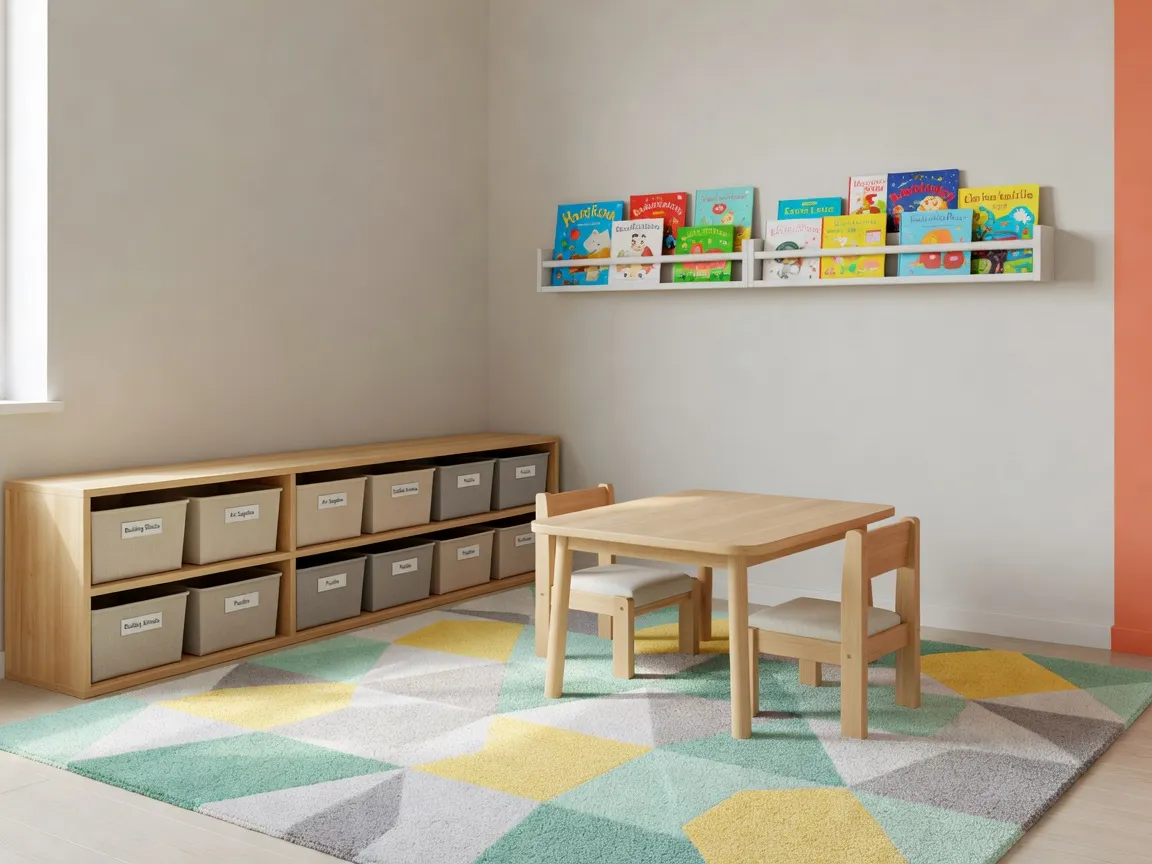
Storage that a child can see into and reach without help is storage that actually gets used; storage that requires opening a door, reaching above shoulder height, or lifting a heavy lid usually turns into a room where toys pile up on the floor instead. Open cube shelving with labeled fabric bins, at a height a child can reach independently, consistently outperforms a tall closed wardrobe or a deep toy chest for daily pickup, simply because putting something "away" takes one motion instead of several. Grouping toys by type — books on a low shelf, building blocks in one bin, art supplies in another — also makes cleanup something a young child can actually do on their own rather than something that needs an adult to sort through afterward. For a room that's outgrown its current storage system entirely, our AI declutter and organize guide covers resetting a cluttered room from the ground up, and our AI room layout planner for small spaces guide is useful when the room itself is on the smaller side and every square foot needs to earn its place.
What Mistakes Do People Make Designing a Kids Room?
- Committing to a full character theme in paint or wallpaper. It looks great for a year, then becomes an expensive repaint once interests change; keep the theme in swappable items instead.
- Buying furniture sized for a toddler instead of a growing child. A crib-height dresser or a tiny desk gets outgrown fast; furniture at a slightly more grown-up scale lasts years longer.
- Storing toys above a child's reach. If a child needs a step stool or an adult's help to put something away, it usually ends up on the floor instead.
- Skipping a play zone entirely in a small room. Even a 4-by-4-foot open rug area matters more to daily use than a slightly larger bed or dresser.
- Not planning for the next stage. A layout that only works for the child's current age often needs a full redo within a year or two; a little flexibility up front avoids that.
AI Kids Room Design — FAQ
What's the best layout for a small kids room?
Push the bed against the longest wall instead of centering it under a window, which frees the most open floor space for play; pair it with low, open shelving rather than a large freestanding wardrobe to keep the floor plan from feeling cramped.
How do I design a shared bedroom for two kids fairly?
Give each child a clearly defined zone — matching beds along opposite walls or a bunk bed plus a shared desk — with their own labeled storage and a simple visual divider like a rug edge, then let each child choose one small personal detail, such as their bedding color, so the space still feels like their own.
Should I paint a kids room in a themed design?
Keep the wall color neutral or soft, and carry the theme through bedding, art, and a rug instead — those are inexpensive to swap out as your child's interests change, while a full themed paint job or wallpaper is not.
Can AI show me how a kids room redesign would look before I buy furniture?
Yes — uploading a photo of your child's actual room to an AI design tool lets you preview layout, color, and storage changes directly on your real space at true scale, which is far more useful for planning a room that has to work for years, not just look good in a single photo.
What storage works best for keeping a kids room tidy?
Open, low shelving with labeled bins that a child can reach and see into without help gets used far more consistently than tall closed storage or deep toy chests that require an adult to sort through.
Conclusion
A kids' room has to work harder than almost any other room in the house, and it's worth planning against your child's actual space and actual age-and-stage needs rather than a themed catalog photo that won't fit either one. Preview a shared or solo layout, a neutral color scheme with swappable accents, and a storage system your child can actually use on a photo of the real room first, and the bigger furniture decisions get much easier. DecorAI lets you see exactly how a kids room redesign will look in your real space before you buy or paint anything. Explore the styles gallery for more design directions, read our AI bedroom design guide for layout ideas that apply to any age, or start from the DecorAI homepage to try it on your own space.
Visualize Your Dream Home Instantly
Don't just read about it. Experience the power of AI interior design with DecorAI's free tool.
Start Designing for FreeWritten by
DecorAI Team
Editorial Team