How to Style a Sideboard: A Simple Formula for the Top, the Wall and the Doors
A practical guide to styling a sideboard: choose the right size, build a three-height arrangement with art or a mirror above, work with lamps and plants, adapt it for a narrow hallway, and preview the look on your own room photo with AI.
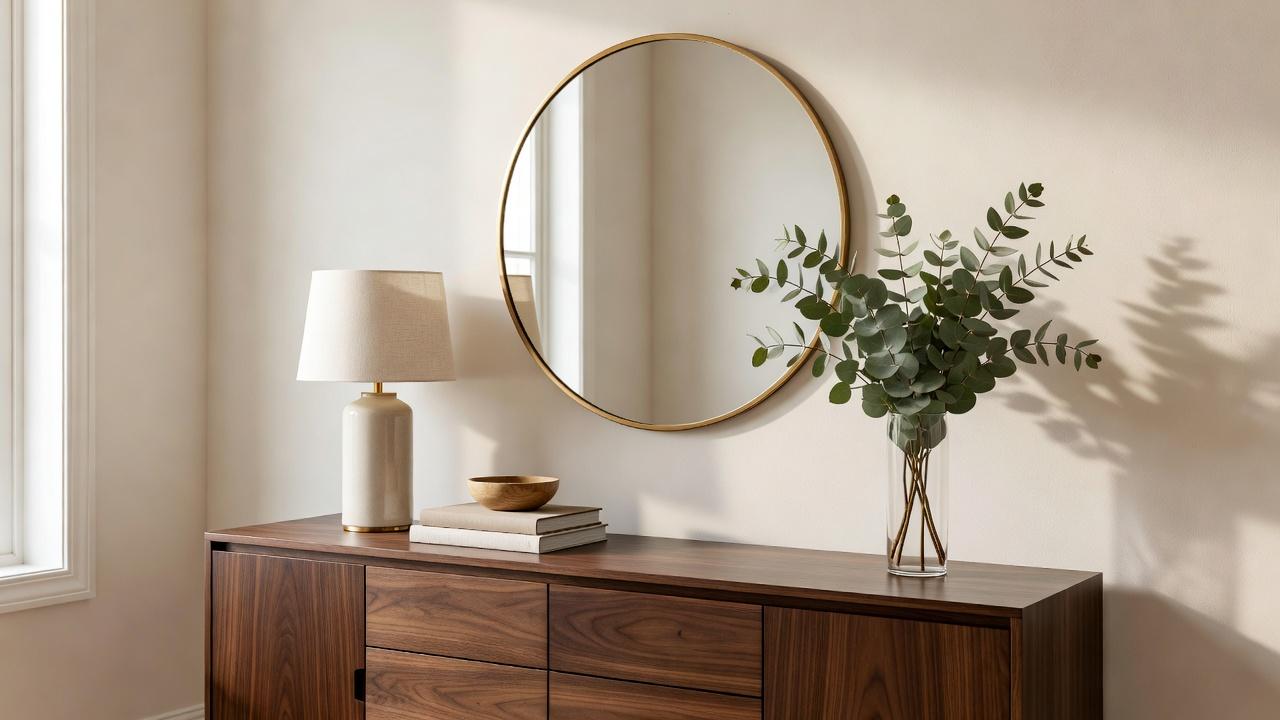
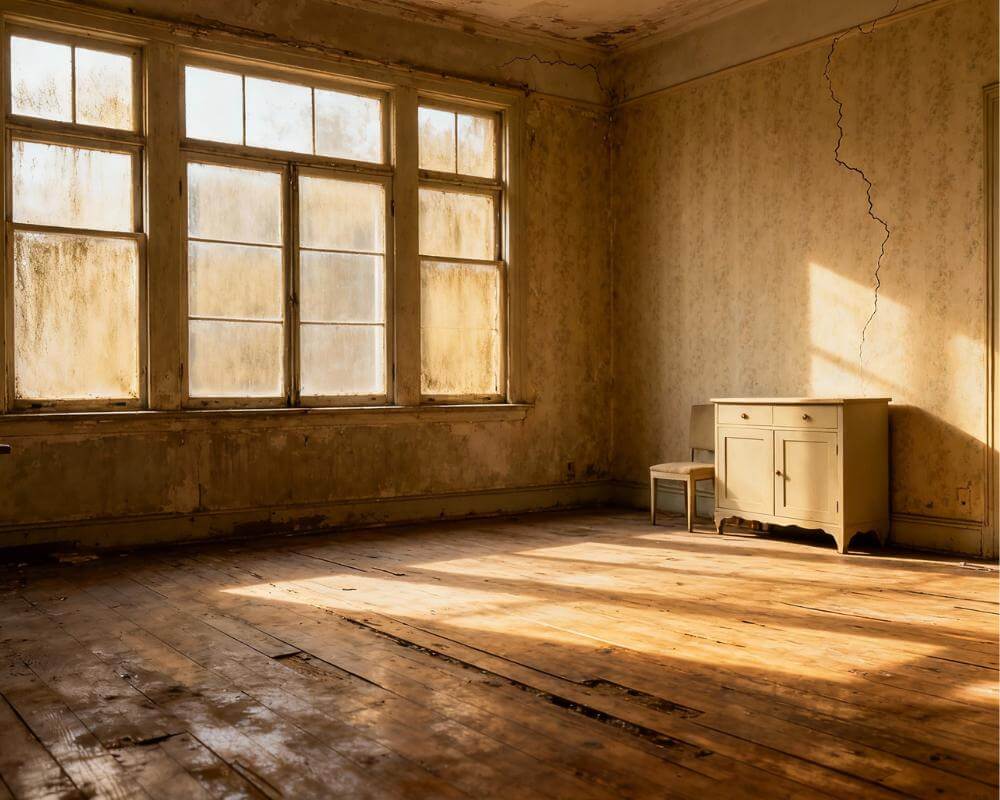
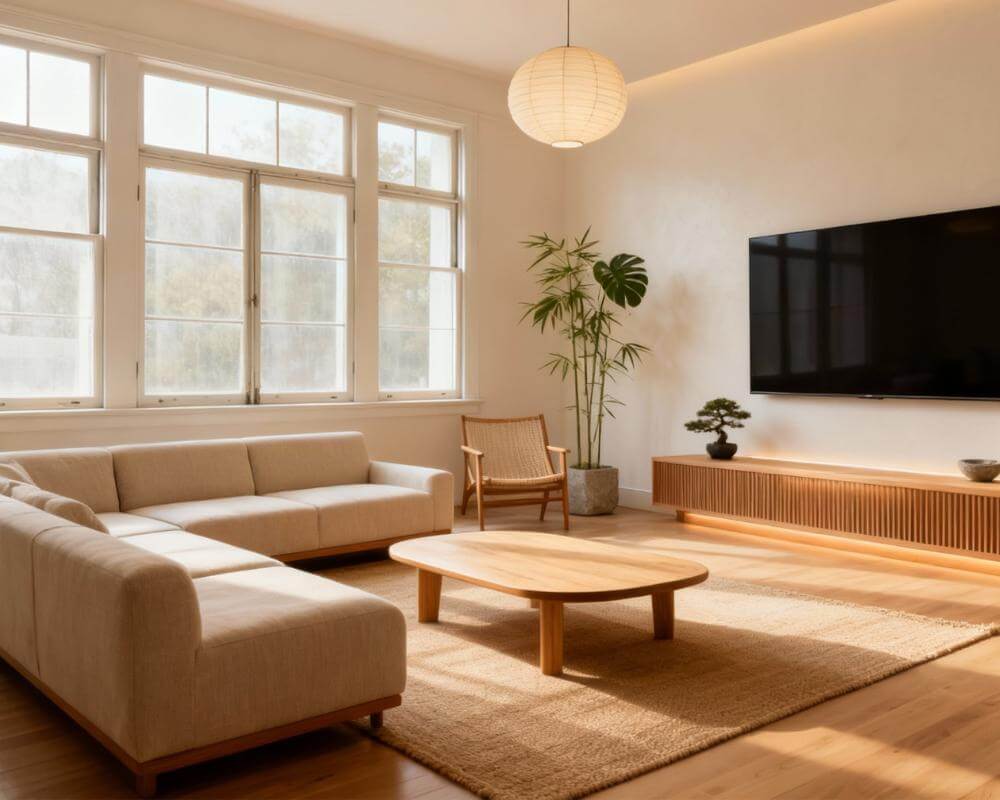
A sideboard is the longest, lowest and most forgiving surface in a dining room or living room, which is exactly why it so often ends up either bare or buried. Styling a sideboard well comes down to three decisions: how the piece is sized to its wall, a simple arrangement on top built from three different heights, and something above it that ties the two together. DecorAI is an AI interior design app that lets users transform photos of existing rooms into realistic redesign concepts, which makes it a practical way to test a new mirror, lamp or wall colour before you buy anything.
This guide covers choosing and placing a sideboard, a formula for the top, what to hang above it, how to treat the doors and storage, how to adapt the look for a narrow hallway sideboard, and how to preview ideas on a photo of your own room.
Key Takeaways
- Think in three heights. Something tall, something medium and something low gives a long surface rhythm without clutter.
- Size the wall piece to the sideboard. Art or a mirror about two thirds the width of the sideboard usually looks balanced.
- Leave breathing room. Empty space on a long top is part of the design, and it keeps the surface useful for serving.
- Use the inside too. A sideboard is storage first, so give the doors and drawers a plan and the top will stay tidy.
- Preview before you buy. DecorAI generates designs from your own room photo in usually under 10 seconds, and offers three free generations per day without requiring an account or credit card.
- Try DecorAI on a photo of your room.
How Do I Choose and Place the Right Sideboard?
Proportion matters more than any object you put on top, so check the piece against the wall before you style it. Measure the wall and the floor space in front of it, then use these rules of thumb as a starting point rather than a law.
- Width. A sideboard that fills a good share of the wall looks intentional. A short one floating in the middle of a long wall can look lost, so consider a longer piece or add a tall plant or lamp at one end.
- Depth and clearance. Most sideboards are shallow, but you still need room to open doors fully and to walk past. Check that doors and drawers do not hit a chair, a radiator or a door frame.
- Height. A low sideboard leaves space for generous art or a mirror above. A taller one needs less on top and more restraint above.
- Position. Against the longest wall of a dining room, beneath a window, behind a sofa or along a hallway are all common choices. Our AI dining room design guide covers layout and colour for the whole room.
What Is a Simple Formula for Styling the Top of a Sideboard?
A long, low surface suits a loose, asymmetrical arrangement. Think of it as a small landscape with a hill on one side, a valley in the middle and a gentle rise at the other end. Four ingredients are enough:
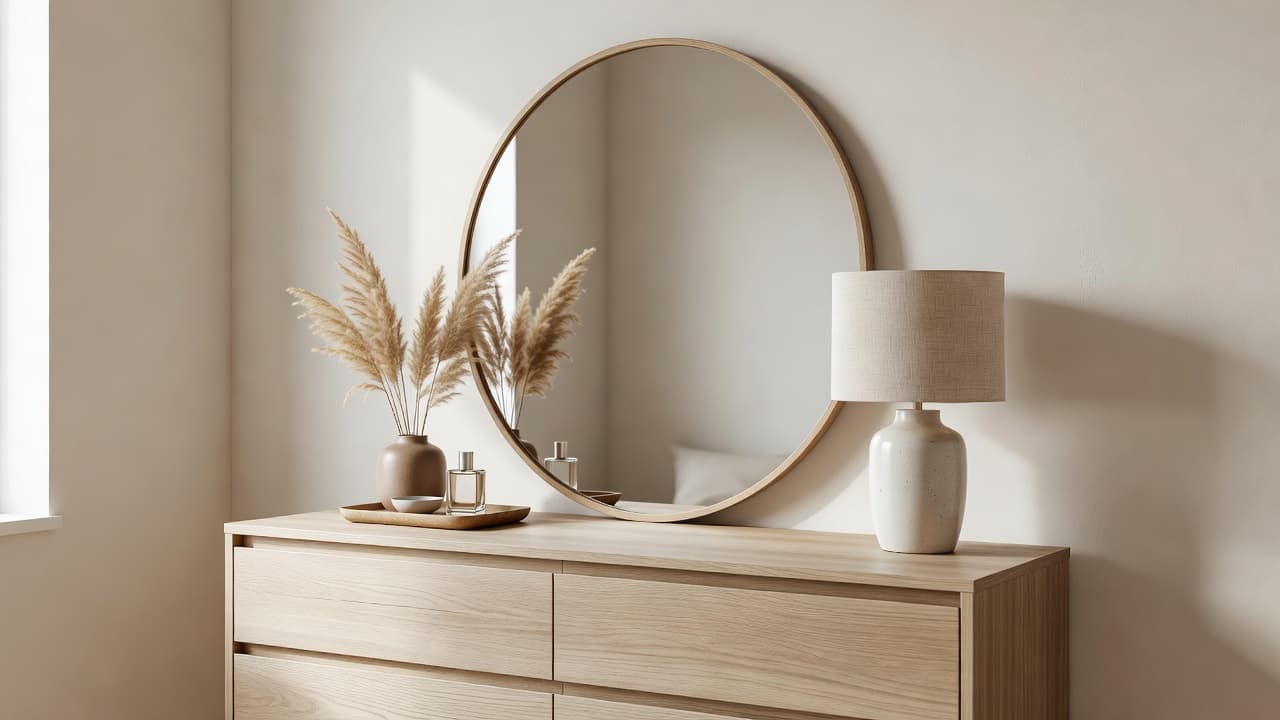
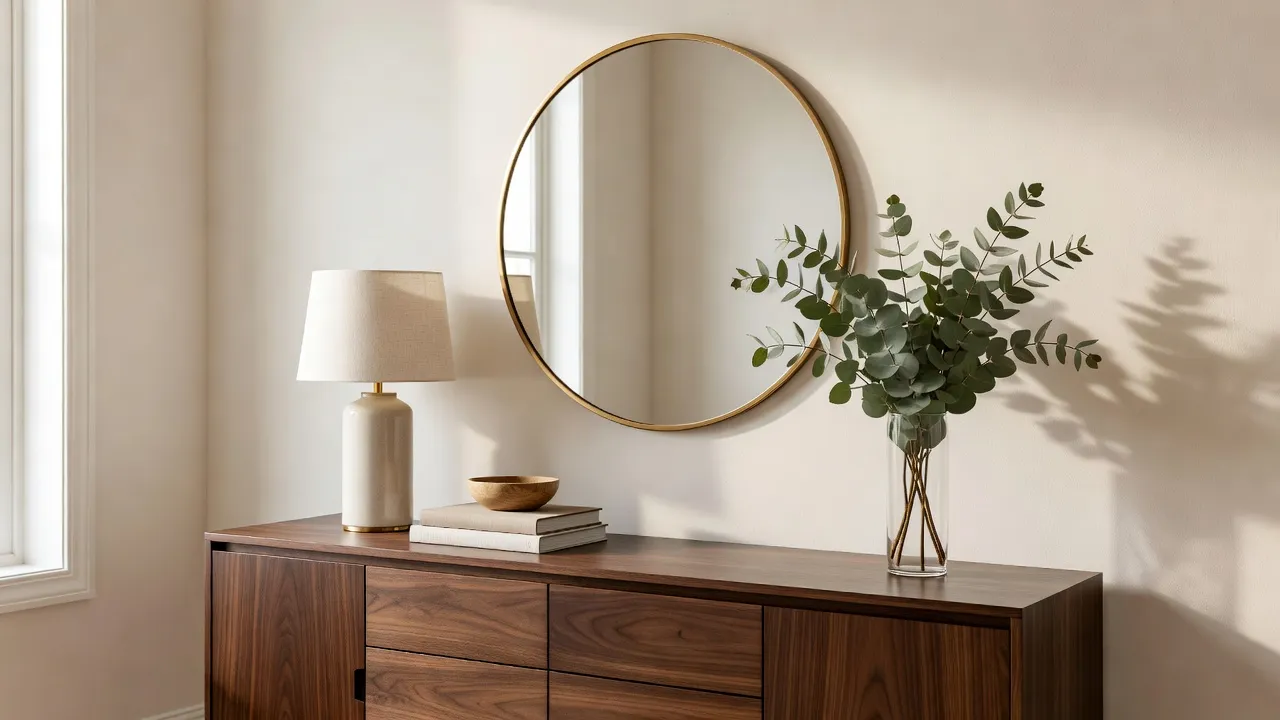
- Something tall. A table lamp, a vase with branches or a sculptural object anchors one end and gives the group height.
- Something medium. A stack of books with a small object on top, or a framed print leaned on the wall, fills the middle.
- Something low. A bowl, a tray or a few candles keep the other side light and give the eye somewhere to rest.
- Something natural. Fresh or dried stems, a trailing plant or a wooden bowl adds texture and softens the hard lines of the furniture.
Group objects in odd numbers, keep the heaviest or tallest piece off the exact centre, and leave some surface empty. The same layering works on a shorter surface in how to style a console table and on a bedroom piece in how to style a dresser.
Should a Sideboard Be Symmetrical or Asymmetrical?
Both work, and the choice sets the mood of the room.
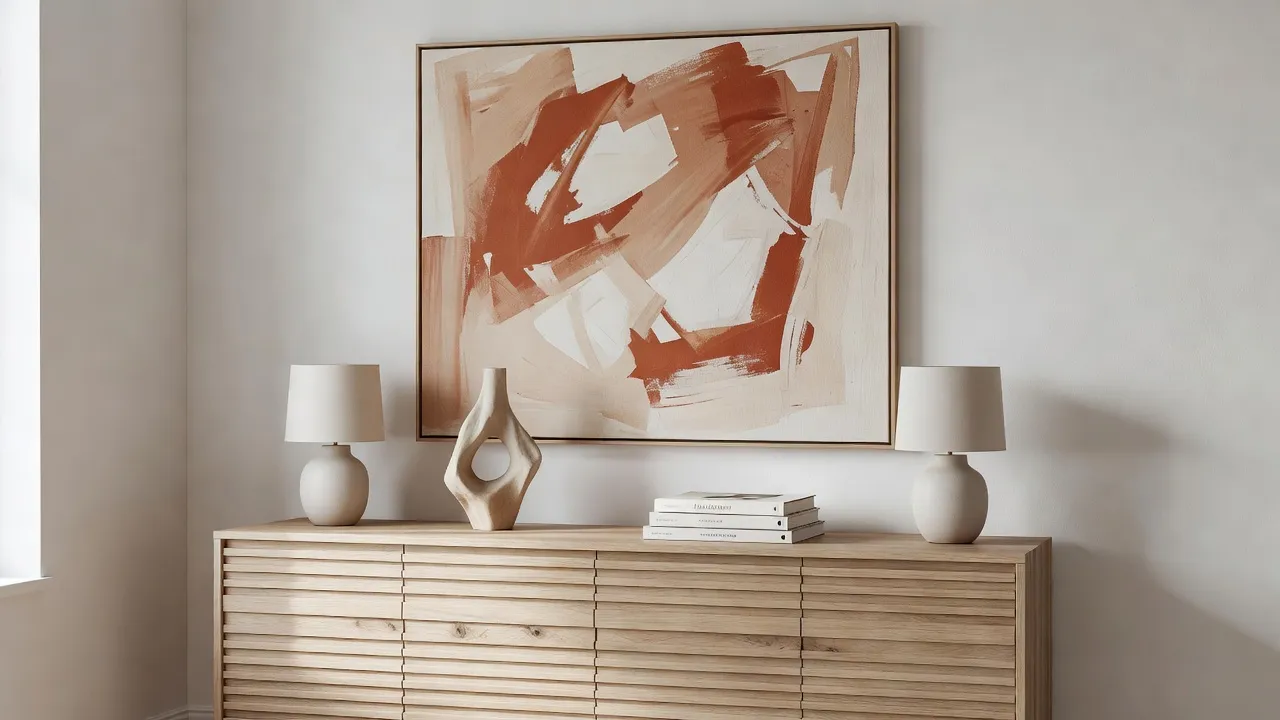
- Symmetrical. A matching pair of lamps at each end with art centred above reads as formal and calm. It suits traditional and transitional rooms, and it is the safest option if you dislike making judgement calls.
- Asymmetrical. One tall lamp on the left, a stack of books in the middle and a vase on the right feels relaxed and modern. Balance the visual weight rather than matching the objects.
If you are unsure, try both on a photo of your wall before you buy a second lamp.
What Should I Hang Above a Sideboard?
The wall above the sideboard is where the arrangement either comes together or falls apart. A few options to consider:
- One large artwork. A single wide piece is simpler than a gallery and gives a long sideboard a strong focal point. Hang it so the bottom edge sits roughly a hand or two above the top of the tallest object.
- A mirror. A round, arched or rectangular mirror bounces daylight around a dining room and makes a narrow space feel wider. Position it to reflect a window or a lamp rather than a bare wall.
- A gallery arrangement. A grouped set of frames works if the outer shape is roughly as wide as two thirds of the sideboard.
- Leaned frames. Resting two or three frames on the surface, overlapping slightly, looks relaxed and lets you change the art without drilling.
- Wall lights or shelves. A pair of sconces on either side of the art frees the surface of lamps in a narrow room.
If you are deciding how to hang a group of frames, see our gallery wall planner guide for ways to test the layout before you pick up a drill.
How Do I Light a Sideboard?
Lighting does as much as any object to make a sideboard feel finished, especially in the evening when the dining room is used most.
- Table lamps. One or two lamps give a warm pool of light at eye level. A fabric shade diffuses it, and a lamp that is too tall for the wall can compete with the art.
- Picture lights. A slim light on top of a large frame highlights the artwork and removes the need for lamps.
- Candles. For dinners, a few candles in low holders add warmth, as long as they sit on a tray or a heat-safe base.
For a wider look at layering ambient, task and accent light, see our AI lighting design guide.
See Your Room Restyled
Upload a photo of your room and try different sideboards, mirrors, lamps, colours and styles. Compare the versions in seconds before you buy a single piece.


How Do I Style a Narrow Sideboard in a Hallway or Small Dining Nook?
A shallow sideboard has less room for objects, so the formula gets shorter and simpler. Keep it to two or three items, make one of them do double duty and let the wall carry the rest.
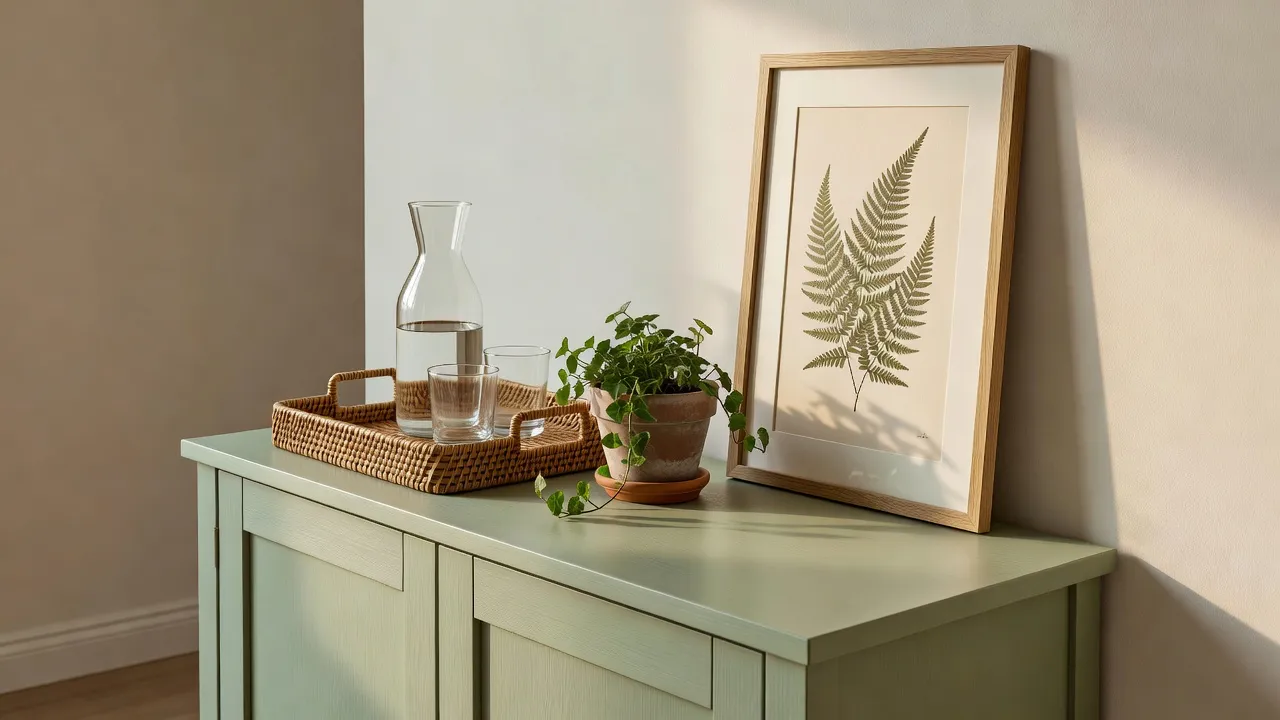
- A tray that works. A woven tray with a carafe and glasses, or a bowl for keys, gives a narrow top a clear purpose.
- Lean, do not hang. A single framed print leaned against the wall takes up no depth and can be swapped in seconds.
- A small plant. A trailing plant in a small pot adds softness without needing floor space.
- A colour that works. A sideboard painted in sage green, warm white or deep blue reads as a feature in a plain hallway.
If the sideboard lives by the front door, our entryway and foyer design guide has more on creating a drop zone that still looks good.
What Should I Store Inside a Sideboard?
A styled top only stays styled if the inside can absorb the everyday items. A few simple habits help:
- Zone by use. Keep serving dishes, table linens and glassware in separate sections so you can find what you need without emptying the shelf.
- Use baskets and boxes. Lidded baskets hide small items such as candles, cables or board games.
- Protect the shelves. Felt or liner paper stops ceramic from scratching and makes a spill easy to wipe.
- Keep the heavy items low. Put heavier dishes at the bottom and lighter items above them.
- Leave a drawer for the extras. Give the things that usually pile on top, such as place mats or napkins, a drawer of their own.
How Can I Preview Sideboard Ideas With AI?
Swapping a vase is easy, but choosing a new sideboard, a different mirror or a new wall colour is a bigger decision. DecorAI lets you test those choices on a photo of your own room first.
- Photograph the sideboard and the wall. Stand back far enough to see the whole wall, keep the camera level and use daylight. Our photo guide for AI design explains how.
- Try a style. Choose the room type and a style, then compare two or three versions to see how the wall reads in different palettes. DecorAI offers 60+ interior design styles and 40+ colour schemes.
- Edit only the sideboard wall. Use the Inpainting editor to paint over the mirror or artwork and describe what should be there, such as a large round mirror with a thin brass frame. The rest of the photo stays the same.
- Test a specific piece. If you have a sideboard in mind, Furniture Import places an item from a product photo into your room.
To restyle the whole room around the sideboard, see AI Living Room Design. Treat every result as a visual concept rather than a measured plan: a preview helps you judge colour, style and proportion, but you should still measure the wall and any item before you buy.
What Mistakes Should I Avoid?
- Art that is too small. A tiny frame above a long sideboard looks lost. Aim for roughly two thirds of the width, or group frames to reach it.
- Hanging it too high. A gap of more than a hand or two between the sideboard and the bottom of the frame breaks the connection between them.
- Lining objects up evenly. A row of identical items spaced like a shop display feels stiff. Vary the heights and group in odd numbers.
- Covering the whole top. If you cannot put down a serving dish, the sideboard is no longer doing its job.
- Forgetting safety. Secure tall pieces to the wall, keep candles on a heat-safe base and avoid placing anything fragile where a door swings.
Sideboard Styling FAQ
What do you put on top of a sideboard?
A good starting set is a lamp or a vase, a stack of books or a leaned frame, and a bowl or tray for something low. Add something natural such as branches or a plant and leave part of the surface clear.
What do you hang above a sideboard?
A large artwork, a mirror or a grouped set of frames all work. A piece about two thirds the width of the sideboard, hung a hand or two above the tallest object, usually looks balanced.
What is the difference between a sideboard and a buffet?
The two names are often used for the same low, wide storage cabinet, and the styling is identical. Some people use buffet for a piece used mainly to serve food, but there is no firm rule.
Can AI help me style a sideboard?
Yes. DecorAI takes a photo of your actual room and generates redesign concepts in different styles, so you can compare mirrors, lamps and colours before you buy. It is a visual preview, not a measured plan.
Is it free to try DecorAI on my room?
DecorAI offers three free generations per day without requiring an account or credit card. Free generations are unlocked by watching a short rewarded video advertisement.
Conclusion
A sideboard looks best when it is sized to its wall, styled with three heights and a touch of something natural, and topped by art or a mirror of the right scale. The same formula adapts to a narrow hallway piece with a tray and a leaned print, or to a symmetrical pair of lamps in a formal dining room. Before you buy anything new, upload a photo of the room to DecorAI, compare two or three directions and keep the one that still looks right on an ordinary evening. For more ideas, explore the full DecorAI feature directory.
Visualize Your Dream Home Instantly
Don't just read about it. Experience the power of AI interior design with DecorAI's free tool.
Start Designing for FreeWritten by
DecorAI Team
Editorial Team