
AI Dining Room Design: Ideas, Layouts & Style Inspiration for 2026
Use AI to visualize dining room designs instantly. Compare layouts, lighting, and style ideas on a photo of your real space — from modern to farmhouse to Japandi to Mediterranean.
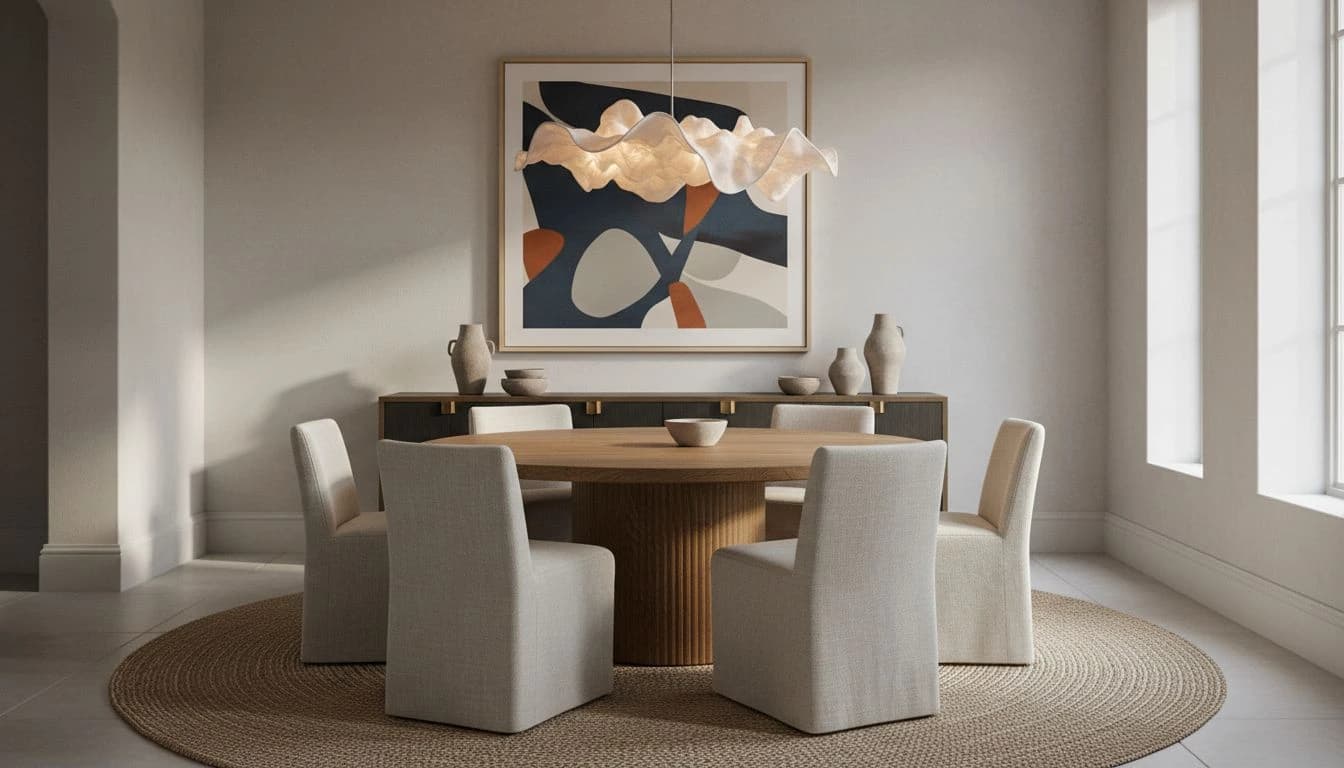

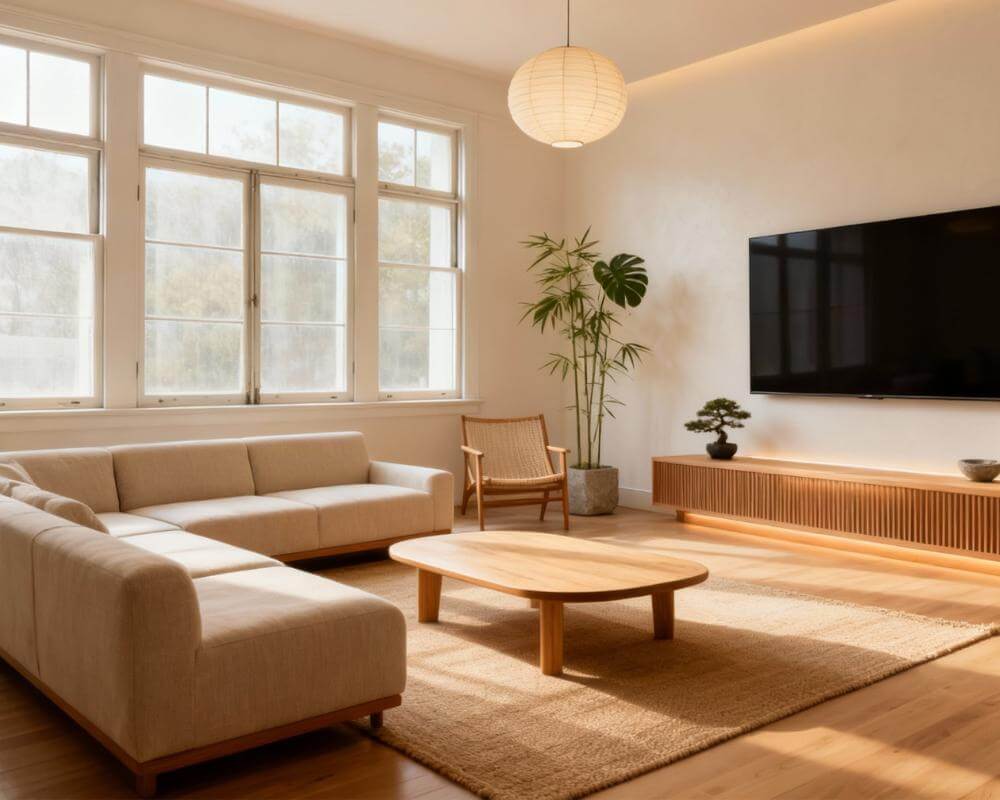
Dining rooms are the most emotionally loaded room in the house, and also the most underdesigned. They have to feel beautiful for dinners, practical for homework, quiet for coffee, and flexible enough to host eight people for the holidays. Most homeowners try to solve that with one compromise table, one compromise light, and one compromise rug. AI dining room design changes that by letting you test full configurations on a photo of your real space before you buy a single piece.
This guide walks through how AI handles dining room proportion, light, and material — and how tools like DecorAI - AI Interior Design help you land a dining room that works for the way you actually use it, not just the photo you pinned last year.
Why Dining Rooms Are the Most Overlooked Room
Living rooms get the inspiration, kitchens get the budget, bedrooms get the comfort. The dining room tends to get whatever is left over. That is a shame, because the dining room is where a home's social gravity lives. It is the one space where the furniture is explicitly arranged for people to sit facing each other, and the mood of that room sets the mood of gatherings.
The reason dining rooms get under-designed is simple: the decisions feel high-stakes and expensive. A dining table is bigger than a sofa, often costs more, and is much harder to "try out" in a showroom. That is exactly why AI design is so useful here. It lets you test table shapes, chair styles, lighting, and rugs in your actual space, at your actual scale, before you commit.
How AI Handles Dining Room Layout, Lighting, and Proportion
AI dining room design works the same way AI interior design handles other rooms: it analyzes your uploaded room photo, identifies structural elements, and proposes new designs that respect your actual space. For dining rooms, that means AI can preserve window placement, ceiling height, and doorway position while trying completely different table and lighting strategies.
The underlying computer vision understands that a dining room lives or dies on three relationships: the distance between the table and the walls, the relationship between the table and the overhead pendant, and the way light washes across the seating surfaces. When those three feel right, the room reads as considered. When they do not, the room feels awkward no matter how expensive the furniture is.
That is the decision space AI is built to accelerate. Instead of guessing whether a round 120 cm table would feel generous or tight in your dining nook, you can see the answer rendered in your actual room. Instead of wondering whether a low-slung linear pendant would feel elegant or oppressive over a long table, you can compare it against a globe pendant, a statement chandelier, and a pair of paper lanterns side by side.
AI Dining Room Design Ideas by Style
Style is not just an aesthetic choice — it changes how the dining room feels when you walk in. A few directions AI handles particularly well:
Modern dining rooms rely on clean lines, minimal ornament, and well-proportioned single statements. A round oak table, six upholstered chairs in a restrained palette, and a single sculptural pendant usually do more than a complex arrangement. AI lets you test the difference between a matte black base and a walnut base, or between a stone top and a solid wood top, in your real room.
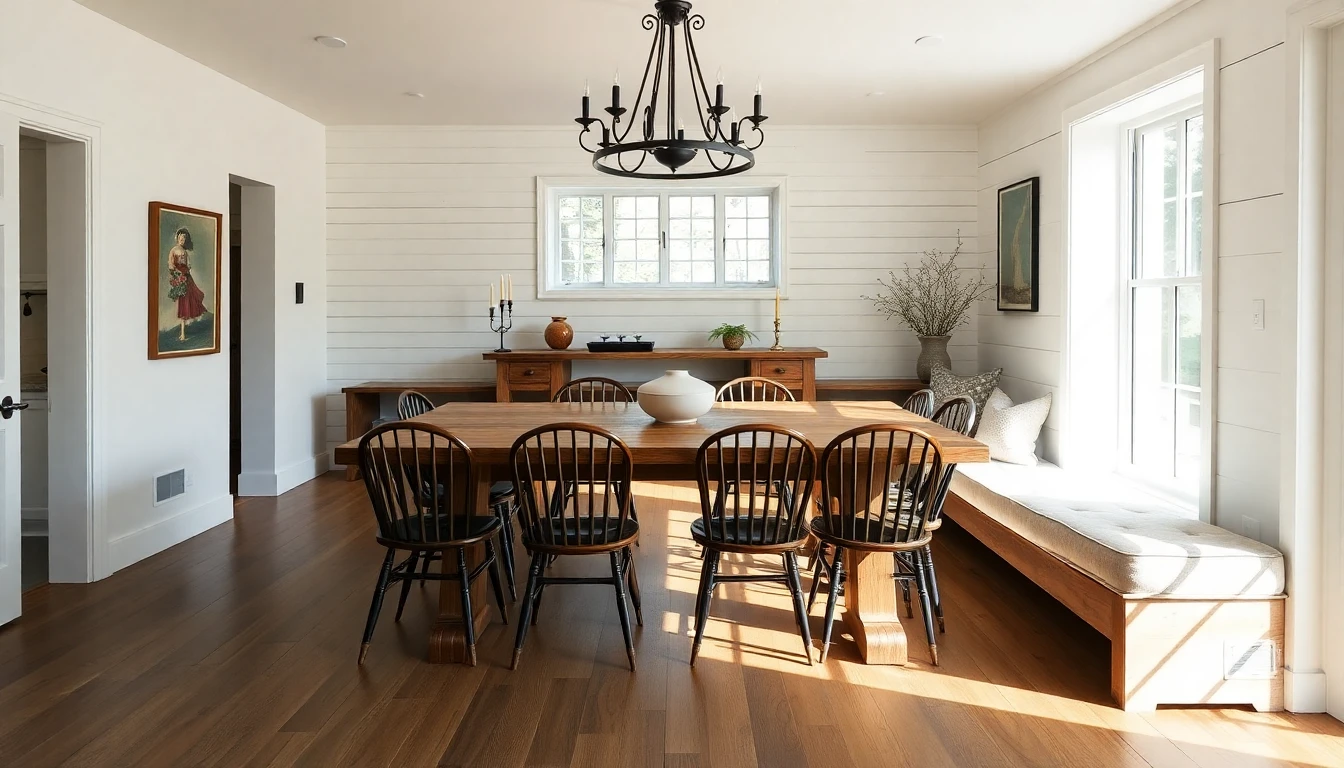
Modern farmhouse dining rooms pair a long trestle or plank table with simpler chairs and a slightly richer lighting moment. The feel is relaxed and gathered. The common mistake is to overload the room with shiplap, signs, and rustic props until it reads as theme rather than home. AI helps you keep the warmth while pulling back on the clichés.
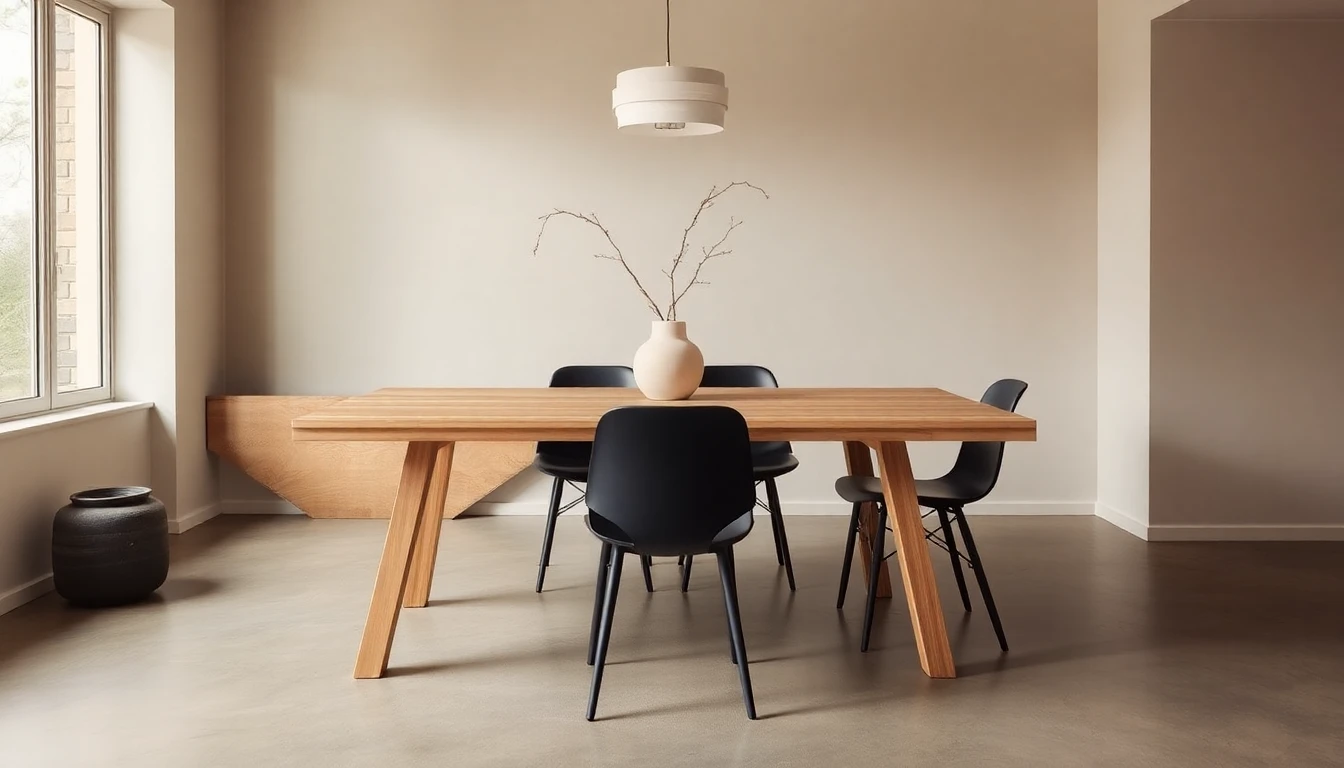
Japandi dining rooms are an increasingly popular direction because they pair warmth with restraint. A low-profile light oak table, matte black or natural wood chairs, a simple paper pendant, and nearly no tabletop decoration. This is a style that rewards AI testing, because a single wrong element ruins the calm.
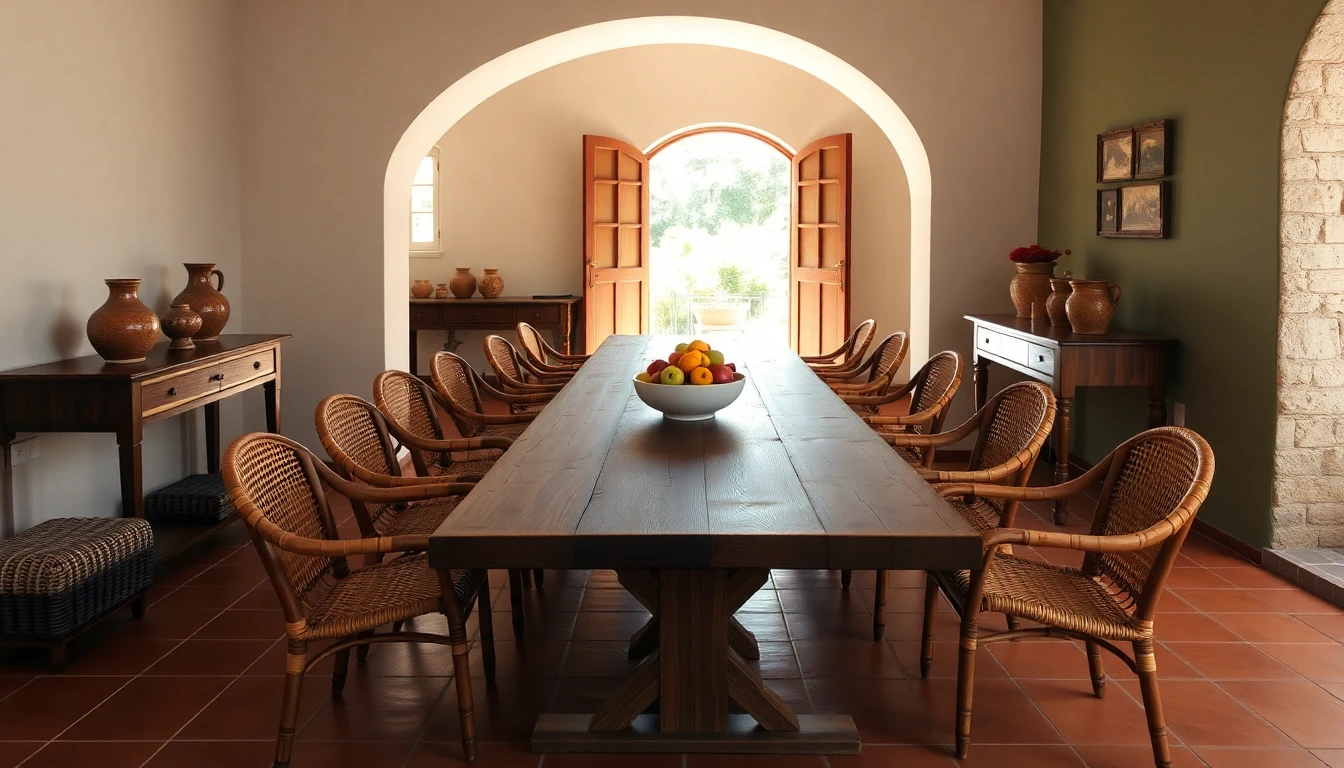
Mediterranean dining rooms bring warmth, terracotta, and arched details. They work best when the overall palette is restrained, with the richness coming from wood, tile, and a small number of earthenware objects. AI helps judge whether a specific wall color or tile pattern will feel authentic or touristy in your space.
Round vs. Rectangular Dining Tables: Let AI Decide for Your Room
The table-shape decision is usually where dining-room planning stalls. Both options are defensible in theory, but only one usually works in your specific room. A rectangular table gives you more seats for the same footprint, while a round table makes the room feel more social and handles tight walkways better. The honest answer depends on the shape of your actual room.
This is where AI is particularly useful. Upload the dining room, ask for a round-table version and a rectangular-table version, and compare them side by side. Pay attention to two things: how much space is left between the chair backs and the walls, and how easily you can picture walking around the table fully seated. If the rectangular version creates a tight pinch on one side, the round table almost always wins. If the room has a dominant long axis, the rectangular table usually makes more sense.
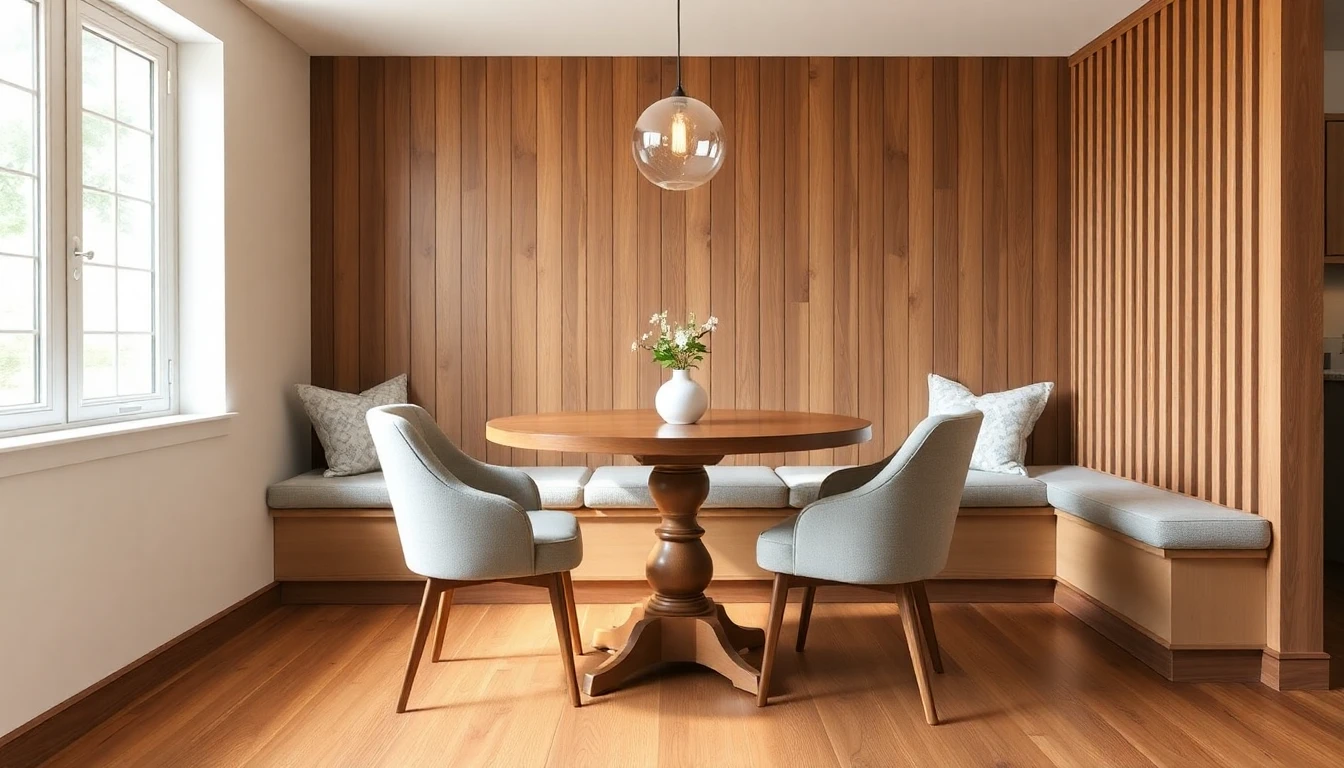
For compact dining nooks, the combination of a round pedestal table and a built-in banquette is almost always a strong move. You get seating for four comfortably, the pedestal base avoids chair-leg conflicts, and the banquette adds architectural presence without stealing square footage. AI shows you whether that combination would still feel airy or would crowd the space.
Lighting and Wall Treatment Decisions AI Can Visualize
The fastest upgrade to any dining room is the lighting. A well-chosen pendant over the table defines the room's mood more than any chair or rug. AI lets you preview the difference between a globe pendant, a linear chandelier, a pair of lanterns, and a dramatic sculptural fixture without touching a screw. You also get to see how each option interacts with your existing natural light.
Wall treatments are the second biggest mood lever. A single accent wall in a deep green, a textural wood paneling treatment, or simply a gallery of restrained art will change how the room reads. AI helps you avoid the common trap of over-styling the dining room into a Pinterest collage that feels fussy at dinner. The best test is whether the room still feels calm at 8 p.m. with a glass of wine on the table. If it does, the direction is right.
For more mood-setting strategies, our AI color palette guide is a useful companion, and the AI design ideas article includes dining rooms in several style directions.
A Practical Process for Dining Room AI Design
The most useful dining-room AI workflow follows a simple sequence. First, take a photo of the dining area from the most common viewing angle — usually the doorway. Second, generate three style variations with very different moods: a restrained direction, a warm direction, and a dramatic direction. Third, pick the variation that most resembles the dining experience you actually want, not the one that photographs best. Fourth, use that selected vision to refine table shape, chair style, and lighting.
That sequence protects you against the single most common dining-room mistake: buying furniture before deciding on the feeling. Publications like Architectural Digest regularly highlight that great dining rooms are defined by a clear decision about mood first, and that everything else — table, chairs, lighting, floor — follows from that decision.
FAQ: AI Dining Room Design
What size dining room works for six people?
A comfortable six-person dining room usually needs a table that is at least 180 cm long with about 90 cm of clearance on each long side for chairs to pull out. AI helps you verify that clearance in your real room before you commit to a specific table size — that check alone avoids the most common dining-room regret.
Should the pendant light always hang above the center of the table?
Yes, and that center point is defined by the table, not the ceiling. If your existing ceiling fixture is off-center, plan for a swag kit or a new electrical box. AI visualizations help confirm the right height too — for most dining tables, the pendant should hang roughly 75–85 cm above the tabletop.
Do I need a rug under the dining table?
A rug defines the dining area and softens acoustics, but it only works if it is sized correctly. The rug should extend at least 60 cm beyond the table on every side so chairs stay on the rug when pulled out. AI will show you immediately whether your chosen rug feels generous or undersized in your real space.
Can AI help me design an open-plan dining room?
Yes — open-plan layouts are one of the strongest use cases. AI helps you test whether the dining zone reads as its own area or dissolves into the living space. For more on that, our AI interior architecture guide covers open-plan flow in detail.
How many style variations should I generate before deciding?
Three is usually the right number. More than five creates decision fatigue and starts blending the options together. Pick three contrasting directions — one restrained, one warm, one dramatic — and commit to the one that resembles the life you actually want at the table.
Design the Dining Room You Actually Want to Eat In
Use DecorAI to visualize dining room directions on a photo of your real space. Compare table shapes, lighting, styles, and moods before you spend a cent on furniture.
Try DecorAI Free

Visualize Your Dream Home Instantly
Don't just read about it. Experience the power of AI interior design with DecorAI's free tool.
Start Designing for FreeWritten by
DecorAI Team
Editorial Team
Related Articles
AI Dorm Room Design: How to Style a Small Shared Space Without Breaking the Rules
9 min read
AI Studio Apartment Design: How to Zone, Furnish and Style One Room That Does Everything
9 min read
AI Playroom Design: How to Plan a Playroom That Stays Tidy and Grows With Your Kids
9 min read