
AI Reading Nook Design: How to Turn Any Spare Corner Into a Cozy Spot for Books
A practical guide to designing a reading nook: find the right spot, choose seating, light, storage and colour, and preview a window seat, armchair corner or sloped-ceiling nook on a photo of your own room with AI.
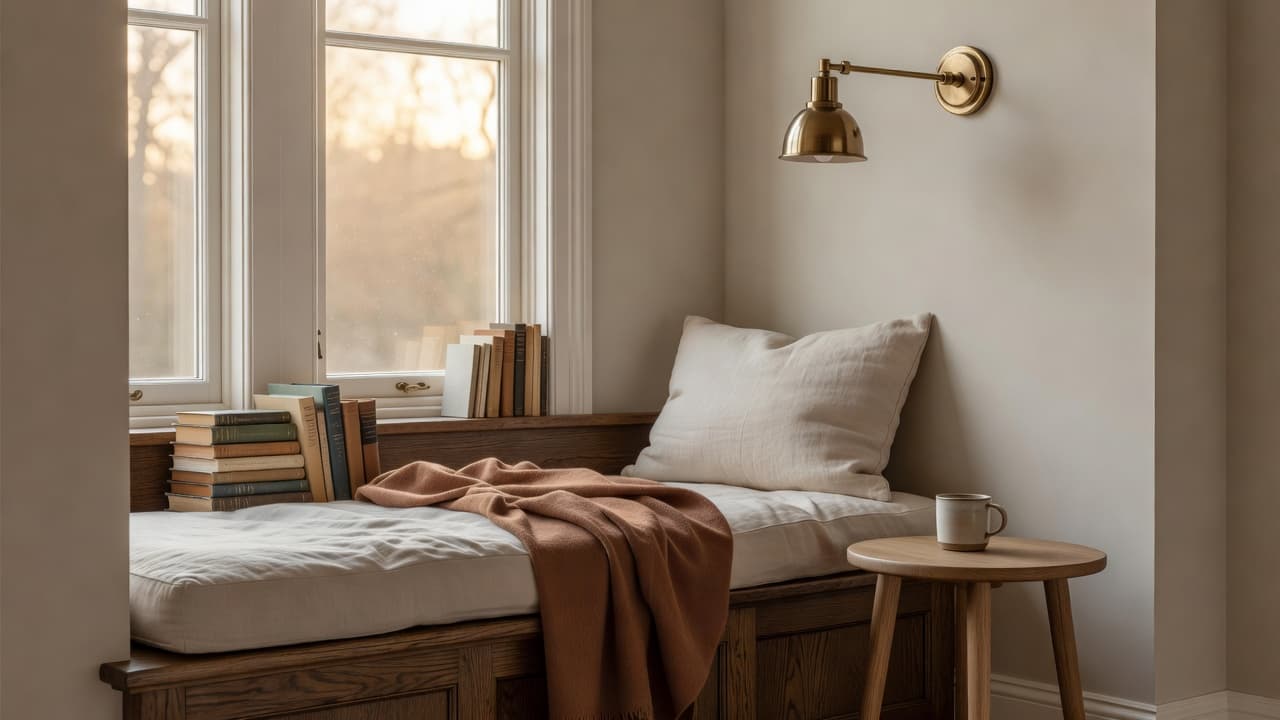
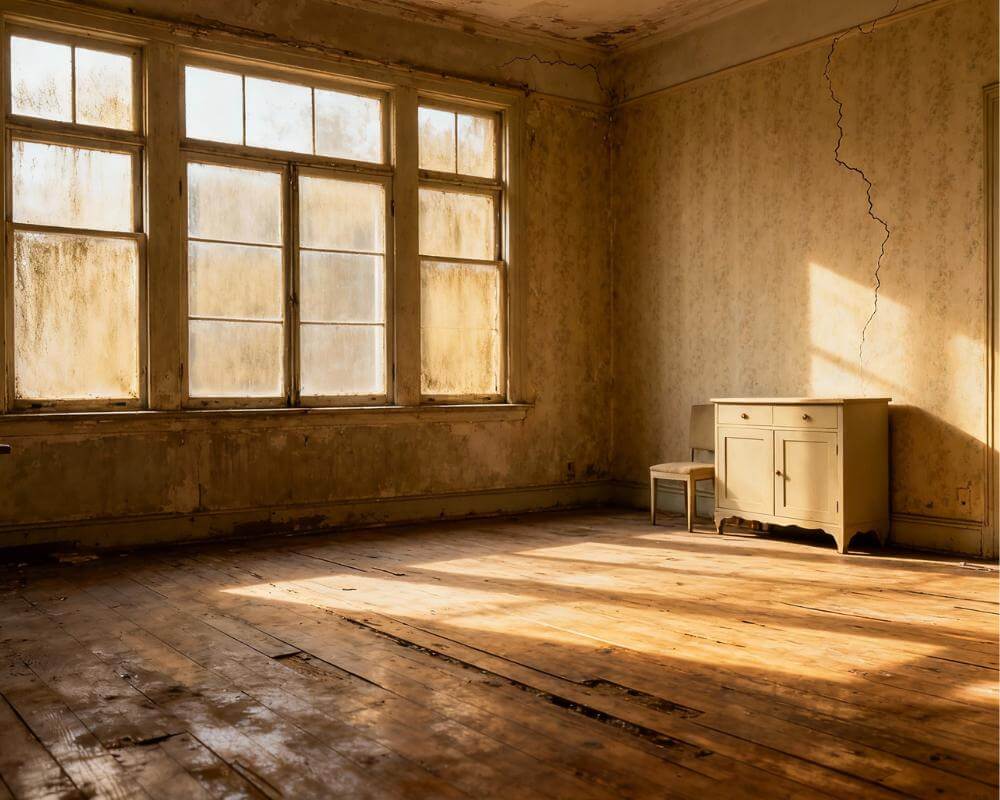
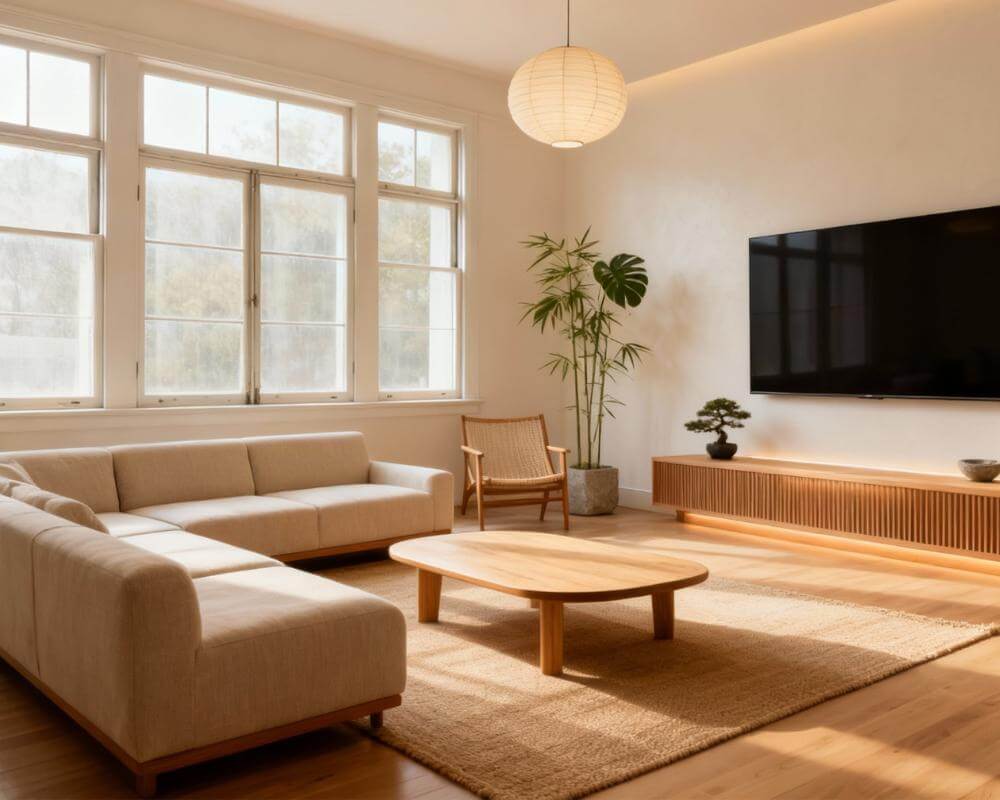
A reading nook is the smallest room in the house that you do not need a room for. A window ledge, a bedroom corner or the space under a sloped ceiling can become a quiet place with a seat, a light and a shelf within reach. Designing a reading nook comes down to four decisions: where it goes, what you sit on, how it is lit, and how you store the books. DecorAI is an AI interior design app that lets users transform photos of existing rooms into realistic redesign concepts, so you can try a nook on a photo of your own space before you buy a chair or build a seat.
This guide covers choosing the spot, three layouts that work in most homes, lighting and storage, and how to preview the result on your own photo.
Key Takeaways
- Start with the light. A spot beside a window gives daylight by day, and a lamp placed beside or behind your shoulder covers the evening.
- Sit properly. A seat with back support, a cushion you can sink into and a place to rest your feet matters more than any decoration.
- Keep the essentials within reach. A small side table for a mug and a shelf for the next few books turn a corner into a nook.
- Enclose it a little. A darker wall colour, a rug or a curtain makes a small area feel like its own place.
- Preview before you buy. DecorAI generates designs from your own room photo in usually under 10 seconds, and offers three free generations per day without requiring an account or credit card.
- Try DecorAI on a photo of the corner you have in mind.
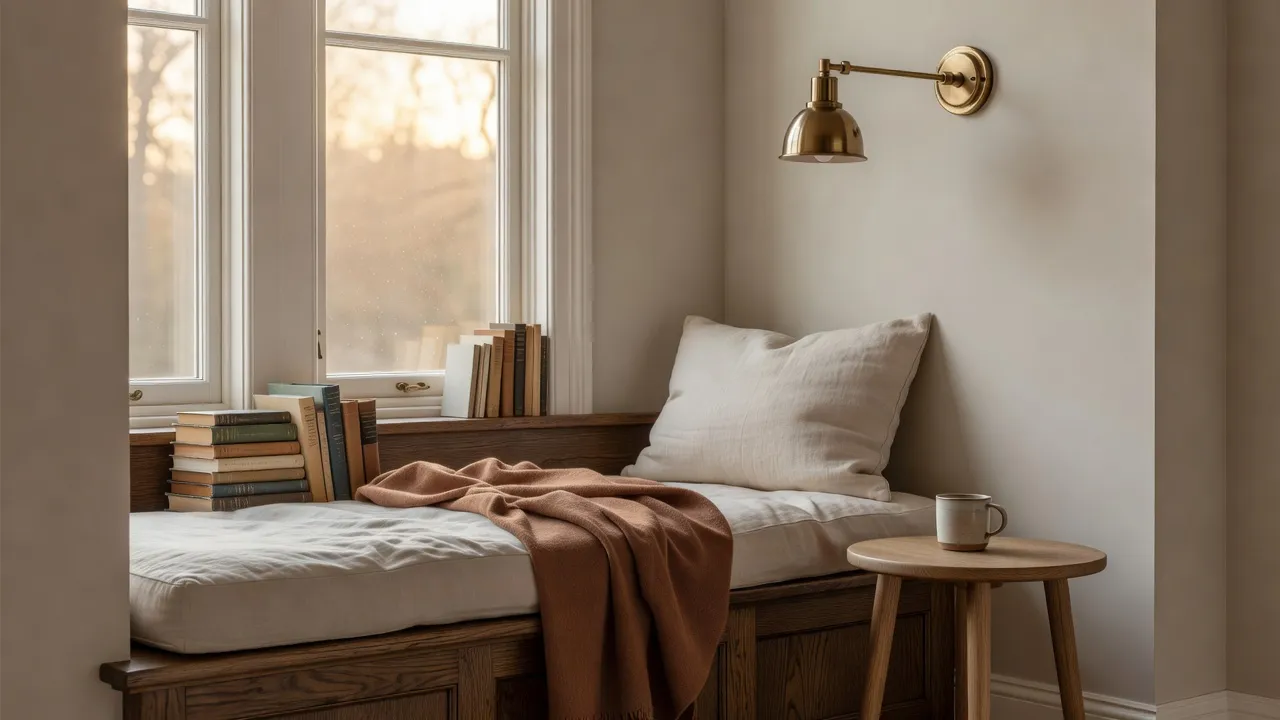
Where Should I Put a Reading Nook?
You do not need extra square footage. Walk through your home and look for an area that is already slightly out of the way, with at least one wall to lean against. Good candidates include:
- A window. A bay window or a deep sill is the classic spot, because it gives daylight and a view to rest your eyes on.
- A bedroom corner. An armchair in the corner of a bedroom is easy to set up and keeps books close to where you sleep.
- An alcove or recess. A gap beside a chimney breast or a shallow recess can hold a built-in seat and shelves.
- The landing or hallway. A wide landing with a window often has space for a chair and a small shelf. Our hallway design guide shows how to use these in-between areas.
- Under a sloped ceiling. The low area under a roof slope is hard to use for anything else, which makes it ideal for a built-in bench. See attic design for more ideas.
Avoid spots next to a television, a busy doorway or a loud appliance. A nook works because it is calm, so choose the quietest corner you have.
What Are the Best Layouts for a Small Reading Nook?
Most nooks follow one of three layouts. Pick the one that matches the space you found.
The window seat
A bench built into a window recess, with a thick cushion, a few pillows and storage drawers or a lid underneath. It is the most inviting version, and it adds seating without taking floor space. If you cannot build one, a narrow upholstered bench or a daybed under the window gives a similar effect.
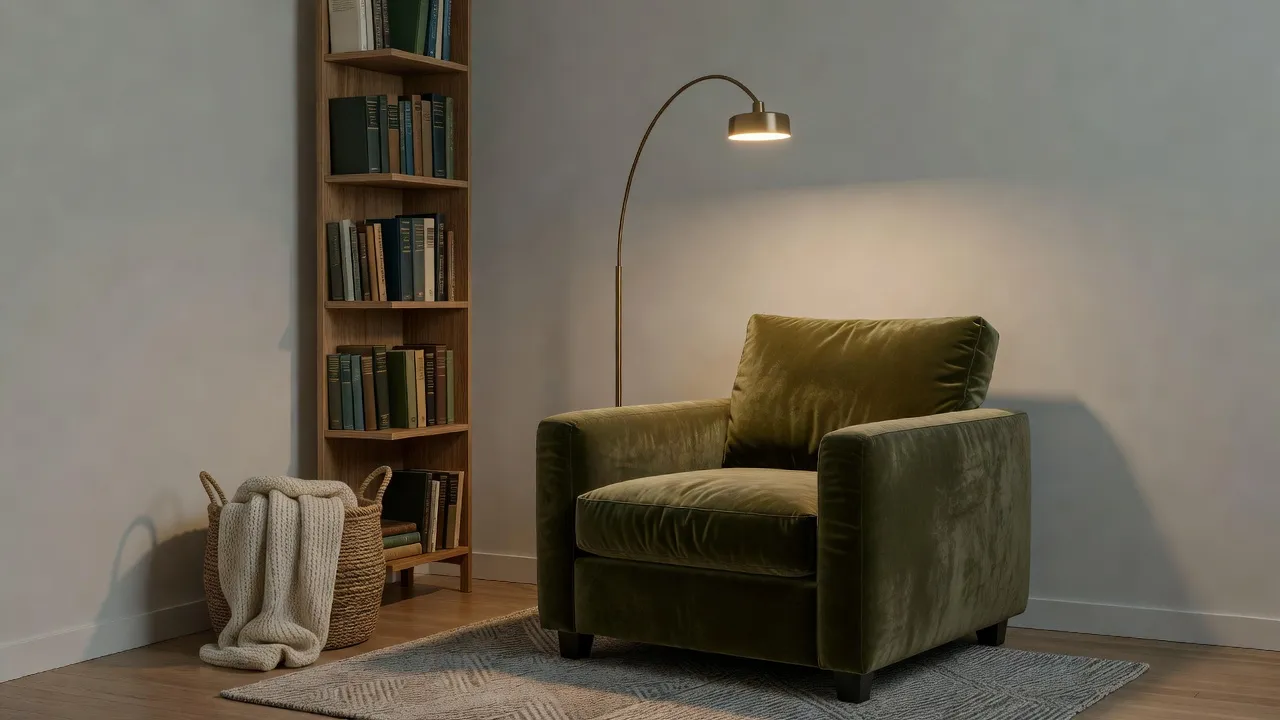
The armchair corner
One comfortable chair, a floor lamp, a small side table and a narrow bookcase. This is the easiest layout to try in a bedroom or living room, because every piece is freestanding and can move with you. Angle the chair slightly toward the room rather than pushing it flat against the wall, and add a small rug to mark the area.
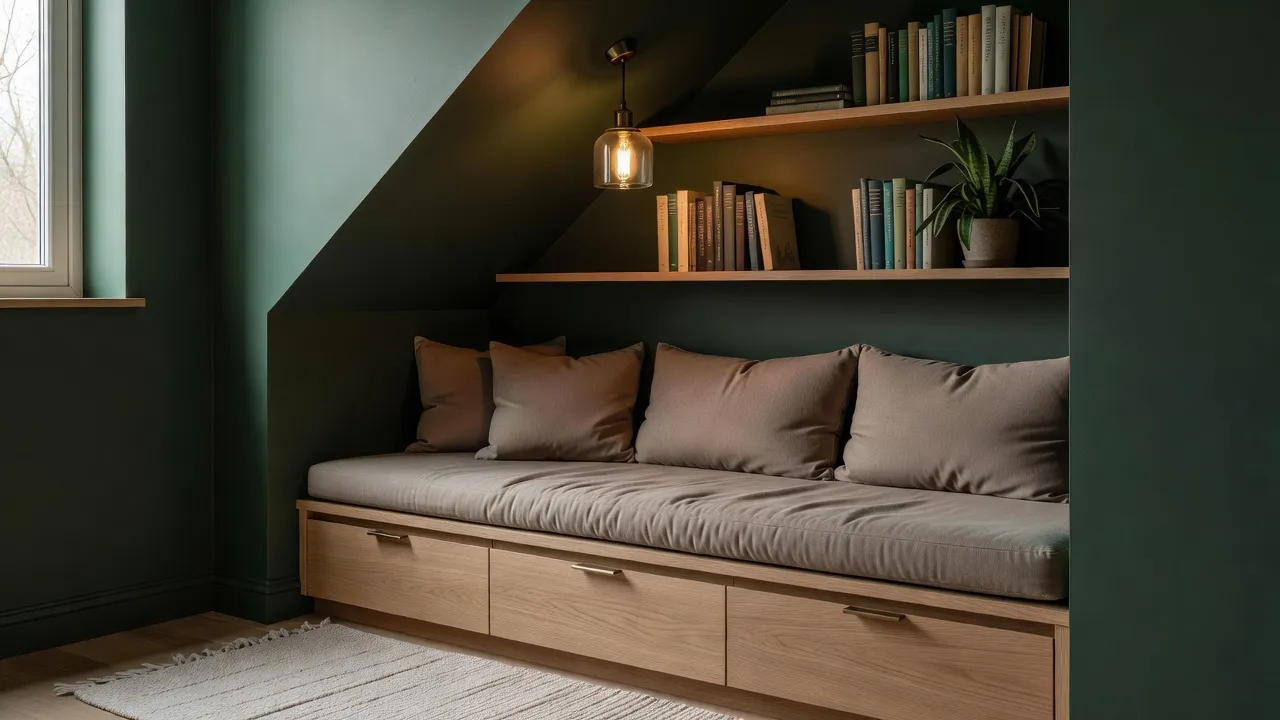
The built-in bench
A fitted bench with drawers below and a pair of shelves above is the best use of an awkward recess or a sloped ceiling. It is a bigger project, so preview it first and check the measurements with a carpenter. Painting the walls and the sloped surface in one deeper colour makes the space feel intentional and snug.
How Do I Choose Seating You Will Actually Use?
A nook only works if you want to stay in it for an hour. Comfort comes first, so test the proportions before the looks.
- Back support. A chair with a supportive back, or a bench with pillows against the wall, is easier on the shoulders than a flat seat.
- Seat depth. Deep seats suit curling up with your legs tucked in. Shallower seats suit sitting upright. Sit in a chair at a shop for a few minutes if you can.
- A place for your feet. A small ottoman, a pouf or a footstool lets you stretch out without crowding the corner.
- Washable fabrics. A removable cushion cover or a tightly woven fabric copes better with daily use than a delicate one.
If you are choosing between larger pieces, the measuring tips in our guide to choosing a sofa also apply to armchairs and benches.
What Lighting Works Best for a Reading Nook?
Good light protects your eyes and sets the mood. Plan two sources: daylight for the day and a lamp for the evening.
- Daylight. Place the seat so the window light falls across the page from the side rather than straight into your eyes. Sheer curtains soften harsh sun.
- A task lamp. A floor lamp with an arc, a swing-arm wall lamp or a small table lamp should shine over your shoulder onto the book. A warm bulb is easier to relax under than a cool one.
- A dimmer or a low glow. Where possible, choose a lamp you can dim, and add a small secondary light such as a picture light or a glass pendant for ambience.
For more on layering light in a room, read our guide to AI lighting design.
See a Nook in Your Own Corner
Upload a photo of the corner, window or recess you have in mind and try a window seat, an armchair or a built-in bench. Compare the versions in seconds before you buy or build anything.


How Do I Store Books Without Cluttering the Nook?
You only need the next few books close by. A narrow bookcase, one or two floating shelves, a small stack on the side table or a basket beside the chair is enough. If you own many books, keep the main collection elsewhere and rotate a handful into the nook. Our guides to styling a bookshelf and designing a home library cover larger collections.
Which Colours and Textures Make a Nook Feel Cozy?
Small spaces usually feel best when they are slightly enclosed. A few approaches:
- Go deeper. A darker wall colour, such as forest green, navy or warm terracotta, wraps the nook and sets it apart from the rest of the room.
- Layer textures. Linen, wool, velvet and wood add warmth, so the nook feels soft even in a plain room.
- Add a rug. A small rug defines the area and makes bare feet happy. See our rug visualizer guide for sizing.
- Keep the palette short. Two or three colours plus wood tones are enough. Too many patterns make a small area feel busy.
How Can I Preview a Reading Nook With AI?
It is hard to judge a nook from a sketch, and the cost of a built-in bench or a new chair is easy to underestimate. DecorAI lets you test the idea on a photo of the space first.
- Photograph the spot. Stand back far enough to see the window, the wall and some floor, keep the camera level and use daylight. Our photo guide for AI design explains how.
- Try styles and colours. Choose the room type and a style, then compare two or three versions to see how a darker wall or a different fabric reads. DecorAI offers 60+ interior design styles and 40+ colour schemes.
- Edit only the nook. Use the Inpainting editor to paint over the corner and describe what should be there, such as a window seat with a linen cushion. The rest of the photo stays the same.
- Test a specific chair. If you have an armchair in mind, Furniture Import places an item from a product photo into your room.
If the nook is in a bedroom, see AI Bedroom Design to restyle the whole room around it. Treat every result as a visual concept rather than a measured plan: a preview helps you judge colour, style and proportion, but you should still measure the space, and ask a carpenter before you build anything fixed.
What Mistakes Should I Avoid?
- No good light. A pretty chair in a dim corner will not be used. Add a lamp before anything else.
- An uncomfortable seat. If it is hard to sit in for twenty minutes, it is not a nook.
- Nowhere to put a cup. A tiny side table or a wide shelf avoids a balancing act.
- Overfilling the corner. A chair, a light, a table and a shelf are enough. More makes it a storage corner.
- Blocking the way. Keep a clear path past the nook, especially on a landing or in a hallway.
Reading Nook FAQ
How much space do I need for a reading nook?
A small armchair, a side table and a floor lamp can fit in a corner of about three feet by three feet (roughly 90 by 90 cm), although a bit more space feels more relaxed. A window seat needs the depth of the recess.
What do I need for a reading nook?
A comfortable seat, good lighting, a surface for a drink and somewhere to keep a few books. Add a throw and a rug if you want it to feel cozy.
Can I make a reading nook in a rental?
Yes. A freestanding armchair, a floor lamp, a small shelf and a rug need no tools and move with you. Avoid fixed changes unless your landlord agrees.
Can AI help me design a reading nook?
Yes. DecorAI takes a photo of your actual room and generates redesign concepts in different styles, so you can compare seating, colours and lighting before you buy. It is a visual preview, not a measured plan.
Is it free to try DecorAI on my room?
DecorAI offers three free generations per day without requiring an account or credit card. Free generations are unlocked by watching a short rewarded video advertisement.
Conclusion
A reading nook needs a quiet spot, a seat you want to sit in, a lamp over your shoulder, a place for a mug and a few books within reach. A window seat, an armchair corner or a built-in bench can each do the job, depending on the space you have. Before you buy or build, upload a photo of the corner to DecorAI, compare two or three directions and keep the one you would sit in tonight. For more ideas, explore the full DecorAI feature directory.
Visualize Your Dream Home Instantly
Don't just read about it. Experience the power of AI interior design with DecorAI's free tool.
Start Designing for FreeWritten by
DecorAI Team
Editorial Team
Related Articles
AI Powder Room Design: How to Make a Tiny Half Bath Feel Bold, Not Boxed In
9 min read
AI Dorm Room Design: How to Style a Small Shared Space Without Breaking the Rules
9 min read
AI Studio Apartment Design: How to Zone, Furnish and Style One Room That Does Everything
9 min read