How to Choose a Sofa for Your Living Room: Size, Fabric, Shape and a Preview Before You Buy
A practical guide to choosing a sofa: measure the room, pick the right size and shape, compare fabrics for your household, check comfort and construction, and preview a sofa on your own living room photo with AI.
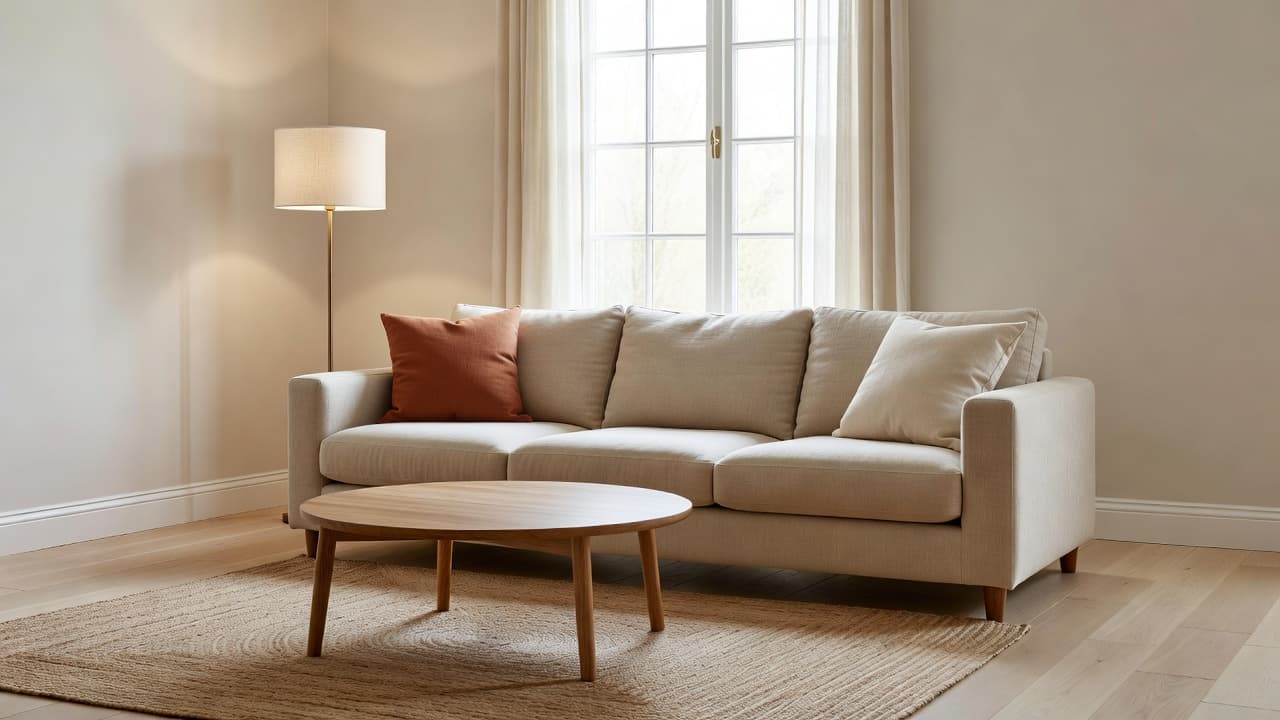
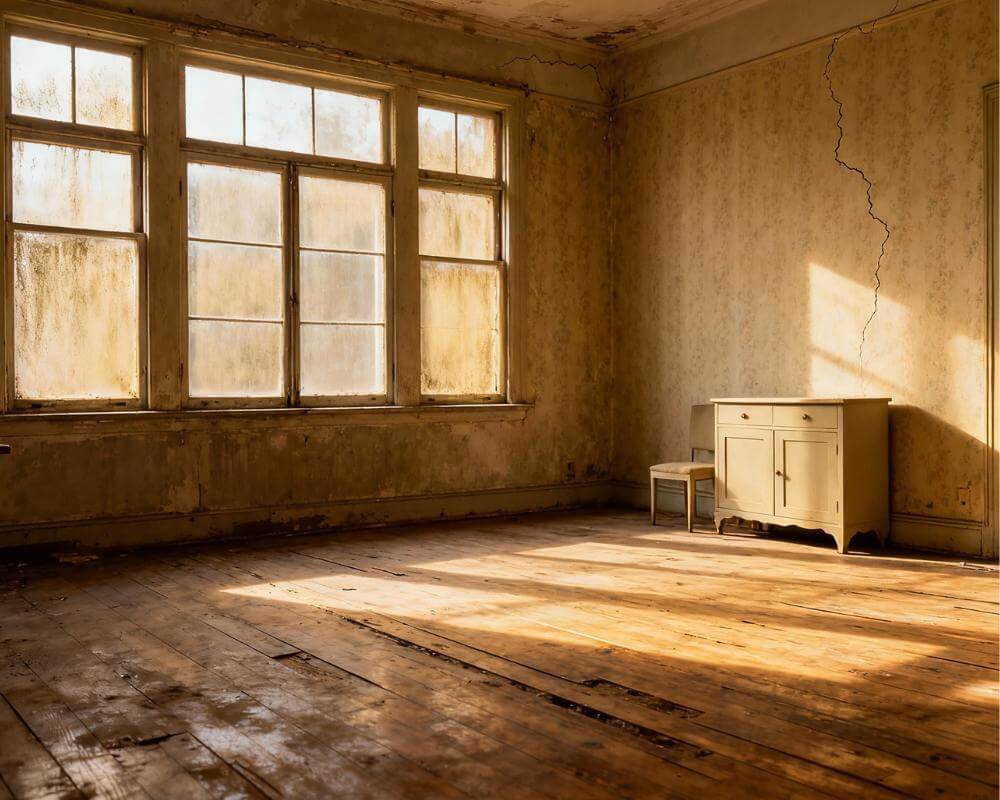
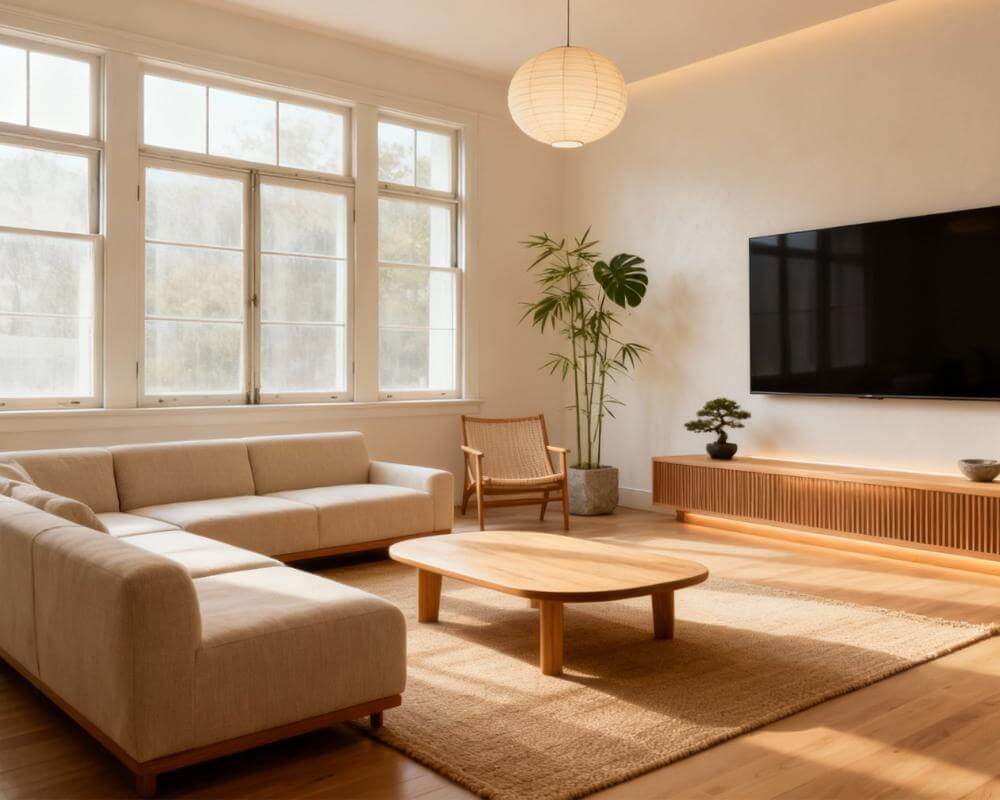
A sofa is the largest and most expensive thing most people put in a living room, and it is surprisingly easy to get wrong: too big to walk around, too deep to sit in comfortably, or in a fabric that looks tired after a year. Choosing a sofa goes best when you decide in a fixed order: the space it has to fit, the shape that suits how you live, the fabric that survives your household, and only then the colour and style. DecorAI is an AI interior design app that lets users transform photos of existing rooms into realistic redesign concepts, which also makes it a handy way to see a candidate sofa in your own room before you order it.
This guide follows that order, with practical rules of thumb you can check with a tape measure, and ends with a simple way to preview your shortlist on a photo of your actual living room.
Key Takeaways
- Measure first, browse second. Record the wall length, the walkways around the sofa and every doorway, stairwell and corner the sofa must pass through on delivery day.
- Choose the shape for how you sit. A standard sofa suits conversation, a sectional suits lounging and movie nights, and a loveseat or apartment sofa suits small rooms.
- Fabric is a lifestyle decision. Tightly woven, textured and performance-style fabrics hide wear better than delicate velvets and loose weaves when pets or children are around.
- Sit on it before you buy. Seat depth, seat height and cushion firmness decide whether a sofa is comfortable for you, and photos cannot show that.
- Preview the look. DecorAI generates designs from your own room photo in usually under 10 seconds, and offers three free generations per day without requiring an account or credit card.
- Try DecorAI on a photo of your living room.
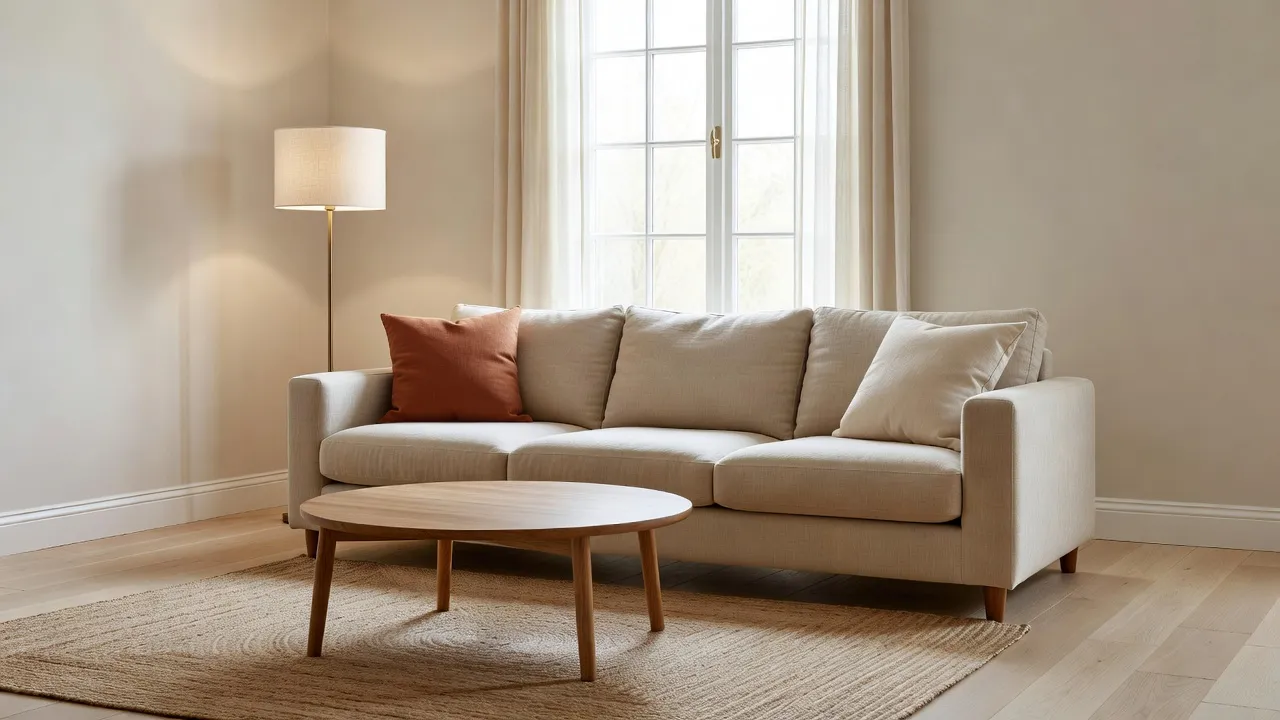
How Do I Measure for a Sofa?
Start with the room, not the catalogue. Measure the wall where the sofa will sit, then the space around it. Sketch the layout on paper or in a note, and mark windows, doors, radiators, vents and anything that swings open.
Three rules of thumb help you test a size before you fall for it:
- Leave walking space. Aim for roughly 30 to 36 inches (75 to 90 cm) for main walkways so nobody has to squeeze past the arm of the sofa.
- Keep the coffee table within reach. About 14 to 18 inches (35 to 45 cm) between sofa and coffee table is a common comfortable gap.
- Do not fill the whole wall. A sofa that is a little shorter than the wall, with space or a side table at each end, looks intentional. A sofa wedged wall to wall looks like it was built in by mistake.
Then measure the delivery route: front door, hallway, stairs, lift, turns and the living room doorway. Compare the sofa's width, depth and height, and its diagonal depth if it will be tilted through a door, with the narrowest point on the route. Many returns happen because a sofa could not get into the room. If you want a deeper walk-through of arranging the whole room, AI room layout planner explains how to test layouts before moving anything.
Which Sofa Shape Suits My Living Room?
The best shape depends on the room and on how you actually use it. A quick way to decide is to picture a normal evening.
- Standard three-seat sofa. The flexible default. It works against a wall or floating in an open plan room, and pairs easily with armchairs for conversation.
- Loveseat or apartment sofa. Shorter and often lighter in scale, ideal for a small living room, a second seating area or a bedroom sitting corner.
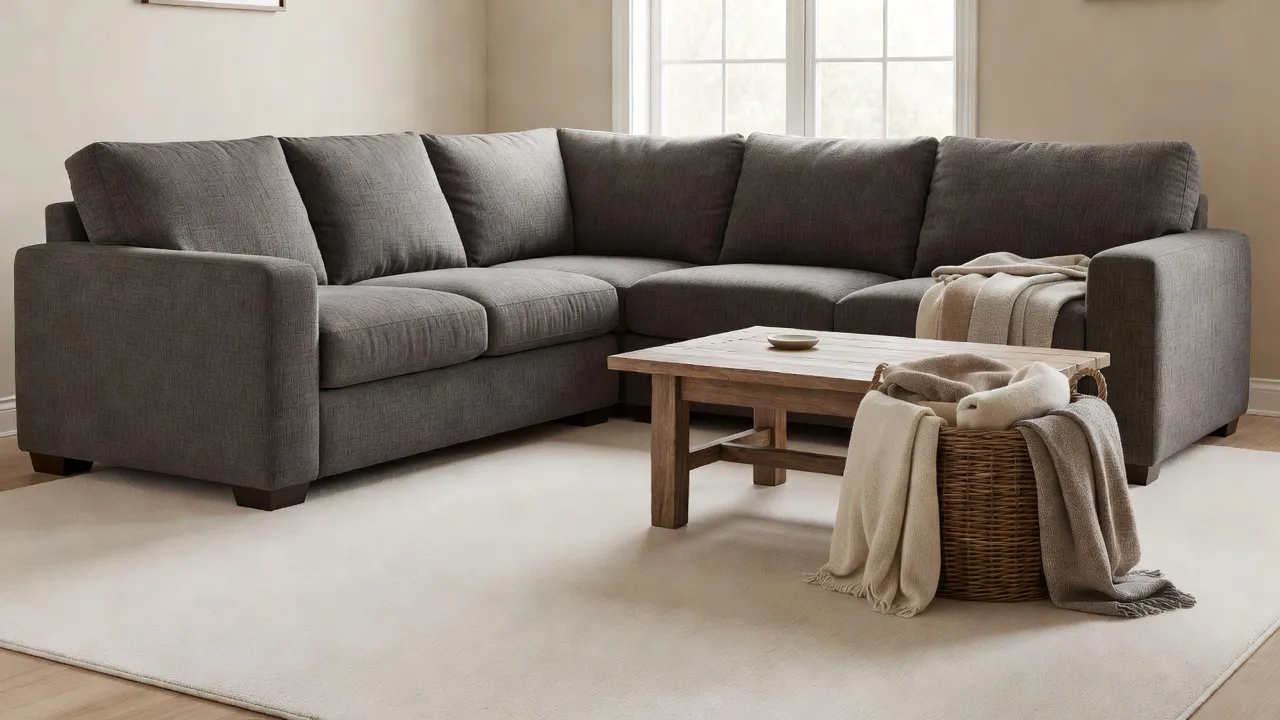
- Sectional (L-shaped). Best for lounging, movie nights and larger households, and it can define a zone in an open plan room. It needs more floor space and has a fixed layout.
- Modular sofa. Separate pieces that you can rearrange, add to or move to a new home. Useful when you do not know what the next living room will look like.
- Sleeper sofa. A good fit for guests, but check how thick the mattress is and whether the seating is still comfortable day to day.
Visual weight matters as much as length. A sofa with slim arms and raised legs lets light and floor show underneath, so it feels lighter in a small room. A deep, low sofa with thick arms feels cosy and generous but takes visual space. If your room is compact, our guide to AI interior design for small spaces has more ideas for keeping furniture in proportion.
What Is the Best Sofa Fabric for My Household?
Fabric changes how a sofa looks, feels and ages, so choose it for the life it will live. There is no single best fabric, only the best match for your household.
- Textured weaves and bouclé. The texture hides marks and gives depth, which suits busy households. Check that loops cannot snag easily if you have pets with claws.
- Performance fabrics. Designed to resist stains and wear, and often with removable or washable covers. A practical choice for children and pets.
- Linen and cotton blends. Soft, breathable and relaxed, but they crease and mark more easily. Slipcovered versions let you wash the whole cover.
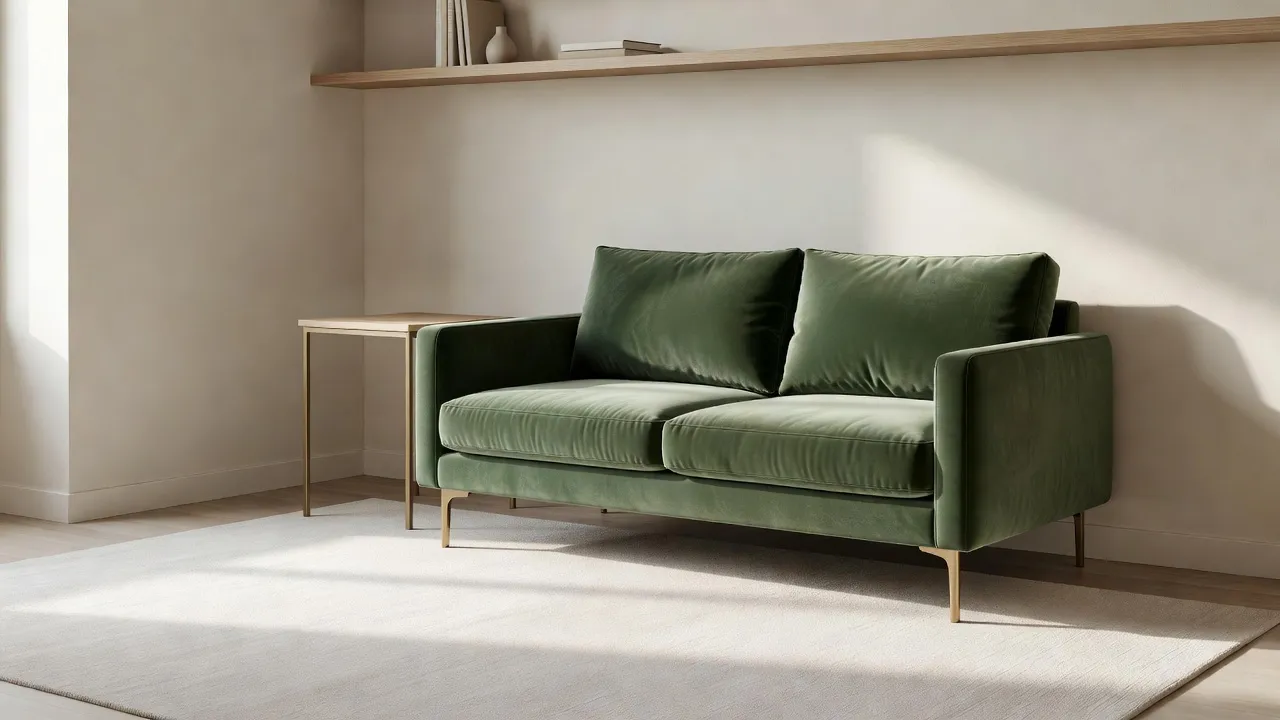
- Velvet. Rich and elegant, and the shade shifts with the light. Some velvets are sturdy, while others show pressure marks, so read the care label.
- Leather. Wipes clean and develops a patina, but it can feel cool in winter and sticky in heat, and it can scratch under claws.
Ask for a fabric swatch and look at it in your own light at different times of day. A colour that looks warm in a shop can turn grey in a north-facing room. Keep the fabric pattern in proportion with the room: a large pattern on a big sofa needs a calm backdrop, while a plain sofa gives you freedom to add colour with cushions and a throw. If you have animals, pet-friendly interior design covers fabrics and layouts that cope well with them.
How Do I Check Comfort and Quality?
A sofa you cannot sit on comfortably is an expensive mistake. Go and sit on it, ideally for several minutes, in the position you actually use at home: upright with a laptop, curled up with your legs under you, or stretched out for a nap.
- Seat depth. A deeper seat suits lounging, while a shallower seat is easier for upright sitting and for shorter people or anyone who finds it hard to stand up from a low, deep sofa.
- Seat height. Your feet should reach the floor comfortably, and getting up should not feel like effort.
- Cushion fill. Foam is firm and keeps its shape, feather and fibre blends feel soft but need plumping, and many sofas combine a foam core with a softer wrap.
- Frame and construction. Ask what the frame is made of, how the joints are built, and whether the sofa has solid legs and a stable base. A heavy, solid frame is generally a good sign, and a lot of creaking or flexing in the shop is not.
- Back support. Lean back and check whether your head and neck are supported, or whether you need extra cushions.
If you cannot test the sofa in person, read the dimensions carefully, check the return policy, and ask about trial periods or sample fabrics. A generous return window is worth more than a small discount.
See a Sofa in Your Own Living Room
Upload a photo of your living room and try different sofa styles, colours and layouts in seconds. Compare the versions before you order or move anything.


How Do I Choose the Colour and Style?
Treat the sofa as the anchor of the room and choose its colour to last. Neutral shades such as oatmeal, warm grey, stone or deep green are easy to restyle with cushions, throws and rugs as your taste changes. A bolder colour can be wonderful, but it works best when it is the one strong element in the room and the walls, rug and curtains stay calm around it.
Match the style to the rest of the room. Slim arms and tapered legs read as mid-century or Scandinavian, rolled arms and a skirted base read as traditional, and a low boxy profile reads as modern or Japandi. If you are still deciding on the overall direction, how to choose an interior design style can help you narrow it down before you shop.
Think about the rug and coffee table at the same time. The front legs of the sofa should usually sit on the rug, or the rug should sit just in front of the sofa, so the seating group reads as one zone. Our rug visualizer guide explains how to test sizes and patterns.
How Can I Preview a Sofa With AI Before I Buy?
A product photo shows a sofa in a showroom, not in your room with your floor, light and walls. DecorAI lets you check the bigger decisions on a photo of your own living room first.
- Photograph the room. Stand back far enough to see the whole seating wall, keep the camera level and use daylight. Our photo guide for AI design explains how.
- Try a style on the whole room. Pick a living room and a style and compare two or three versions. DecorAI offers 60+ interior design styles and 40+ colour schemes, so you can see how different sofa shapes and shades sit in different palettes.
- Test a specific sofa. If you have a candidate in mind, Furniture Import places an item from a product photo into your room with matching scale and lighting.
- Change only the sofa area. Use the Inpainting editor to paint over the existing sofa, describe the replacement, and keep the rest of the photo as it was.
- Check it fits the whole room. The AI Living Room Design page shows how DecorAI restyles the whole space around your seating.
Treat every result as a visual concept rather than a measured plan. AI previews help you judge colour, style and proportion, but you should still measure the wall, the walkways and the delivery route, and confirm the dimensions of the real sofa. If you plan to keep some of your current pieces, designing around existing furniture explains how.
What Mistakes Should I Avoid When Buying a Sofa?
- Buying for the showroom. Showrooms are large, so a sofa that looks modest there can overwhelm a normal living room. Always compare with your own measurements.
- Forgetting the delivery route. A sofa that cannot pass the stairs or the doorway will not reach your living room, so measure every turn.
- Choosing by looks alone. Seat depth, firmness and frame quality decide whether you still like the sofa in two years.
- Matching the colour to a trend. A very trendy shade can date quickly. Choose a lasting base colour and put the trend in cushions.
- Ignoring the rest of the room. The rug, coffee table, lighting and walls all affect how a sofa looks, so plan them together.
Sofa Buying FAQ
How do I choose the right size sofa for my living room?
Measure the wall and the walkways, leave roughly 30 to 36 inches (75 to 90 cm) for main paths, and choose a sofa a little shorter than the wall. Check the delivery route as well as the room.
Is a sectional better than a standard sofa?
A sectional suits lounging and larger households but needs more floor space. A standard sofa is more flexible in smaller rooms and works well with armchairs.
What is the most durable sofa fabric for kids and pets?
Tightly woven, textured and performance-style fabrics tend to hide wear and clean more easily than delicate velvets or loose weaves. Always read the care label and ask for a swatch.
Can AI show me how a sofa will look in my room?
Yes. DecorAI takes a photo of your actual living room and generates redesign concepts, and Furniture Import can place a product from a photo into your room. It is a visual preview, not a measured plan.
Is it free to try DecorAI on my living room?
DecorAI offers three free generations per day without requiring an account or credit card. Free generations are unlocked by watching a short rewarded video advertisement.
Conclusion
Choosing a sofa is easier when you decide in order: measure the room and the route, pick the shape for how you sit, choose a fabric that fits your household, test the comfort in person, and only then fall in love with a colour. When you want to see a candidate in your own space, upload a photo to DecorAI, compare a few directions, and keep the one that feels right. For more room-by-room inspiration, explore our living room design ideas.
Visualize Your Dream Home Instantly
Don't just read about it. Experience the power of AI interior design with DecorAI's free tool.
Start Designing for FreeWritten by
DecorAI Team
Editorial Team