AI Pet-Friendly Interior Design: Beautiful Homes that Work for Dogs and Cats
Design a pet-friendly home without sacrificing style. Use AI to test durable materials, layouts, and storage that work for dogs, cats, and the humans who love them.
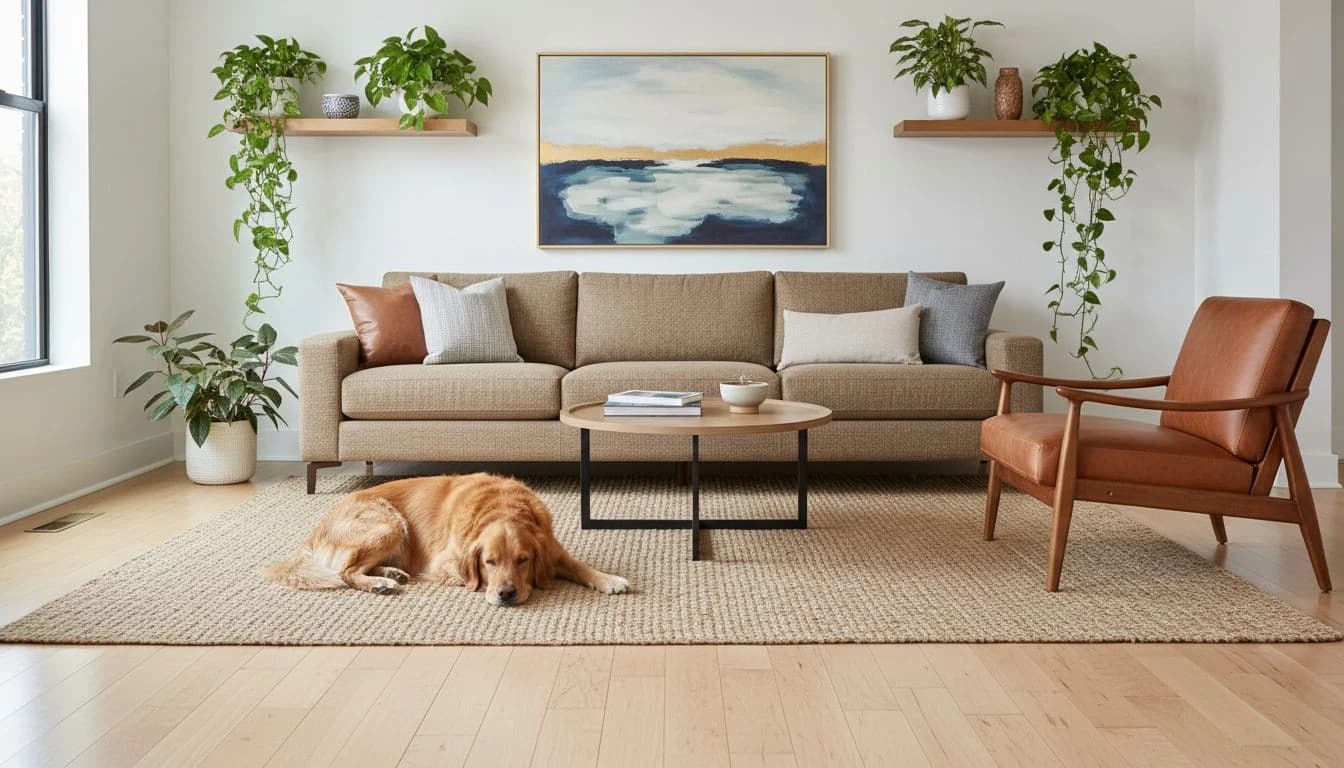

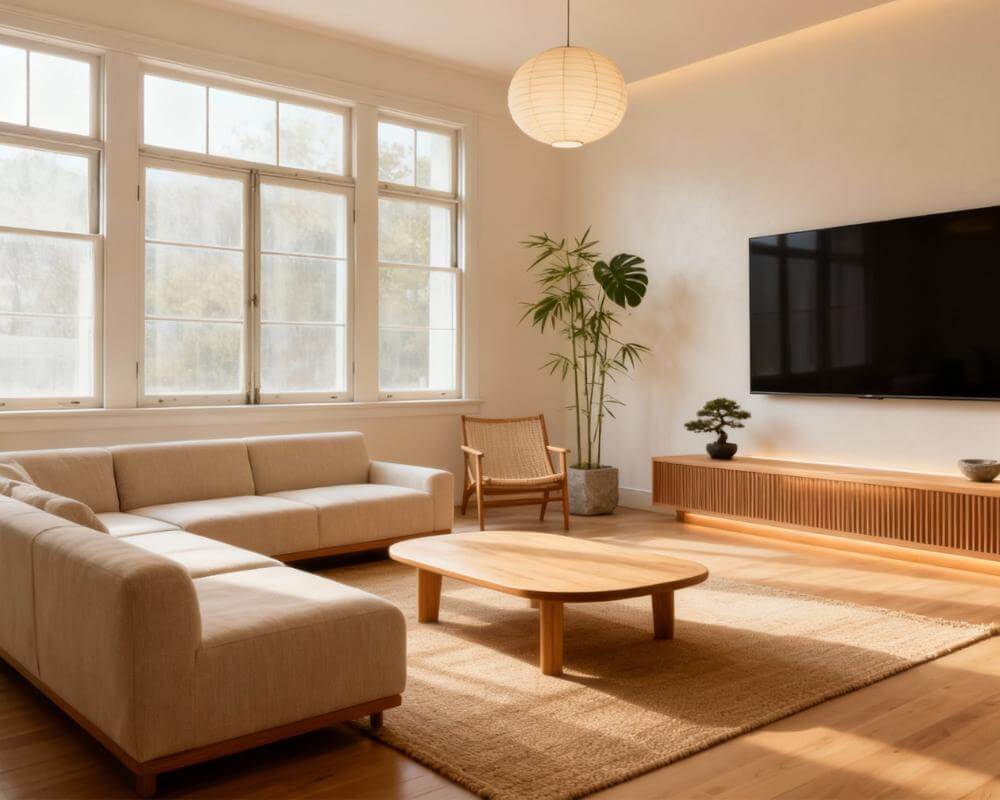
A pet-friendly home used to mean visible compromise — a plastic-covered sofa, a stained rug, and a chewed corner on the coffee table. That era is over. AI pet-friendly interior design lets you test durable materials, smart layouts, and hidden pet zones on a photo of your real room before you commit to a single purchase. The result is a home that looks beautiful for humans and works honestly for the dogs and cats who live there.
This guide explains how DecorAI - AI Interior Design helps pet owners make better material, layout, and storage decisions, and how to design rooms that survive claws, fur, and water bowls without looking like a kennel. Whether you have a 70-pound retriever, a curious cat, a senior dog with mobility needs, or all three at once, the principles are the same — and AI helps you visualize them before you spend.
Why Pet-Friendly Design Is Mainstream Now
Pets are no longer an afterthought in interior design. The majority of households now include at least one dog or cat, and the most popular furniture lines explicitly advertise performance fabrics, durable finishes, and scratch resistance. The mainstream design conversation has caught up to what pet owners always knew: a home should work for everyone who lives in it, including the four-legged residents.
That cultural shift also changes the AI design conversation. When you generate a room in DecorAI, you can specify "pet-friendly" as a design constraint and get directions that prioritize the right materials, edges, and layouts. The room still looks like a styled home, not a pet store, because the design choices are doing quiet structural work rather than shouting "pet zone" at every glance.
Materials That Survive Claws, Fur, and Spills
The single biggest decision in pet-friendly design is fabric. Performance fabrics — woven from solution-dyed fibers like polyester blends and acrylic — have transformed what is possible. They look like linen, feel soft, and survive muddy paws, accident cleanups, and weekly vacuuming without pilling. They are now the default recommendation for sofas, sectionals, and dining chairs in pet households.
The same logic applies to rugs. Indoor-outdoor rugs, flatweave wool, and tightly woven jute hold up beautifully. Shag rugs, deep-pile cotton, and high-loop synthetics quickly become fur magnets and snag traps. Hard surfaces win in busy zones: engineered hardwood, luxury vinyl plank, and porcelain tile all handle paws and water bowls better than carpet ever will.
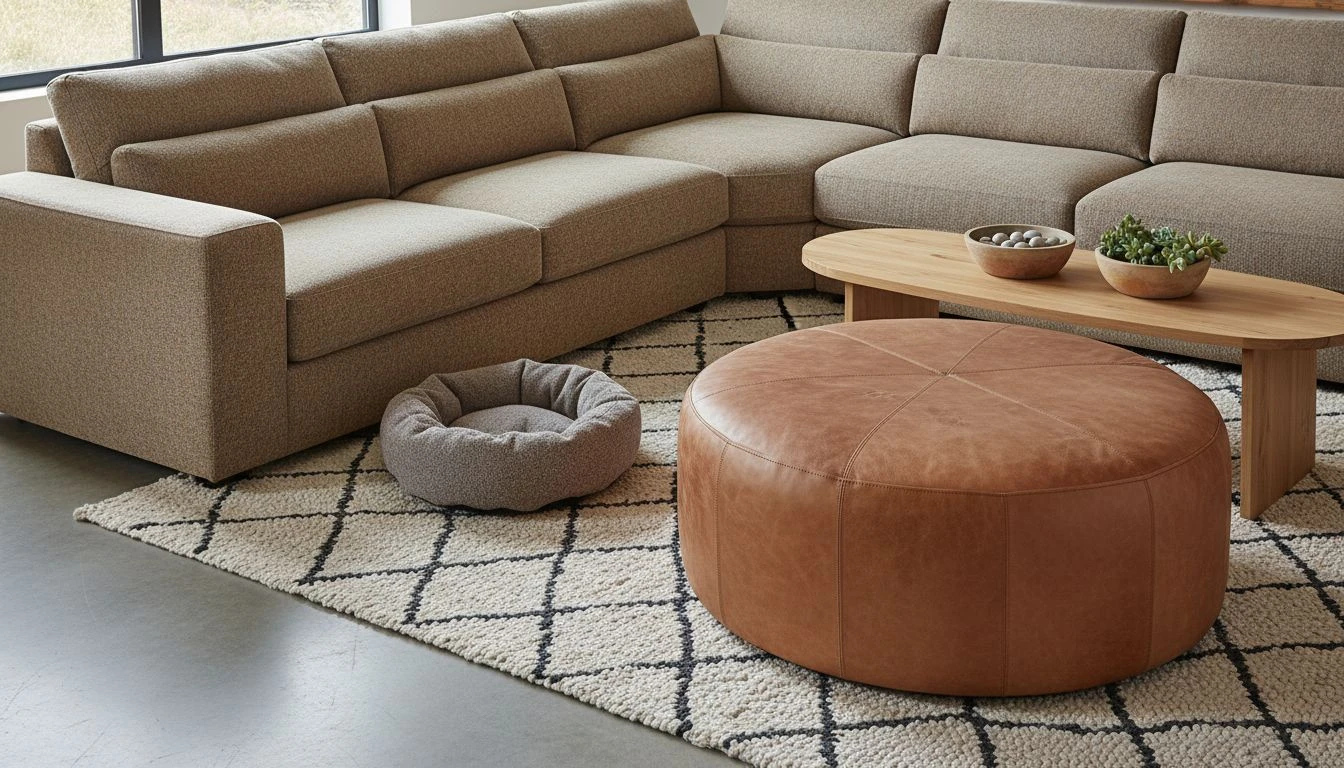
Hard furniture deserves the same scrutiny. Choose solid wood over veneer for coffee tables and consoles — scratches in solid wood develop into character, while veneer chips look like damage. Avoid sharp corners at dog-height; rounded edges read more modern and reduce vet visits. Trusted sources like The Spruce regularly publish pet-proof material guides that pair well with AI-generated visuals.
Layout Decisions That Reduce Daily Friction with Pets
The second-biggest pet-friendly design lever is layout. Most pet-household frustration comes from layout mismatch: the dog crate sits awkwardly in the corner of the living room, the litter box is in plain sight by the front door, or the food bowls live next to high-traffic walking lanes. AI makes these layout problems visible — and fixable — before they happen.
Three layout moves dramatically reduce daily friction. First, give pets a designated "home base" with sightlines to the family but slightly out of traffic — a corner of the living room, a sunny nook, or a built-in bed beneath a console. Second, place food and water bowls along a wall, not in the middle of a walking lane. Third, hide litter and waste zones inside furniture or behind cabinetry rather than leaving them visually exposed.
For the home overall, our AI room layout planner guide covers broader layout principles that apply equally well to pet households. The pet-friendly version simply adds three or four extra constraints to the same workflow.
Dog-First vs Cat-First Design Considerations
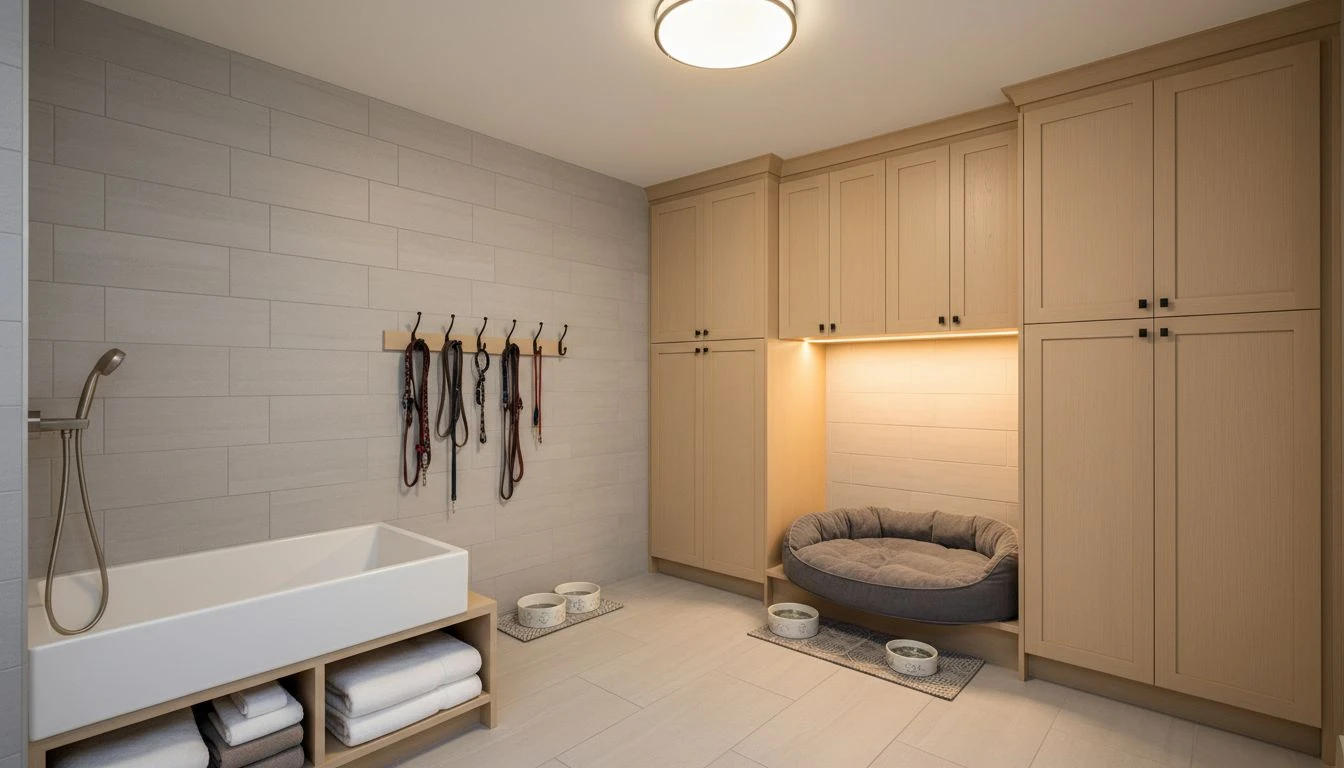
Dog-first design centers on durability, traffic management, and easy cleanup. A mudroom or entryway pet station is the highest-value upgrade in a dog household — a place to towel-dry muddy paws, hang leashes, and store food without dragging it through the kitchen. Built-in dog beds beneath consoles or stair landings give the dog a sightline-friendly spot without colonizing the living room.
Cat-first design is about vertical space, sunlight, and hidden waste zones. Cats want to climb, perch, and survey — wall-mounted shelves arranged as a climbing path, a window seat with a sunny cushion, or a tall, slim cat tree near a view solve most of that. Litter zones belong inside styled furniture: a console cabinet with a discreet side opening reads as a credenza, not a litter box. Publications like Better Homes & Gardens regularly cover this category of "stylish-but-functional" cat design.
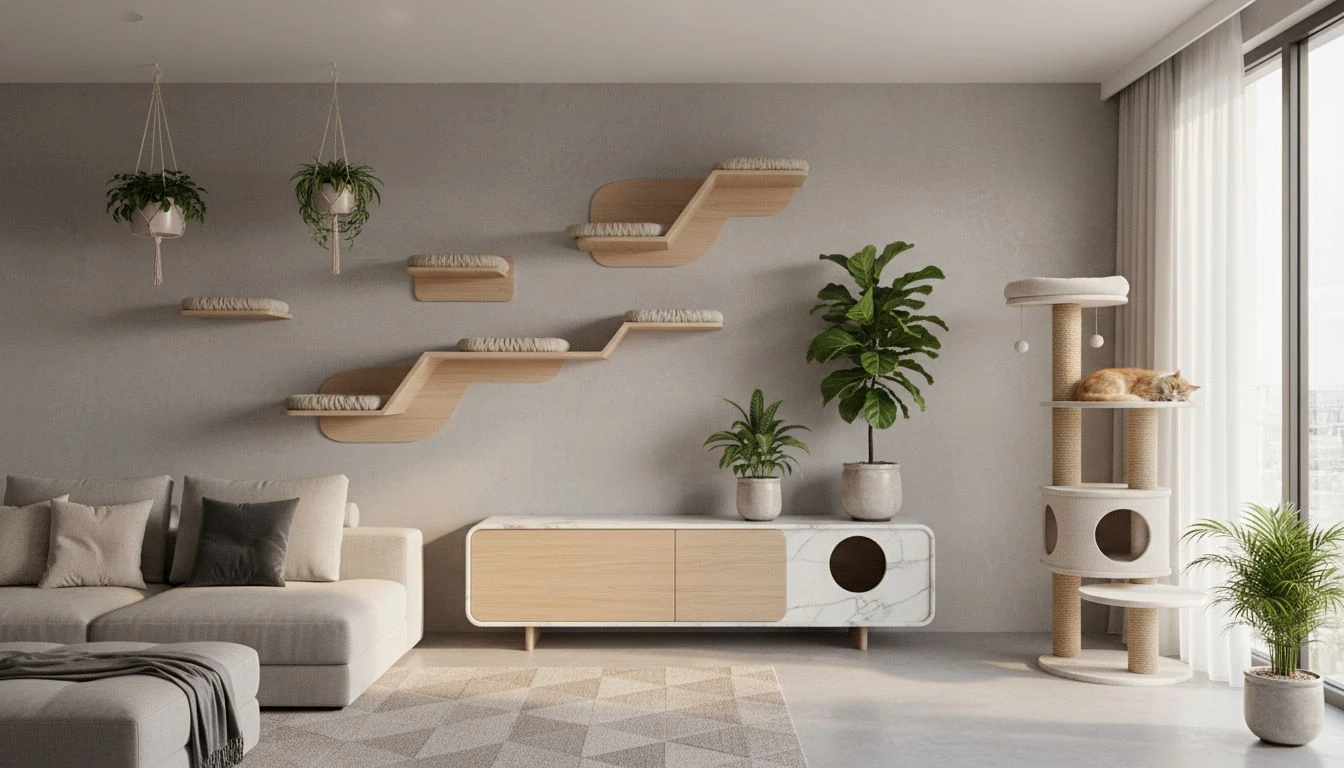
Multi-pet households need both. AI is especially helpful here because you can layer constraints in a single prompt — "pet-friendly living room with hidden litter cabinet, performance fabric sofa, low dog bed nook, and cat shelves on the far wall" — and see whether the resulting room still looks like a styled space rather than a compromised one.
Hidden Pet Zones: Feeding, Litter, and Toys
The fastest way to make a pet-friendly room look unstyled is to leave the pet infrastructure visible. The opposite is also true: well-designed hidden pet zones make a room read as intentional and calm, even with three pets in residence. Three categories deserve hiding.
Feeding stations work beautifully as a built-in pull-out drawer at the end of a kitchen island, with bowls recessed into the drawer face. Litter zones belong inside a styled cabinet with ventilation and a discreet side opening. Toy storage lives well in lidded baskets near the dog bed or under a console — toys are charming for the first five minutes of a visit and visually chaotic after that. AI helps you visualize each of these options before you spec the cabinet or buy the basket.
Pet-Friendly Bedroom and Quiet Zones
Bedrooms are the most personal pet zone in the home. Some households welcome pets onto the bed; others want a dedicated dog bed at the foot of it; others want a closed-door rule. All three are valid, and AI helps you visualize each version before you commit. Performance bedding in cotton percale or washable linen survives the inevitable paw prints. A low side bench gives older dogs a step-up without making the bed feel like a furniture playground.
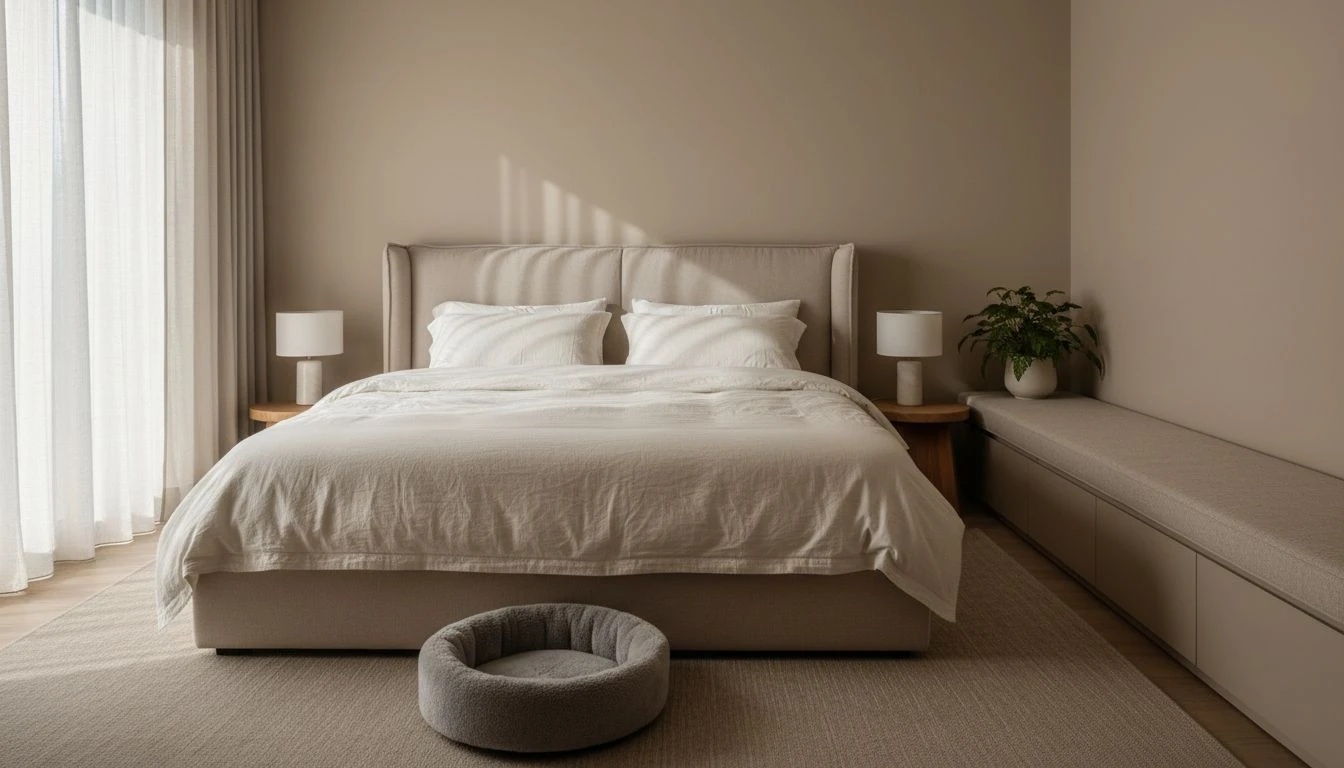
For broader bedroom planning that complements pet-friendly choices, our AI bedroom design guide covers layout, palette, and lighting principles that work hand-in-hand with the durable-material recommendations above.
AI-Tested Pet-Friendly Rooms — Real Examples
The best way to learn pet-friendly design is to generate several versions of the same room with different constraints. Try a living room with "two large dogs and one cat" as the prompt context. Generate again with "one senior dog with mobility needs." Generate again with "two indoor cats and no dogs." The materials, layout, and storage decisions shift in each version — and the differences teach you more than any single rule list.
That iterative workflow is exactly where DecorAI earns its place in a pet household. Instead of buying a sofa and hoping it survives, you preview the room with the sofa, see how the dog bed and rug interact, and adjust before the purchase. Our AI design ideas article is a useful companion for translating those visuals into actual shopping decisions.
FAQ: AI Pet-Friendly Interior Design
Are performance fabrics actually pet-proof?
They are not literally claw-proof, but they are dramatically more forgiving than traditional upholstery. Performance fabrics resist staining, shed fur easily, and clean up with mild soap and water. They are the right default for any pet-household sofa.
What is the best flooring for dogs?
Engineered hardwood, luxury vinyl plank, and porcelain tile all perform well. Pure solid hardwood scratches more easily; deep carpet traps fur and odor. The best choice depends on climate, budget, and how much paw traffic the floor will see.
Can AI help me design around a senior pet?
Yes. Add age and mobility constraints to your prompt — "senior dog, low steps, soft landing zones" — and AI will favor low platforms, padded rugs at landing points, and traffic patterns that avoid stairs and tight corners.
How do I hide the litter box without making the cat unhappy?
Use a ventilated cabinet with a side opening sized for your cat, placed in a quiet, low-traffic spot. Keep the cabinet at floor level so the cat does not have to jump in or out. AI is excellent for visualizing where this cabinet belongs in the room.
Are houseplants safe in a pet-friendly home?
Many common houseplants are toxic to dogs or cats. Use pet-safe options like spider plants, areca palms, and Boston ferns, or keep plants on high shelves that the cat cannot reach. Verify each plant against a vet-trusted source before bringing it home.
Design a Pet-Friendly Home That Still Looks Beautiful
Use DecorAI to test durable materials, hidden pet zones, and smart layouts on a photo of your real room. Beautiful for humans, honest for the pets who live there.
Try DecorAI Free

Visualize Your Dream Home Instantly
Don't just read about it. Experience the power of AI interior design with DecorAI's free tool.
Start Designing for FreeWritten by
DecorAI Team
Editorial Team