One Room, 10 AI Interior Styles: See the Same Space Completely Reimagined
We ran a single living room through ten different AI interior design styles — Scandinavian, Japandi, Modern Farmhouse, Industrial, Bohemian, Mid-Century Modern, Coastal, Minimalist, Art Deco, and Mediterranean — to show exactly what each style actually changes about a space, side by side.
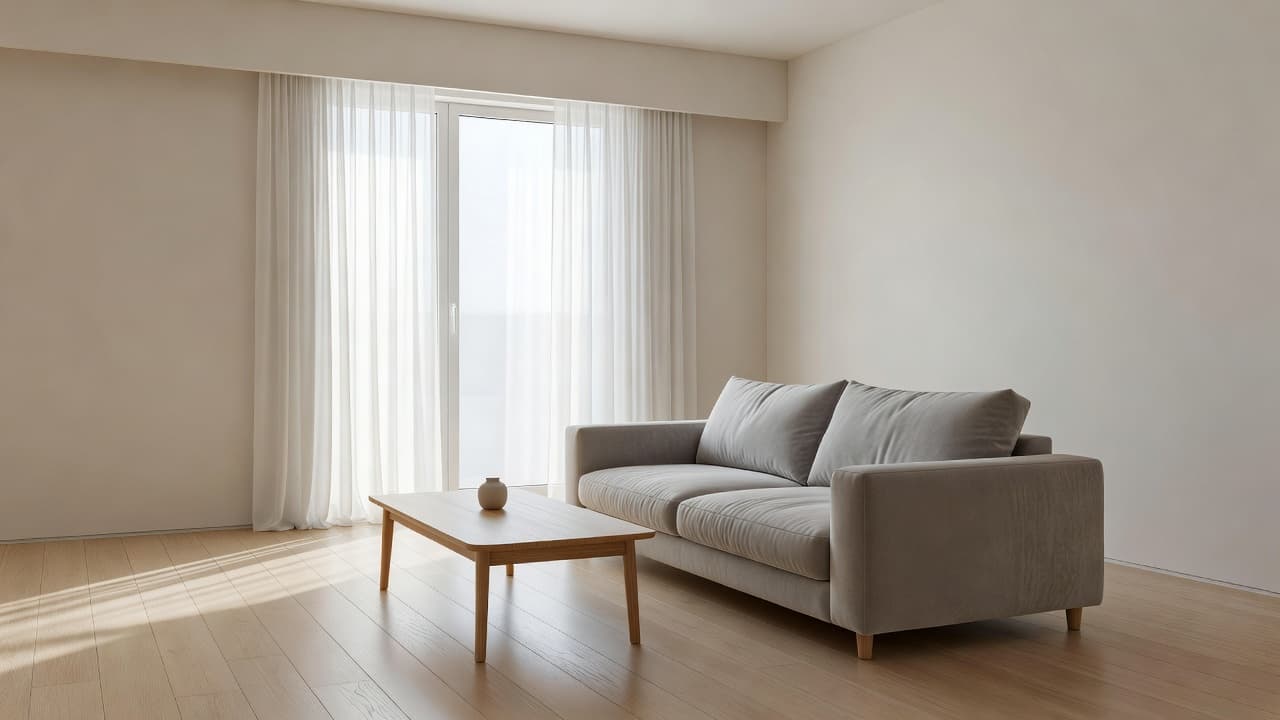
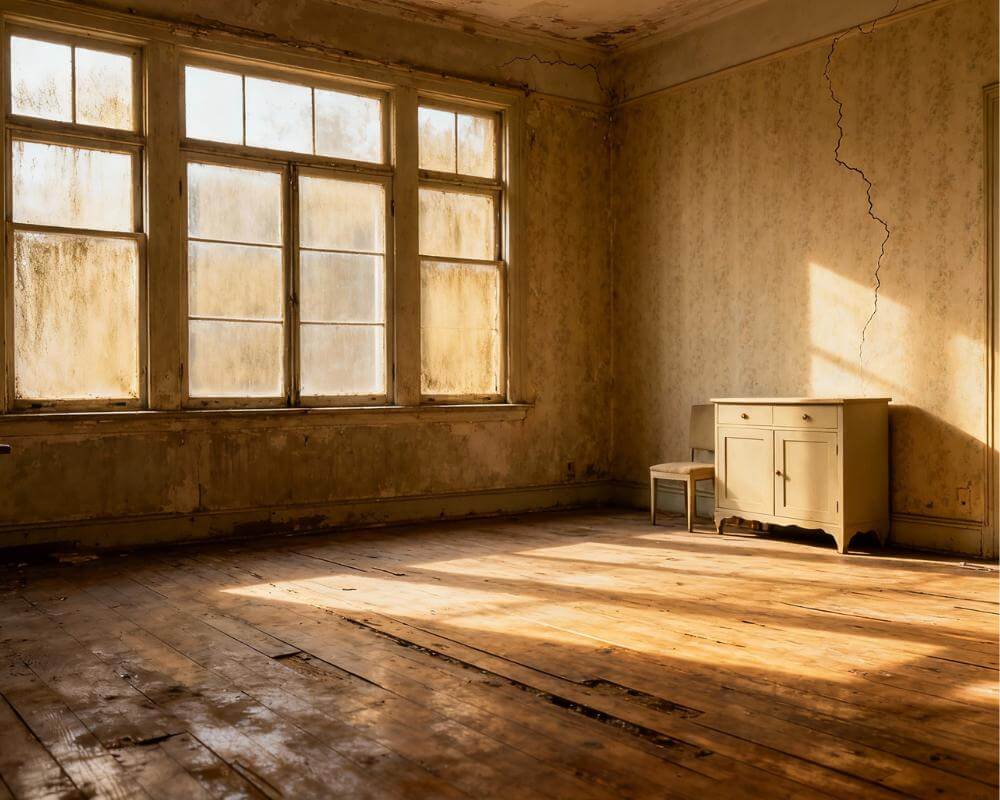
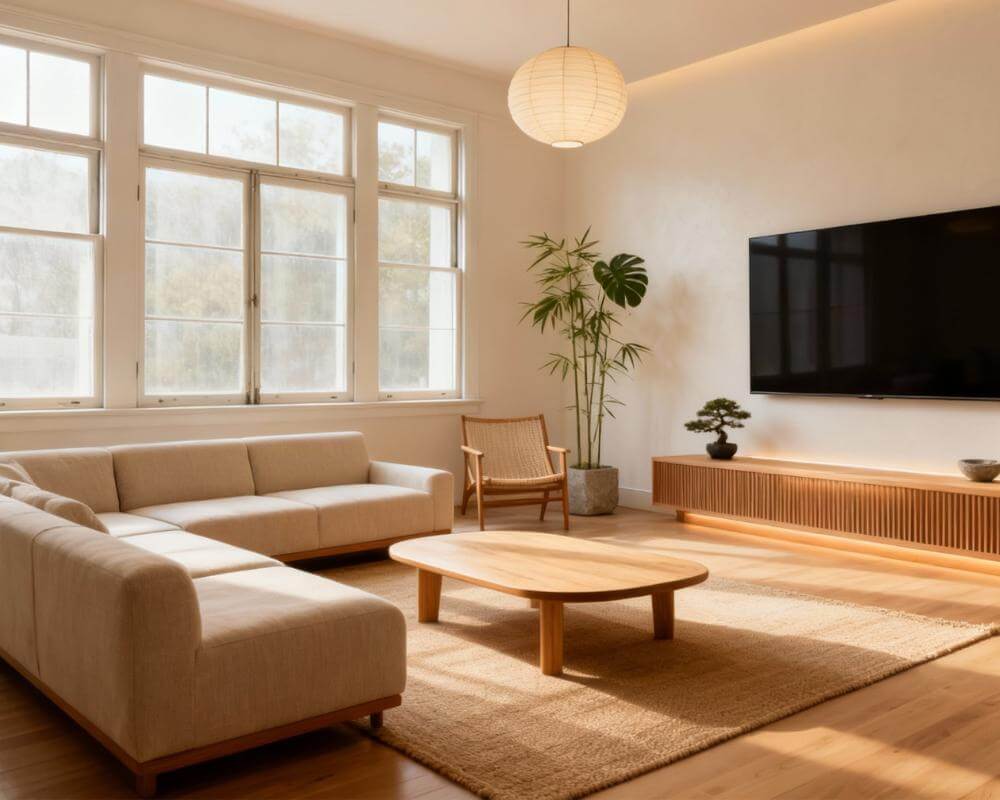
Pick a style from a list and it's just a word. See it applied to a real room and it's suddenly obvious whether it's right for you. DecorAI is an AI interior design app that lets users transform photos of existing rooms into realistic redesign concepts, and one of the more revealing ways to use it isn't picking a single style and committing — it's running the exact same room through several styles back to back. So we did that with one ordinary living room: same walls, same window, same layout, same lighting, run through ten distinct AI interior design styles. Nothing else changed except the style prompt.
What follows isn't a ranking — there's no "best" style here, only ten different, valid answers to the same room. It's a look at what each style actually does differently: which ones change the furniture silhouette, which change the color story, which change almost everything, and which leave more of the original room intact than you'd expect.
Key Takeaways
- The same room photo can carry very different styles — walls, windows and layout stay fixed, but furniture, color, material and mood change completely from one style prompt to the next.
- Some styles are close cousins (Scandinavian and Japandi, Coastal and Mediterranean) while others sit at opposite ends of the spectrum (Minimalist vs. Bohemian, Industrial vs. Art Deco).
- Comparing styles on your own room beats comparing them on inspiration photos, because inspiration photos are never your actual walls, window placement or light.
- This piece is a visual comparison, not a decision framework — for a step-by-step method to find which style fits you personally, see how to choose an interior design style.
- Try DecorAI free and run your own room through a few of these styles.
Why Test Ten Styles on the Same Room Instead of Browsing Inspiration Photos?
Inspiration photos have a hidden problem: no two of them share a room. A Scandinavian living room on Pinterest and an Industrial one three pins down were never the same space to begin with, so it's impossible to tell how much of the difference is the style and how much is just a different window, a different ceiling height, or better light. Holding the room completely fixed and only changing the style prompt removes that noise. Every difference you see below is the style, not the room, which is exactly the same reason it's worth doing on a photo of your own room rather than someone else's — your walls, your window, your light. Our room visualizer guide covers the mechanics of that process in more depth.
The Same Living Room, Ten Ways
Here's what changed — and what stayed recognizably the same room — under each style.
1. Scandinavian
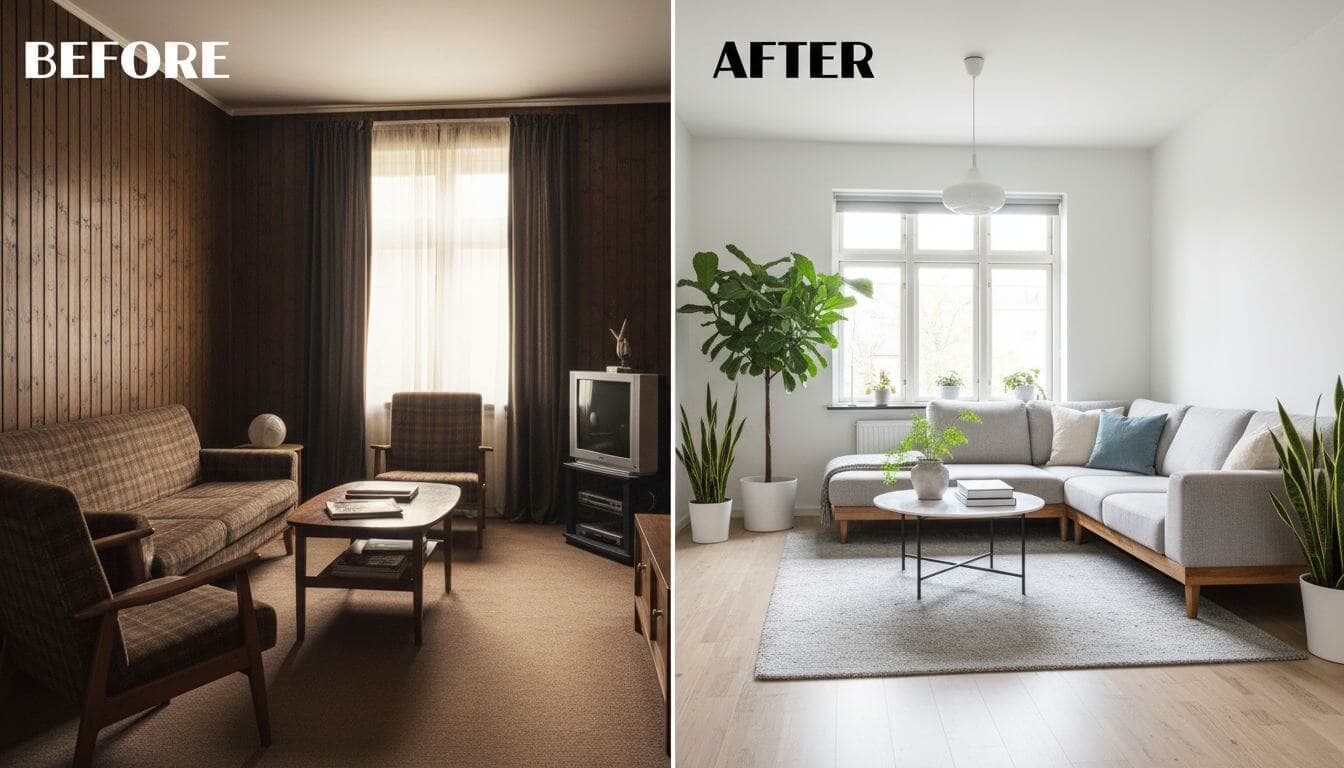
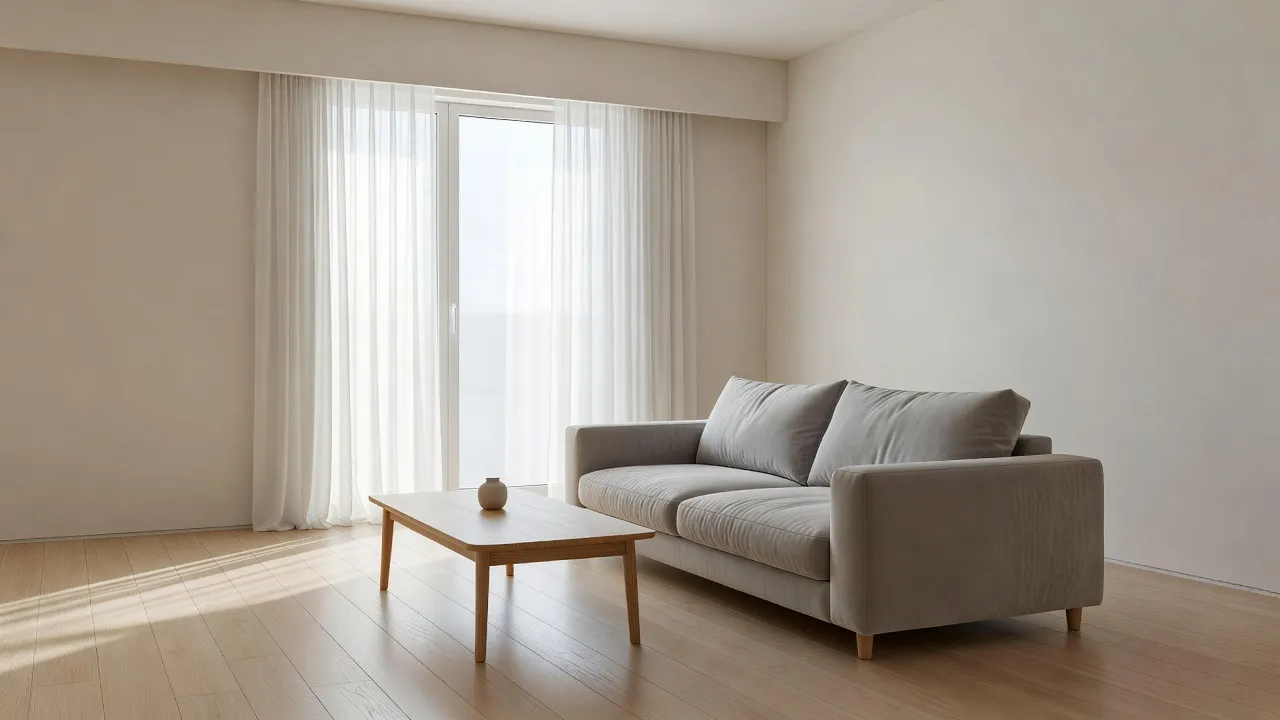
Light oak furniture, a low-profile sofa in undyed linen, a chunky wool throw, and a palette that barely leaves off-white and warm wood. The window gets the least visual competition of any style here — sheer, pale curtains let the light through rather than framing it. This is the style that changes the least about the room's structure and the most about its mood: the same walls suddenly feel calmer.
2. Japandi
Close enough to Scandinavian that the two are easy to confuse from a thumbnail, but the details diverge: darker, low-slung furniture with visible joinery, a single piece of pottery or ikebana rather than a cluster of decor, and a palette that leans slightly warmer and more muted than Scandinavian's brighter whites. If Scandinavian is "light and airy," Japandi is "quiet and grounded" — same room, noticeably different emotional register.
3. Industrial
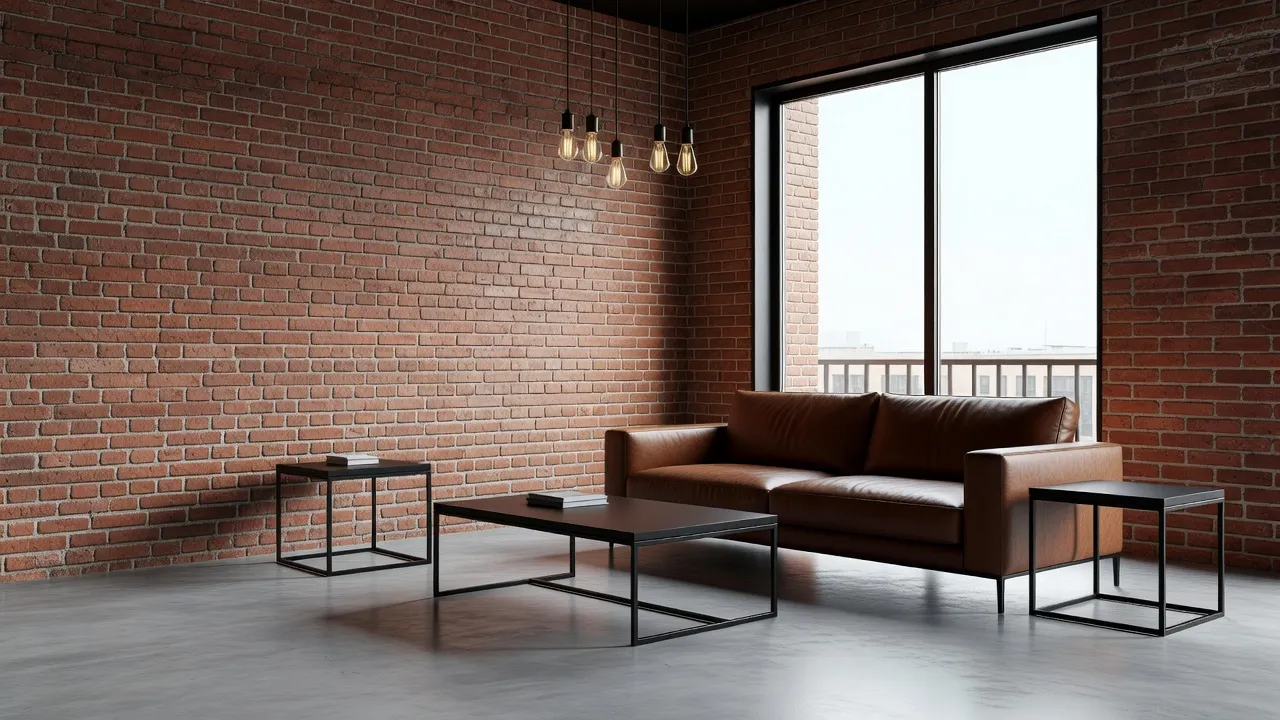
The most aggressive material change of the ten: exposed brick or raw concrete texture appears on the walls, black metal frames replace wood on the furniture, leather swaps in for linen, and factory-style pendant lighting replaces anything soft. This is a style that changes what the walls themselves seem to be made of, not just what sits in front of them — the biggest single shift in this comparison.
4. Modern Farmhouse
Shiplap or board-and-batten texture on an accent wall, a slipcovered sofa, black window frames, and a mix of wood tones that reads collected rather than matched. Warmer and more textured than Scandinavian, but still restrained compared to what's coming in Bohemian and Maximalist territory — a comfortable middle ground between rustic and clean.
5. Bohemian
The layered opposite of Scandinavian on the same floor plan: a patterned rug over a second rug, macrame or rattan wall hangings, mismatched vintage-style furniture, and a jungle's worth of plants filling the corners the minimalist version of this room left empty. Nothing about the walls or window changed, and the room still reads as twice as full.
6. Mid-Century Modern
Tapered wooden legs, a walnut credenza, a boldly colored accent chair in mustard or burnt orange, and geometric shapes on textiles and lighting. This is the style that most changes the furniture's silhouette specifically — arms, legs and profiles all read distinctly different from every softer, boxier style around it, even though the wall color barely shifts.
7. Coastal
Whitewashed wood, blue-and-white textiles, woven jute underfoot, and light rattan accents. Airy in the same family as Scandinavian, but with a color story that leans toward sky and sea tones instead of pure neutrals, and a slightly more casual, beach-house furniture profile than Scandinavian's cleaner lines.
8. Minimalist
The starkest version of the ten: one sofa, one coffee table, almost nothing on the walls, and a palette that stays within two or three tones. Where Bohemian fills every surface, Minimalist empties nearly all of them — the same square footage suddenly reads as a much larger room simply because there's less in it to look at.
9. Art Deco
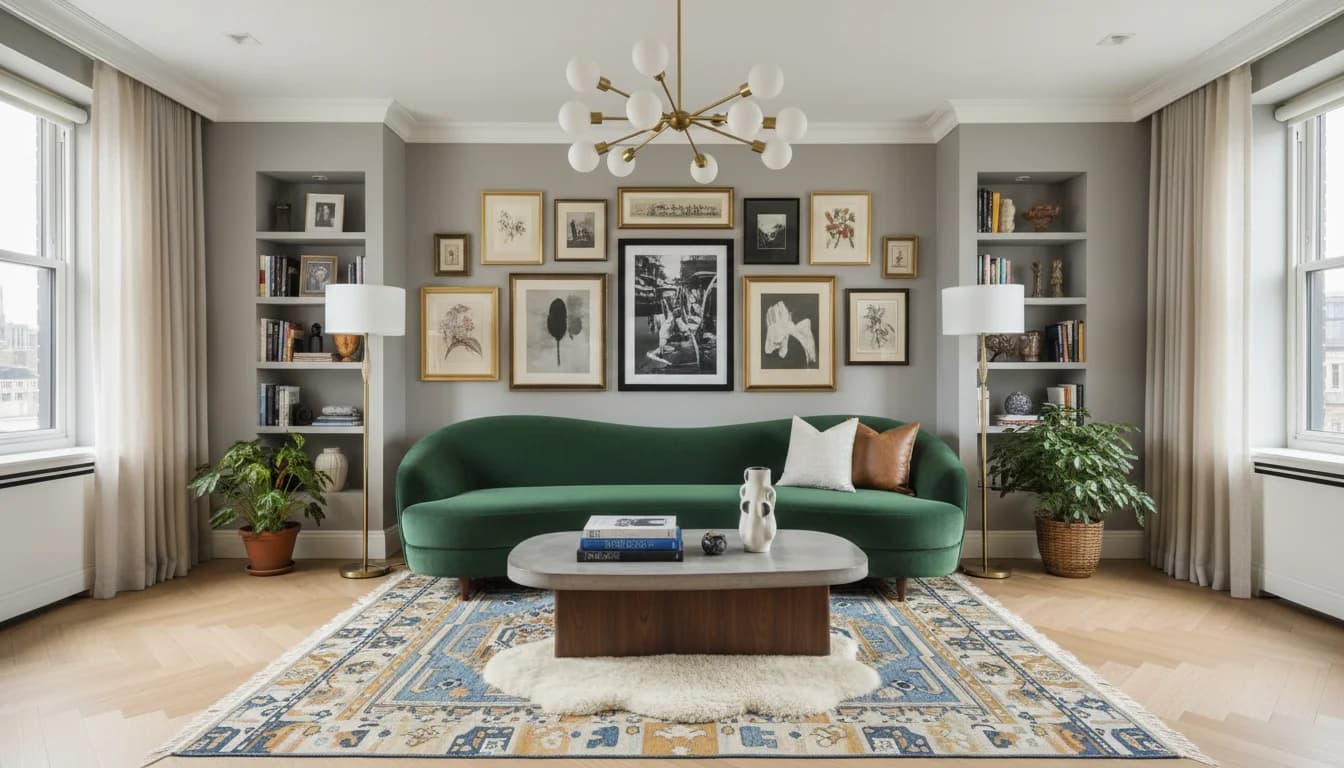
Bold geometric patterning, brass or gold metal accents, a velvet sofa in an emerald or navy jewel tone, and a general sense of formality that no other style in this set attempts. Where Mid-Century Modern is playful with color, Art Deco is dramatic with material — this is the style that makes the room feel like it belongs somewhere grander than a standard living room.
10. Mediterranean
Warm terracotta and ochre tones, wrought-iron details, textured plaster-look walls, and heavier wood furniture with a sun-bleached finish. Closer in spirit to Coastal than to Industrial, but where Coastal cools the room down with blue, Mediterranean warms it up with earth tones — proof that two "relaxed, natural-material" styles can still land in completely different places.
See Your Own Room in Ten Styles, Not Just This One
Upload a photo of your actual living room, bedroom or kitchen and preview any of these styles — or all of them — before you buy a single thing.


What Ten Styles on One Room Actually Reveal
A few patterns only show up when you hold the room constant like this. First, styles cluster into families more than the marketing names suggest — Scandinavian and Japandi are close cousins, as are Coastal and Mediterranean, and knowing that helps you understand what you're actually choosing between rather than treating each name as a totally separate option. Second, some styles change color more than shape (Mid-Century Modern keeps the furniture's era-specific silhouette but swings the palette wide), while others change material more than color (Industrial keeps a fairly neutral palette but overhauls what the walls and furniture seem to be made of). Third, the amount of "stuff" in the room varies enormously by style alone — Minimalist and Bohemian sit at opposite ends of that scale on the identical floor plan, which is worth knowing if what you actually want is a calmer room rather than a specific look.
None of this is visible from browsing unrelated inspiration photos, because you're never controlling for the room itself. It only becomes obvious when the walls, window and layout stay put and the style is the only variable — which is also exactly how DecorAI's style guides are meant to be used: not read in isolation, but tried against a photo of the room you're actually redesigning.
How to Run This Comparison on Your Own Room
- Photograph your room in even, natural light, straight-on rather than from a sharp angle, so the AI has a clean read on the walls and layout. Our photo guide covers the details that make the biggest difference.
- Generate the same room in three or four styles first rather than all twenty-plus at once — enough to see whether you're drawn to the airy end of the spectrum (Scandinavian, Coastal, Minimalist) or the layered end (Bohemian, Mediterranean, Art Deco).
- Compare them side by side rather than one at a time from memory. What reads as "nice" in isolation can look wrong the moment it's sitting next to a style you actually prefer.
- Save the ones you like to a project so you can return to them later instead of re-generating from scratch — Projects and History keeps every version in one place.
One Room, Ten Styles: FAQ
Is it normal for the same room to look this different across styles?
Yes. Style is doing most of the work here, not the room. Walls, windows and layout stay identical across all ten versions above; everything else — furniture shape, material, color and how full or empty the room feels — is entirely a function of the style prompt.
Which two styles in this comparison are closest to each other?
Scandinavian and Japandi are the closest pair here, followed by Coastal and Mediterranean. Both pairs share a similar starting palette and a relaxed, natural-material feel, and diverge mainly in warmth, formality and how much pattern or ornament each one adds.
Which style changes the room the most?
Industrial makes the biggest structural-feeling change, since it alters what the walls and furniture frames appear to be made of. Bohemian makes the biggest change in how full the room feels, and Minimalist makes the biggest change in the opposite direction.
Can I do this exact comparison on my own room?
Yes — that's the point of showing it this way rather than just describing each style. Upload a photo of your own living room, bedroom or kitchen to DecorAI and generate it in as many of the 20+ available styles as you want to compare.
How is this different from a "how to choose your style" guide?
This piece is a visual comparison of the same room across ten fixed styles, meant to show what each one actually does. How to choose an interior design style is a decision framework for figuring out which one or two styles suit you personally, based on the room you already have.
Conclusion
Ten AI interior design styles, one unchanged room: the walls, window and layout never moved, and yet the result reads as ten genuinely different spaces, from Scandinavian's quiet restraint to Bohemian's layered warmth to Art Deco's formal drama. That's the clearest way to see what a style actually contributes versus what the room itself was always going to look like. Try it on your own room at DecorAI, browse the full style lineup in the feature directory, or head back to the DecorAI homepage to get started.
Visualize Your Dream Home Instantly
Don't just read about it. Experience the power of AI interior design with DecorAI's free tool.
Start Designing for FreeWritten by
DecorAI Team
Editorial Team