AI Mediterranean Interior Design: Sun-Washed Style Guide
A complete guide to AI Mediterranean interior design — the terracotta tones, whitewashed plaster, and wrought iron that define sun-washed coastal European style. Learn the palette, materials, and room-by-room tips, then preview the look on your real room with AI before you buy anything.
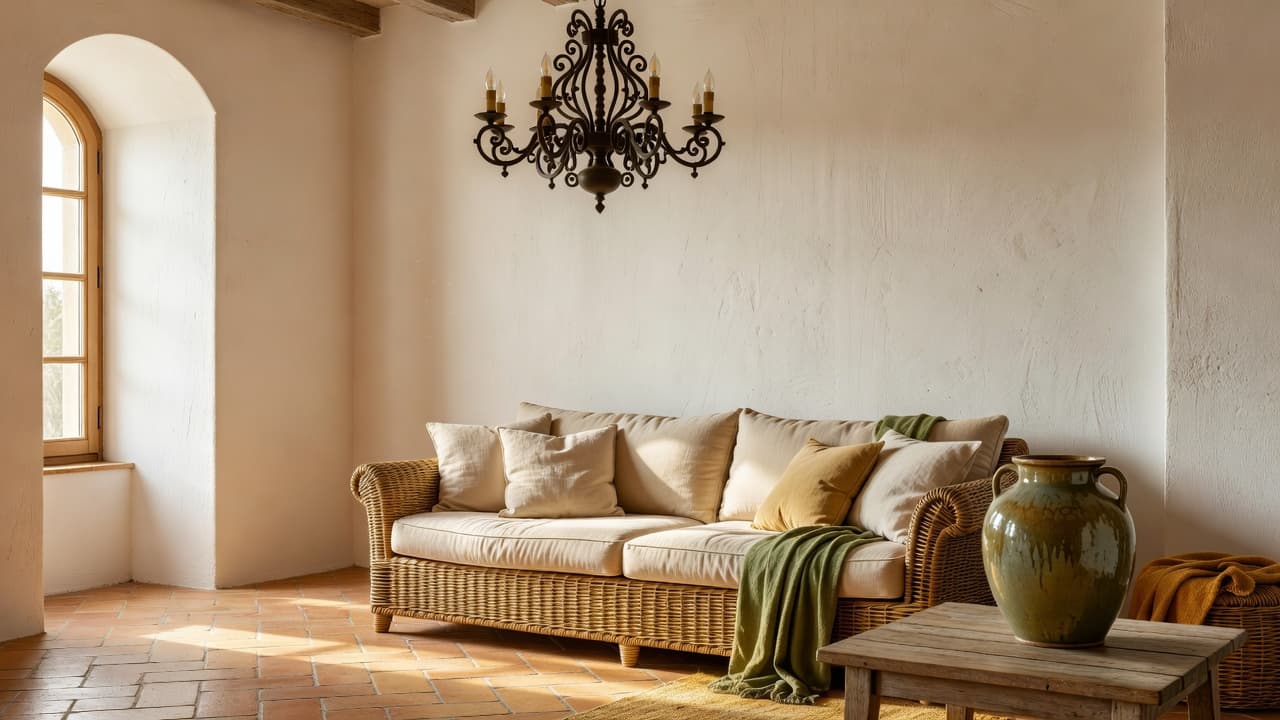
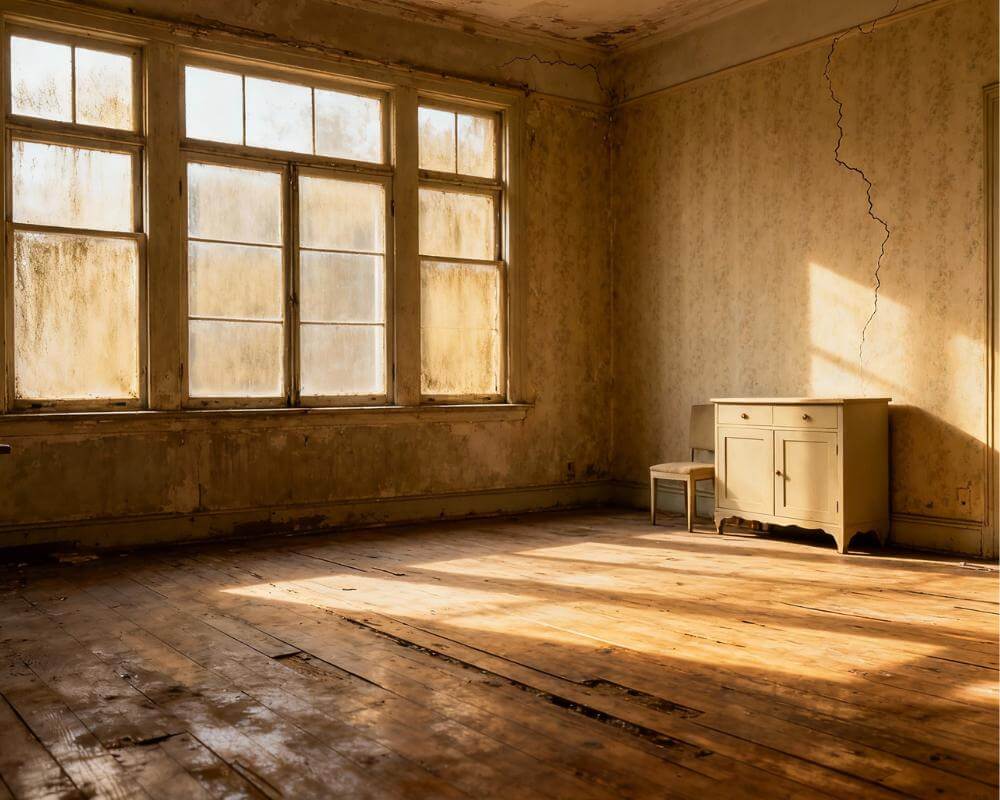
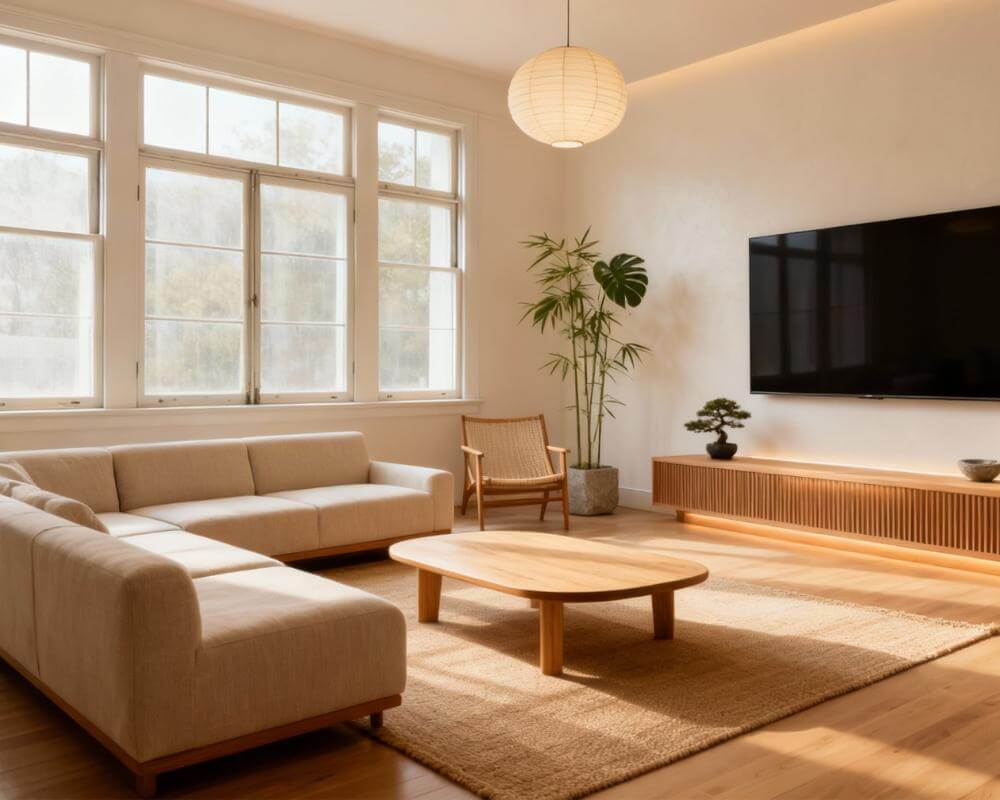
AI Mediterranean interior design brings the sun-washed warmth of a coastal villa in Spain, Italy, or Greece into a real room, without the guesswork of picking terracotta tile or whitewashed plaster from a swatch card. Instead of imagining how a wrought iron chandelier or a hand-glazed ceramic vase might actually look in your own living room, you upload a photo of your space to a tool like DecorAI and see it redesigned in photorealistic Mediterranean style in seconds.
Mediterranean style draws on centuries of coastal European architecture — sun-bleached stucco, terracotta roof tile, olive groves, and interiors built to stay cool through long, bright summers. It shares some DNA with Spanish Revival and Tuscan design but is broader than either, pulling from Greek, Italian, Spanish, and North African coastal traditions at once. Done well, it feels relaxed, textured, and timeless. Done poorly, it tips into a theme-park version of a vacation resort. This guide breaks down what actually defines Mediterranean interior design, the palette and materials that make it work, how to apply it room by room, the mistakes that undercut the look, and how to preview it on your own space with AI before you commit to a single piece.
Key Takeaways
- Mediterranean interior design blends sun-bleached materials — terracotta, whitewashed plaster, wrought iron — with warm earthy color and natural texture drawn from coastal Europe.
- The palette is warm and earthy: terracotta, ochre, olive green, and warm white, occasionally lifted with cobalt or azure blue as an accent, not a base color.
- Terracotta and wrought iron are the signature materials: used on floors, roof-style accents, and lighting rather than crammed into every corner.
- Arches and curved lines soften the look: even a single arched mirror or doorway nod can shift a room toward Mediterranean without any construction.
- AI makes it easy: upload your room photo to DecorAI, choose a Mediterranean-inspired style, and see your real space redesigned photorealistically in seconds — before you buy a single terracotta pot.
What Is Mediterranean Interior Design?
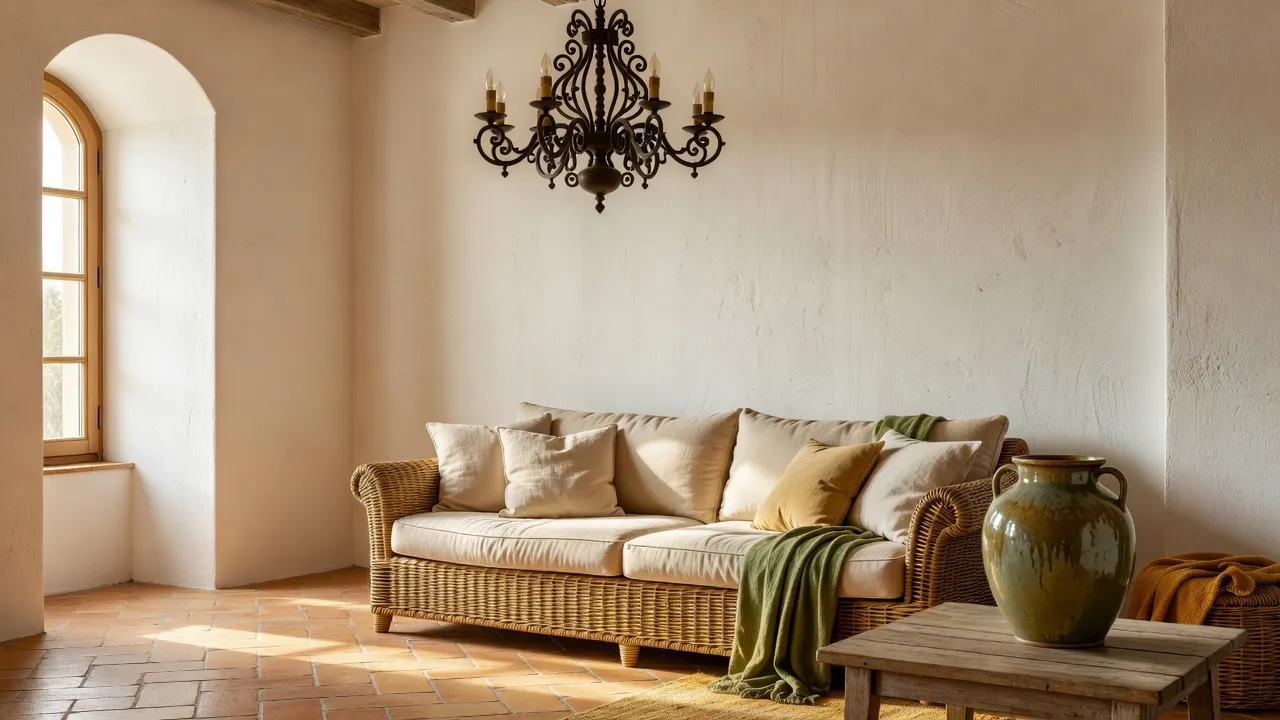
Mediterranean interior design is a warm, textured style rooted in the coastal architecture of Spain, Italy, Greece, and southern France, built around sun-bleached plaster, terracotta, wrought iron, and furniture shaped by centuries of design meant to stay cool in the heat. It favors earthy, saturated color and natural material over anything glossy or synthetic — a hand-glazed tile, a rough plaster wall, and a weathered wood beam are more true to the style than anything that looks factory-perfect. The result feels relaxed and sun-worn rather than formal, closer to a hillside villa than a showroom.
It is easy to confuse with a couple of related looks without being identical to either. Our guides to AI coastal interior design and AI French country interior design cover neighboring styles within broader Mediterranean Revival architecture — coastal design leans nautical and blue-and-white, while French country brings in more toile pattern and Provençal florals. Mediterranean style sits apart with its terracotta warmth, arched details, and sun-baked earth tones.
What Defines the Mediterranean Look?
Mediterranean interiors share a recognizable set of ingredients drawn from centuries of coastal European building. Get these right and a room reads as sun-washed and collected rather than a resort-lobby cliché.
A warm, earthy color palette
Mediterranean color schemes borrow from sun-baked earth and coastal light — terracotta and burnt orange, ochre and mustard, olive and sage green, and a warm off-white that reads sandier than a stark white. Cobalt or azure blue appears as an accent, echoing sea and sky, but it is a highlight rather than the dominant color the way it is in a strictly coastal-nautical palette.
Terracotta and natural stone
Terracotta floor tile, exposed or whitewashed stucco walls, and natural stone counters or flooring form the structural backbone of the style. The word itself comes from the Italian for "baked earth," and that unglazed, sun-warmed quality is the point — nothing should look too smooth or too perfect.
Wrought iron and hand-glazed ceramics
Hand-forged iron shows up in chandeliers, stair railings, window grilles, and furniture legs, almost always with a matte, slightly irregular finish. Hand-glazed ceramics — a large urn, patterned tile inset, or table lamp base — add color and craft in a way that mass-produced decor cannot fake.
Arches and curved lines
Arched doorways, niches, and mirror frames are one of the most recognizable Mediterranean signatures, softening a room's lines and echoing the whitewashed archways of coastal villages. You do not need structural arches to borrow the effect — an arched mirror, headboard, or cabinet front reads as unmistakably Mediterranean on its own.
What Colors and Materials Work Best?
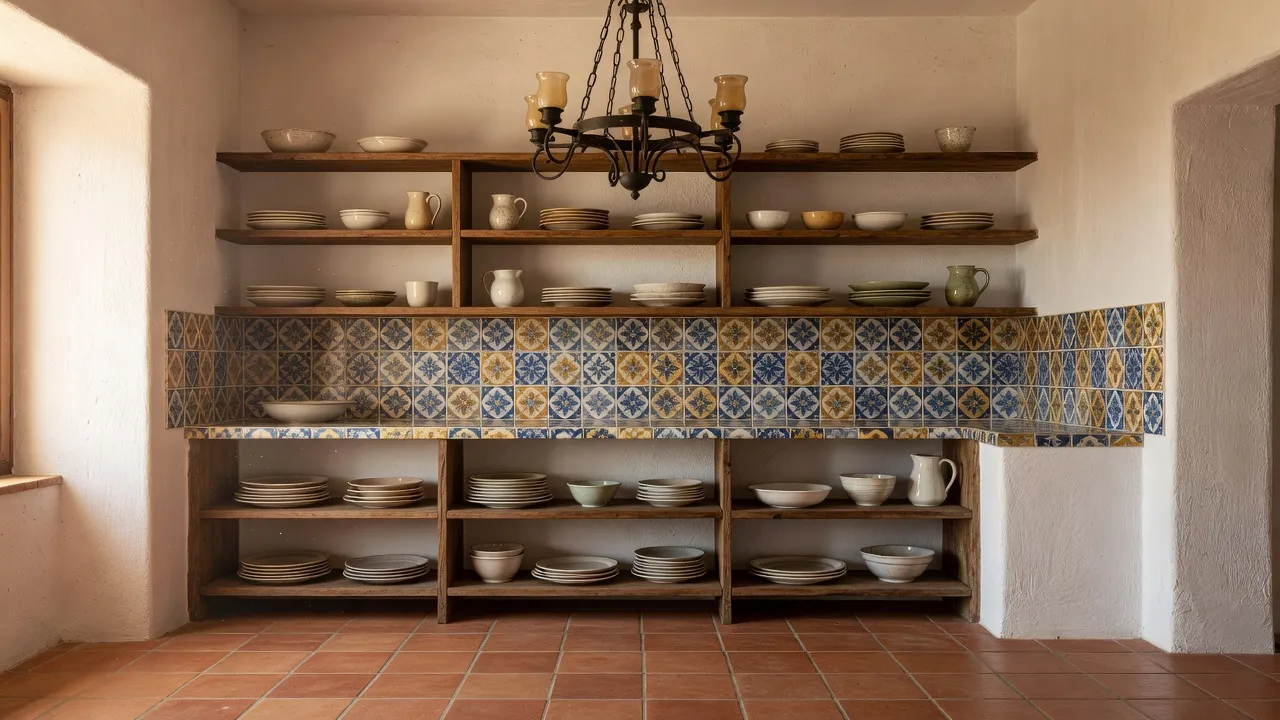
Start a Mediterranean palette with a warm neutral base — sandy white, limewash, or warm plaster tone — then layer in one dominant earth color like terracotta or ochre, plus a smaller accent of olive green or cobalt blue. Keep the ratio uneven rather than equal; the room should read as mostly warm neutral with earth-toned punctuation, not a flag of competing colors. Our guide to AI color palette room design covers how to test a full palette against your actual walls before committing to paint.
For materials, mix at least two textures with visible history in every room — plaster with terracotta, wood with wrought iron, linen with a hand-woven rug — so the space carries tactile warmth even where the palette stays quiet. Hand-made and artisanal pieces do more for the look than anything mass-produced in a "Mediterranean" shape; a single hand-glazed vase often outweighs several matching new ones.
How Do You Apply Mediterranean Style Room by Room?
Mediterranean style adapts across the home, but the specific materials and focal points shift depending on the room.
Living room
Ground the space with a terracotta or natural stone floor, or a rug in a similar warm tone if you cannot change the flooring. Add a rattan or wood-framed sofa, a wrought iron light fixture, and one or two hand-glazed ceramic pieces as focal accents. A whitewashed or lightly textured wall finish keeps the backdrop calm enough for the furniture and color to stand out.
Kitchen
Terracotta or patterned ceramic floor tile, whitewashed plaster or exposed brick walls, open wood shelving, and a hand-glazed tile backsplash define a Mediterranean kitchen. Olive wood accessories and a scrubbed wood table for casual dining reinforce the sun-warmed, gathering-place feel. Our AI kitchen remodel guide covers how to preview material and layout changes like these before any construction starts.
Bedroom and outdoor spaces
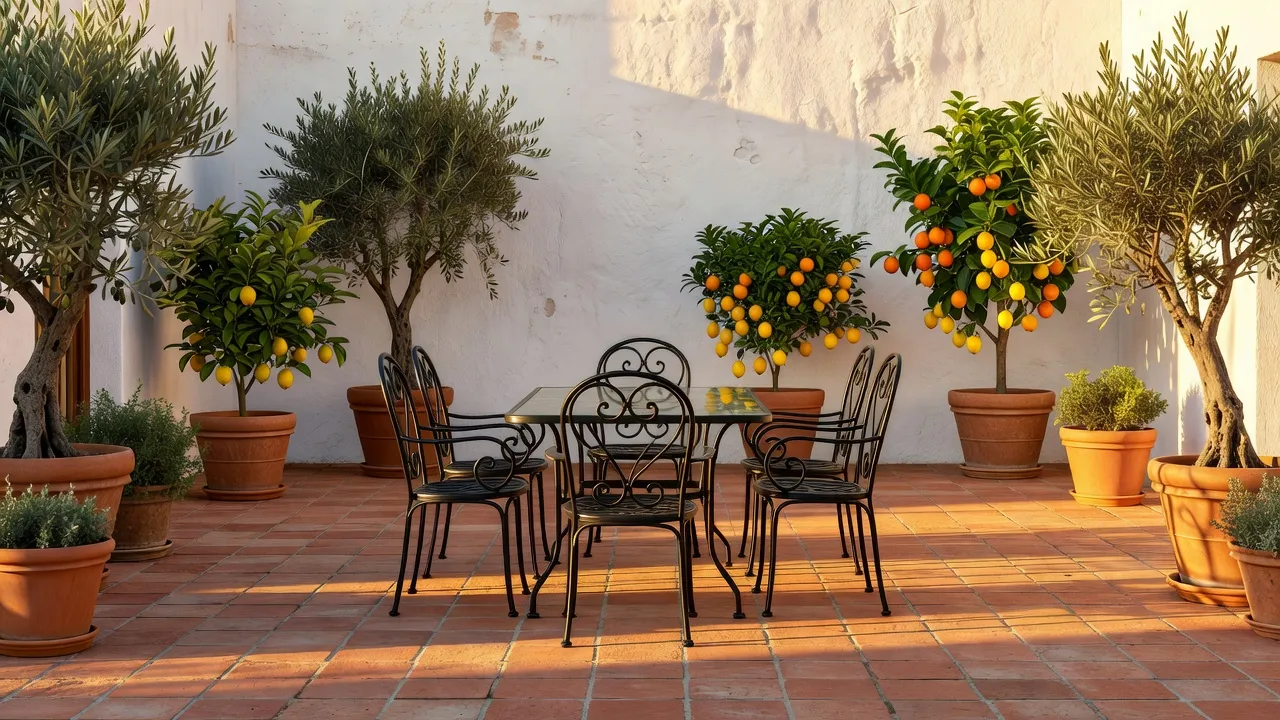
A wrought iron or rattan headboard paired with warm linen bedding and an arched mirror sets a restful Mediterranean tone, with terracotta pots and olive-toned textiles adding color without overwhelming the room. Outdoor patios and balconies take the style especially well — terracotta pavers, wrought iron furniture, and potted olive or citrus trees turn even a small balcony into a sun-washed retreat.
How Can AI Help You Design a Mediterranean Room?
The hardest part of Mediterranean design is judging texture and warmth from a tile sample or a resort photo — a terracotta floor or a whitewashed plaster finish can look completely different once it is scaled up across your actual walls and furniture. That is exactly where AI helps. With DecorAI you upload a photo of your real room and the AI redesigns it in Mediterranean style photorealistically, keeping your real windows, proportions, and layout intact, so you are judging your own space rather than someone else's villa.
That means you can compare a terracotta-and-ochre palette against a cooler olive-and-cobalt one, test how much wrought iron and arched detailing feels right in your specific room, and decide on materials before buying tile or repainting a wall. Browsing real before-and-after transformations shows how convincing this is, and the full styles gallery lets you compare Mediterranean against related looks like coastal to find the right balance of warmth and breeziness for your home.
See Your Room in Mediterranean Style — Free
Stop guessing whether terracotta tile and whitewashed plaster will suit your space. Upload one photo of your room to DecorAI, choose a Mediterranean-inspired style, and watch the AI redesign your actual room photorealistically in seconds — keeping your real walls, windows, and layout.


What Mistakes Undercut the Mediterranean Look?
The most common mistake is treating Mediterranean as a nautical theme — piling on anchors, seashells, and navy-and-white stripes until the room reads as coastal-generic rather than genuinely Mediterranean. The fix is to let earth tones and craft carry the style instead of vacation souvenirs: terracotta, plaster, and hand-glazed ceramics do the work that beach props are often used to fake.
Another frequent issue is overusing bright blue as a base color rather than an accent — a room painted entirely cobalt loses the sun-baked warmth that makes Mediterranean design feel grounded. Keep blue to one or two spots and let terracotta, ochre, and warm white carry the rest of the room. Finally, mixing in furniture that is too sleek or minimalist breaks the handmade feel; even one glossy, mass-produced piece can undo an otherwise convincing room. Previewing the whole space with AI first makes these missteps obvious before you have spent money fixing them.
AI Mediterranean Interior Design — FAQ
What is Mediterranean interior design in simple terms?
It is a warm, textured style based on coastal architecture from Spain, Italy, Greece, and southern France, combining terracotta, whitewashed plaster, and wrought iron with an earthy color palette of ochre, olive, and terracotta lifted by touches of blue. It feels sun-washed and handmade rather than polished or nautical.
How is Mediterranean style different from coastal design?
Coastal design leans nautical, with a blue-and-white palette built around beach and boating imagery, while Mediterranean style is earthier and warmer, built around terracotta, plaster, and wrought iron with blue used only as an accent. Both reference the sea, but Mediterranean is about sun-baked land as much as water.
What colors define a Mediterranean palette?
Warm, earthy tones: terracotta, ochre, olive and sage green, and a sandy warm white base, with cobalt or azure blue appearing only as a smaller accent. Colors read as sun-baked rather than bright or synthetic, and are usually layered rather than confined to a single wall.
Can I get a Mediterranean look without renovating?
Yes — textiles, lighting, and accessories do most of the work. A terracotta planter, a wrought iron light fixture, an arched mirror, and a warm, earthy paint color can shift a room toward Mediterranean without touching floors or walls structurally. An AI preview is a useful way to test how far furnishings alone can take the look before considering anything structural.
How can I try Mediterranean style before committing to it?
Upload a photo of your actual room to an AI design tool like DecorAI and generate a Mediterranean-inspired version of that same room. Because it keeps your real layout, windows, and proportions, you get an honest preview of the palette and materials rather than a generic resort inspiration photo.
Conclusion
Mediterranean interior design rewards warmth over polish and craft over uniformity — terracotta, whitewashed plaster, and wrought iron do more for the look than any number of nautical props ever could. The fastest way to know if it suits your home is to see it on your actual room rather than a resort brochure. DecorAI lets you upload a photo of your room and view a photorealistic Mediterranean redesign in seconds, so you can judge the palette and materials with confidence before buying anything. Explore the styles gallery or start from the DecorAI homepage to try it on your own space.
Redesign Your Room in Mediterranean Style — Free
Open DecorAI's web app, upload a photo of your room, and let the AI redesign your real space in warm, sun-washed Mediterranean style in seconds. Your first designs are completely free.
Try the DecorAI Web App Free →No credit card required · Works on any device with a browser
Visualize Your Dream Home Instantly
Don't just read about it. Experience the power of AI interior design with DecorAI's free tool.
Start Designing for FreeWritten by
DecorAI Team
Editorial Team