AI Industrial Interior Design: Ideas & Style Guide
A complete guide to AI industrial interior design. Learn the signature materials, exposed brick, metal, and raw textures — and how to redesign your real room in the urban industrial style in seconds.
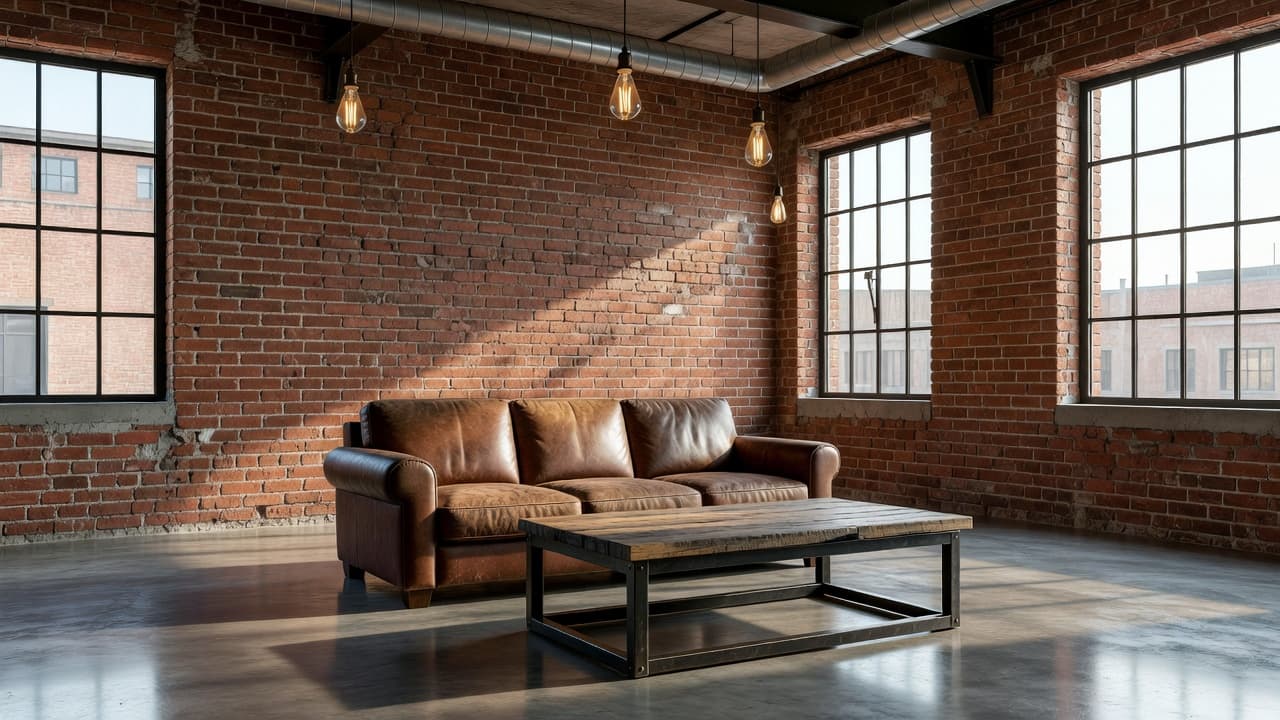
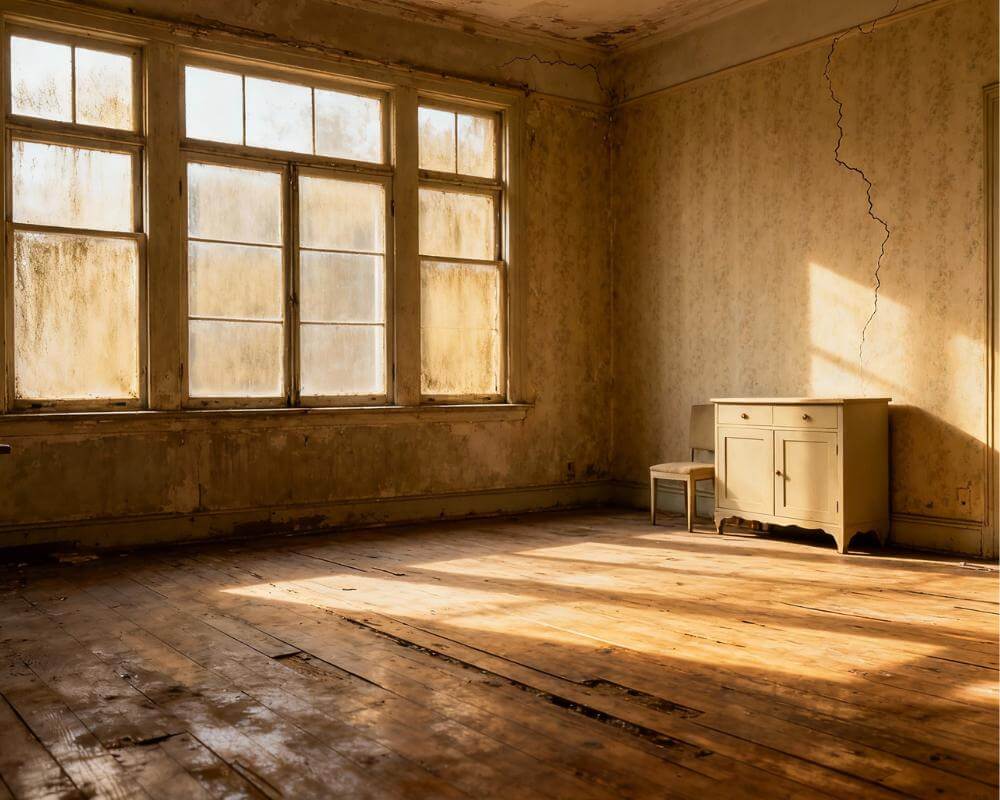
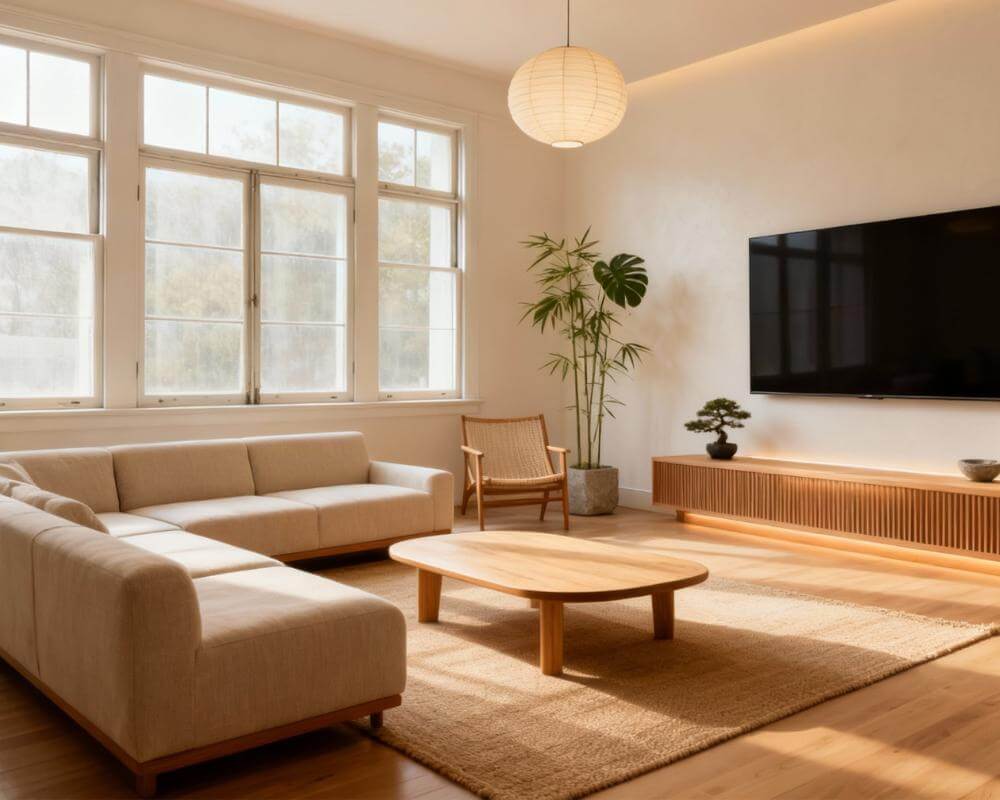
AI industrial interior design brings the raw, warehouse-loft look — exposed brick, weathered metal, and honest materials — into your real home without guesswork. You upload a photo of your room and a tool like DecorAI restyles your actual space with concrete, steel, reclaimed wood, and Edison-bulb lighting in seconds, so instead of imagining how an exposed-brick wall or a leather sofa would sit under your window, you simply see it.
Industrial style turns the bones of a building into the décor: it celebrates structure rather than hiding it. This guide breaks down exactly what defines the look, the materials and colors that make it work, how to apply it room by room, and how to preview the whole thing on your own space with AI before you spend a cent.
Key Takeaways
- Industrial design grew out of converted 20th-century factories and warehouses, exposing brick, pipes, beams, and ductwork as features rather than flaws.
- Raw materials are the hero: exposed brick, concrete, blackened steel, and reclaimed wood define the style.
- The palette is moody and neutral — charcoal, rust, warm gray, black, and weathered brown — warmed by wood and leather.
- Function on display: open shelving, visible hardware, and statement Edison or factory lighting are signatures.
- AI makes it easy: upload your room photo to DecorAI, pick the industrial style, and see your real space redesigned photorealistically in seconds.
- Try DecorAI free to test the industrial look in your own room before buying a thing.
What Is Industrial Interior Design?
Industrial interior design is a style that takes its cues from old factories, warehouses, and other industrial buildings, leaving structural and mechanical elements like brick walls, concrete floors, steel beams, and exposed pipes visible as part of the aesthetic. It emerged when disused industrial spaces in cities were converted into loft apartments in the mid-to-late 20th century, and the unfinished, utilitarian character became a look people deliberately sought out.
What makes it so livable today is the honesty of it: nothing is dressed up or hidden, materials are allowed to show their age, and the result feels grounded, spacious, and effortlessly cool. It pairs naturally with adjacent looks — the clean lines of mid-century modern design and the pared-back warmth of Scandinavian style both blend beautifully with industrial bones.
What Are the Key Elements of Industrial Style?
A handful of defining ingredients separate true industrial from generic "modern." Get these right and almost any room reads as authentically industrial.
Raw, exposed materials
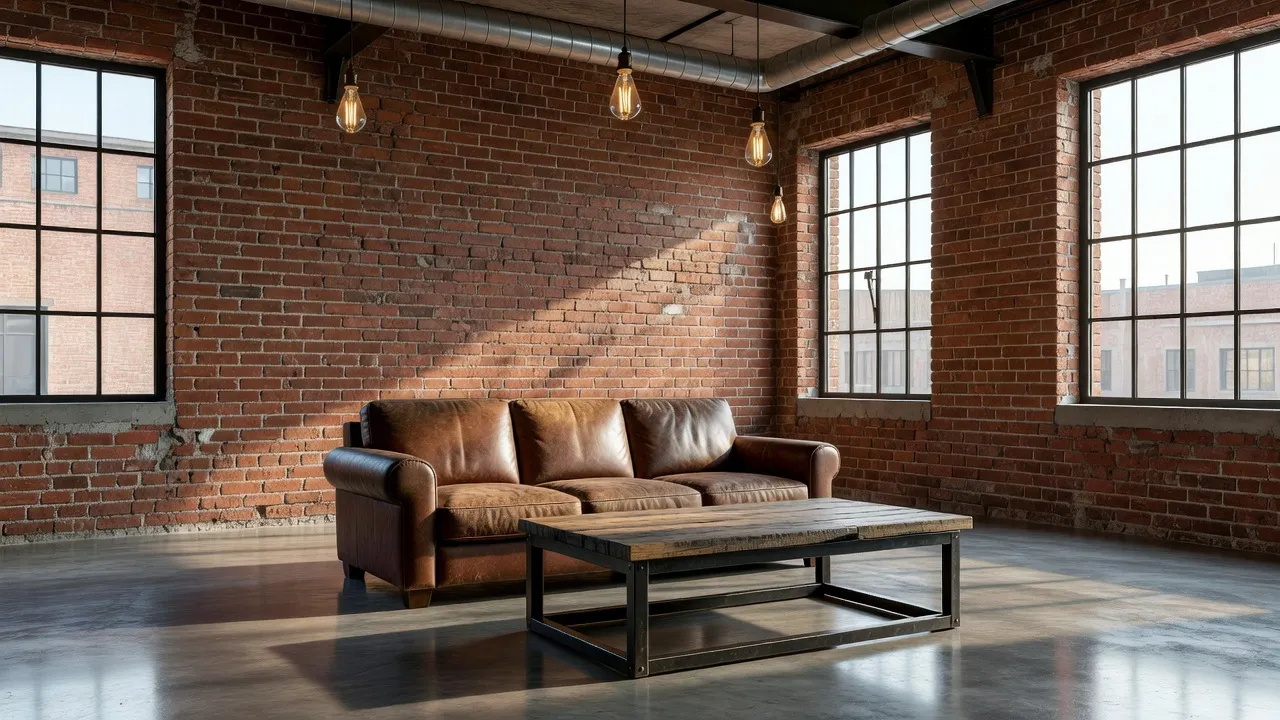
The foundation of the style is honest material left on show: exposed brick, poured or polished concrete, blackened or galvanized steel, and reclaimed timber. Walls are stripped back, ceilings reveal beams and ductwork, and surfaces are valued for their texture rather than their polish.
Metal and a moody palette
Black and gunmetal metal frames everything — windows, shelving brackets, chair legs, and pendant fittings. The color scheme stays neutral and atmospheric: charcoal, slate, warm gray, rust, and black, grounded by the natural reds and browns of brick and wood.
Statement lighting
Lighting is the jewelry of an industrial room. Think exposed Edison bulbs, oversized factory pendants, cage fixtures, and articulated task lamps in black or aged brass. Bare filaments and visible hardware are features, not things to conceal.
Open, utilitarian furniture
Furniture mixes worn leather, raw wood, and metal: a distressed leather sofa, a reclaimed-wood-and-pipe shelving unit, metal stools, and a sturdy workbench-style table. Open shelving and rolling carts keep the look practical and unfussy.
What Colors Define an Industrial Room?
The industrial palette is built on warm neutrals and moody darks, then lifted by the natural tones of raw materials. Start with a grounded base of charcoal, concrete gray, and black, then layer in the rust-red of brick, the warm brown of reclaimed wood, and the cognac of aged leather. Keep bright color minimal — a single accent, like a vintage sign or a leafy plant, goes a long way. For help building a cohesive scheme, see our guide to AI interior design color schemes.
- Base: charcoal, concrete gray, warm white, black.
- Materials: exposed brick red, reclaimed wood brown, cognac leather.
- Metals: blackened steel, gunmetal, aged brass, raw iron.
- Texture: rough brick, smooth concrete, distressed leather, weathered wood.
How Do I Apply Industrial Style Room by Room?
Industrial scales up and down beautifully. The same principles — raw materials, metal accents, moody neutrals, statement lighting — just adapt to each space.
Living room
Anchor the space with a worn leather sofa, a reclaimed-wood-and-metal coffee table, and an exposed-brick or concrete feature wall. Add a factory-style pendant or floor lamp, open metal shelving, and one large plant to soften the hard surfaces. For more layout ideas, browse our AI living room design ideas.
Bedroom
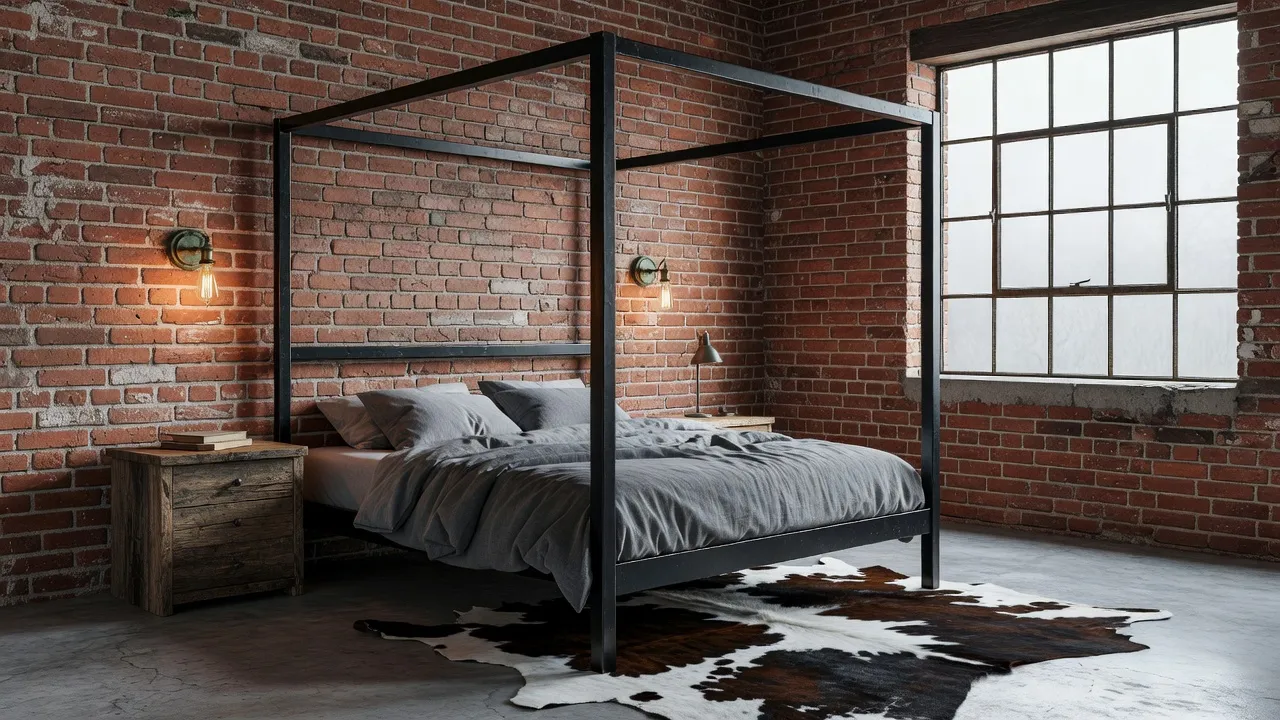
Choose a black metal bed frame, layer in gray linen and a textured throw, and let a brick or concrete wall sit behind the headboard. Edison-bulb sconces, a reclaimed-wood nightstand, and a leather bench at the foot of the bed complete the look without clutter. See our AI bedroom design ideas for more.
Kitchen and dining
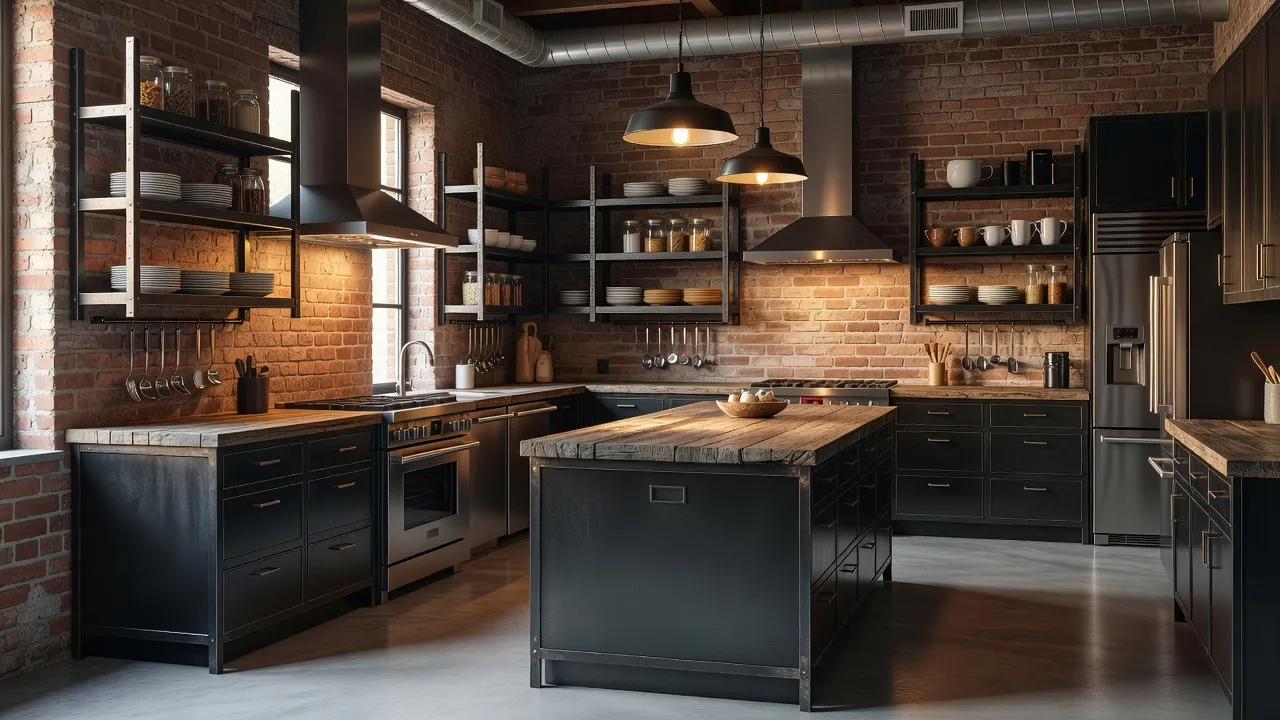
Matte black or stainless cabinets, a reclaimed-wood or concrete countertop, open metal shelving, and a brick backsplash capture the look. Hang oversized factory pendants over an island, add metal bar stools, and let stainless appliances read as part of the aesthetic. Planning a bigger change? Our AI kitchen remodel guide walks through it.
Does Industrial Style Work in Small Spaces?
Yes — industrial design suits small apartments well because its open shelving, leggy metal furniture, and uncluttered surfaces keep sightlines clear and rooms feeling airy. The trick in a compact space is to use one feature wall of brick or concrete rather than wrapping every surface, keep the palette light enough to avoid a cave-like feel, and lean on vertical metal shelving to store without crowding the floor. For more tactics, read our guide to AI interior design for small spaces.
How Does AI Make Industrial Design Easy?
The hardest part of any style is picturing it in your space — your windows, your proportions, your light. This is exactly where DecorAI shines. It is a browser-based tool that redesigns your real room from a single photo: you upload a picture, choose the industrial style (or describe the look in a short prompt), and it returns a photorealistic redesign of your actual space in seconds, keeping your layout and architecture intact. Because it starts from your room rather than inventing a generic one, you see a believable preview you can actually act on. Explore every look on our styles page or start from the homepage.
Unlike general-purpose image generators that conjure a fictional room from text, a dedicated interior tool restyles your existing space, so the windows, dimensions, and flow stay true to life. That difference is the whole point when you are deciding whether to add a brick feature wall or swap in a leather sofa. Pair the visual with practical steps from our AI home renovation guide to take a redesign from screen to reality.
See Your Room in Industrial Style — Instantly
Upload one photo and watch DecorAI restyle your actual room with exposed brick, raw metal, and warm leather, keeping your real windows and layout. No download, no designer, no guesswork.


What Are Common Industrial Design Mistakes to Avoid?
Industrial style is forgiving, but a few missteps can make a room feel cold or like an unfinished basement instead of a curated loft. Keep these in mind as you plan.
- Too much hard surface: all brick, metal, and concrete reads as harsh. Warm it with wood, leather, textiles, and plants.
- Forgetting softness: rugs, throws, and upholstered seating keep an industrial room comfortable, not clinical.
- Over-theming: a few authentic materials beat covering every surface in faux pipes and signage.
- Poor lighting: moody palettes need layered light — combine statement pendants with warm task and accent lighting.
Industrial Interior Design FAQ
What materials are used in industrial interior design?
The core materials are exposed brick, concrete, blackened or galvanized steel, and reclaimed wood, accented with leather and aged metal. These raw, unfinished materials are left visible and celebrated for their texture rather than covered up.
What colors work best for an industrial look?
Industrial rooms use a moody, neutral palette of charcoal, concrete gray, black, and warm white, grounded by the natural rust-red of brick, brown of reclaimed wood, and cognac of leather. Bright accent colors are used sparingly, if at all.
Can I get an industrial look without exposed brick?
Yes. If you do not have real brick, you can lean on concrete-effect walls, dark paint, black metal furniture, reclaimed wood, and factory-style lighting to capture the style. AI tools like DecorAI let you preview a faux-brick or concrete wall on your real room before committing.
How do I make industrial style feel warm instead of cold?
Layer in warm materials and soft textures: reclaimed wood, leather, wool throws, a large rug, and plenty of plants. Warm-toned lighting and a few personal pieces turn a raw, hard-edged space into an inviting one.
Conclusion
AI industrial interior design makes one of the most distinctive looks in décor approachable: exposed brick, raw metal, concrete, and warm leather, balanced so the result feels cool rather than cold. Start with one feature wall, build a moody neutral palette, add statement lighting, and soften the hard surfaces with wood, textiles, and greenery. The fastest way to see whether the style suits your home is to upload a photo to DecorAI and watch your real room transform in seconds. From there, explore more AI interior design fundamentals or browse the full styles gallery.
Bring the Industrial Loft Look to Your Home
Open DecorAI's web app, upload your room photo, pick the industrial style, and see your real space redesigned with brick, metal, and leather in seconds. Your first designs are completely free.
Try the DecorAI Web App Free →No credit card required · Works on any device with a browser
Visualize Your Dream Home Instantly
Don't just read about it. Experience the power of AI interior design with DecorAI's free tool.
Start Designing for FreeWritten by
DecorAI Team
Editorial Team