AI Biophilic Interior Design: Bring the Outdoors In
A complete guide to AI biophilic interior design — the living plant walls, natural light, organic materials, and nature-inspired layouts that define wellness-focused biophilic style. Learn the principles, materials, and room-by-room tips, then preview the look on your real room with AI before you buy anything.
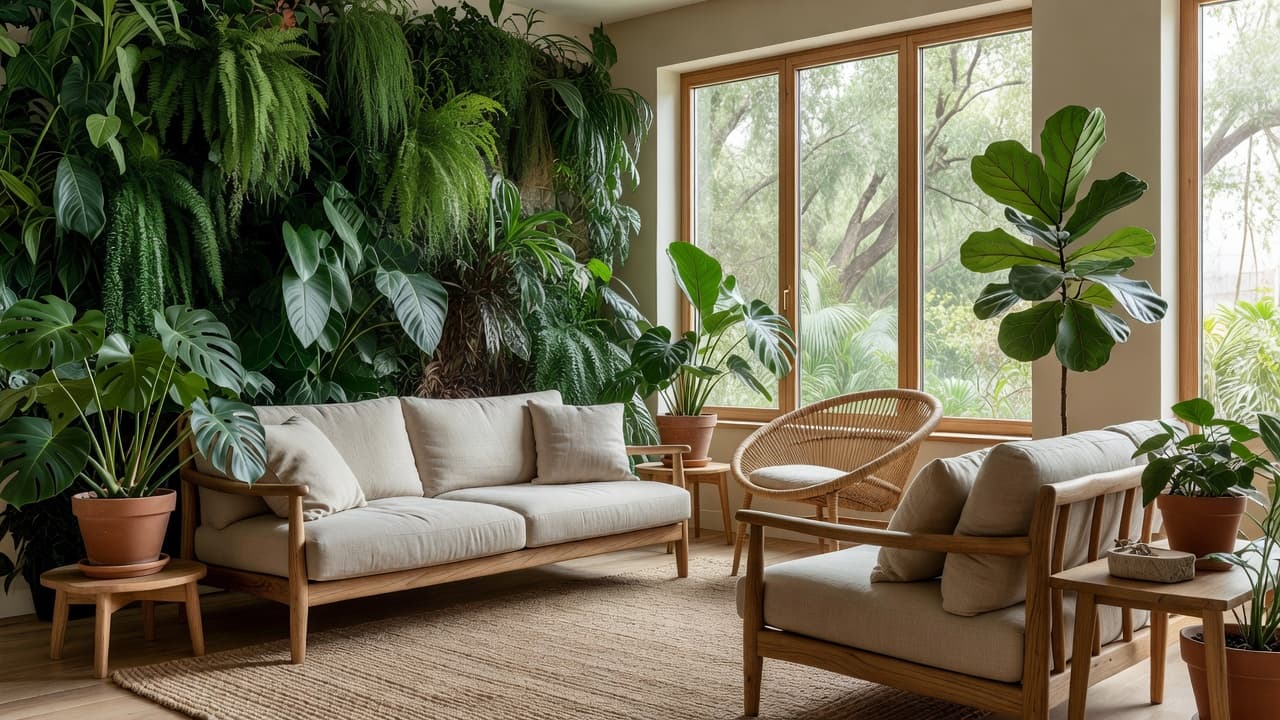
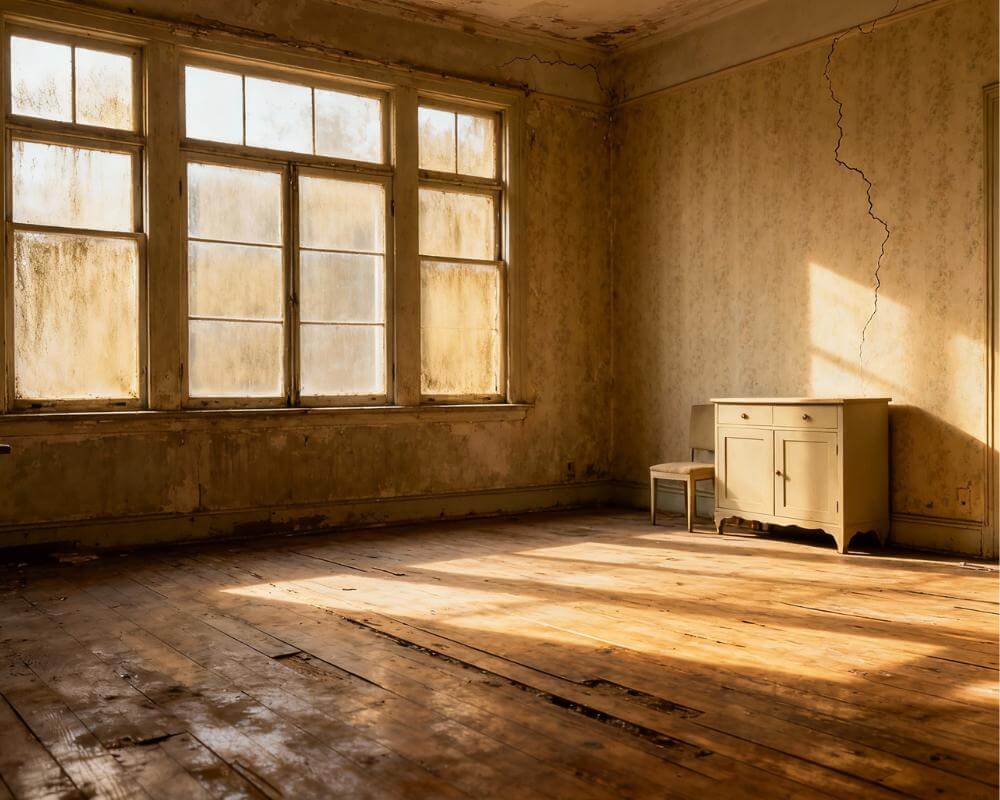
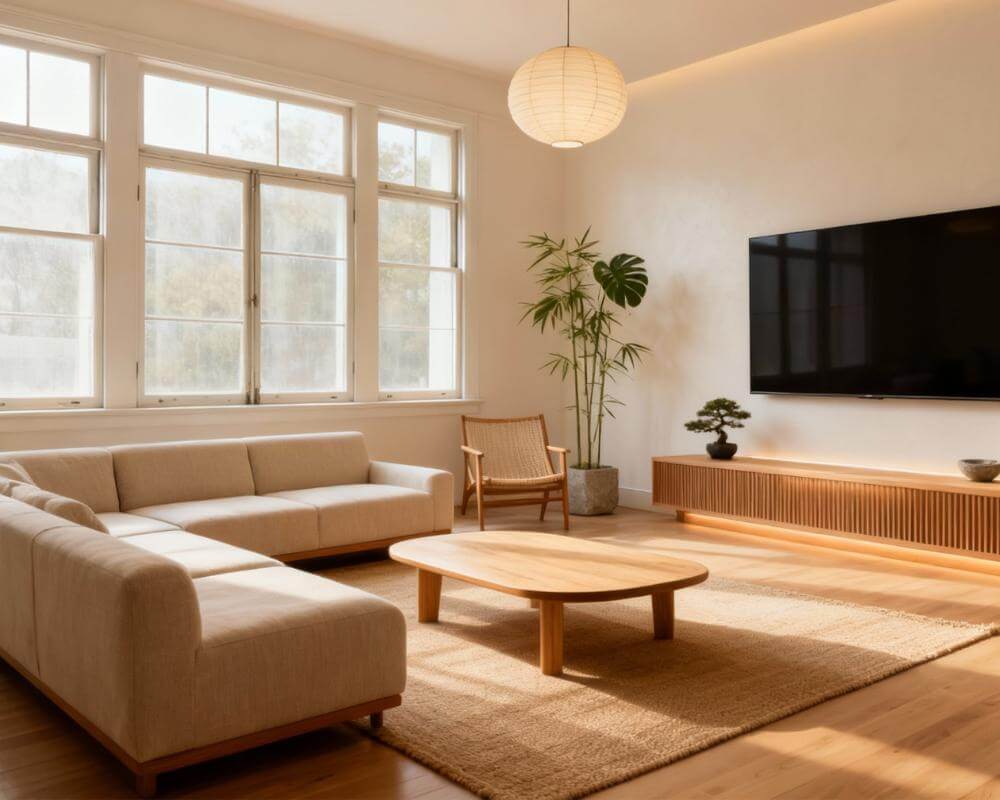
AI biophilic interior design turns a design idea rooted in decades of environmental psychology — that rooms filled with plants, daylight, and natural material make people feel calmer and think more clearly — into something you can actually see in your own space before you buy a single plant. Instead of guessing whether a living plant wall or a slab of natural oak would overwhelm your living room, you upload a photo of your real space to a tool like DecorAI and see it redesigned in photorealistic biophilic style in seconds.
Biophilic design is not a decorating trend so much as a design philosophy: humans evolved surrounded by nature, and interiors that reintroduce natural light, greenery, water, and organic texture tend to measurably lower stress and improve focus. It borrows plants from Scandinavian and Japandi interiors, natural materials from organic modern style, and layout thinking from architecture, but it treats nature as the organizing principle rather than one ingredient among many. Done well, a biophilic room feels alive and calming. Done poorly, it turns into an overgrown jungle that is more maintenance than sanctuary. This guide breaks down what actually defines biophilic interior design, the materials and layouts that make it work, how to apply it room by room, the mistakes that undercut the effect, and how to preview it on your own space with AI before committing to a single living wall.
Key Takeaways
- Biophilic interior design is built on maximizing daylight, greenery, natural material, and views of the outdoors rather than treating plants as decoration.
- The palette leans muted and earthy: greens, warm wood tones, stone gray, and clay, chosen to echo a forest or coastline rather than compete with it.
- Natural material does more than plants alone: raw wood, stone, rattan, and linen carry the biophilic feeling even in rooms with few live plants.
- Light and airflow matter as much as greenery: unobstructed windows, sheer curtains, and a clear sightline outside are core biophilic moves, not afterthoughts.
- AI makes it easy: upload your room photo to DecorAI, choose a biophilic-inspired style, and see your real space redesigned photorealistically in seconds — before you buy a single plant or living wall panel.
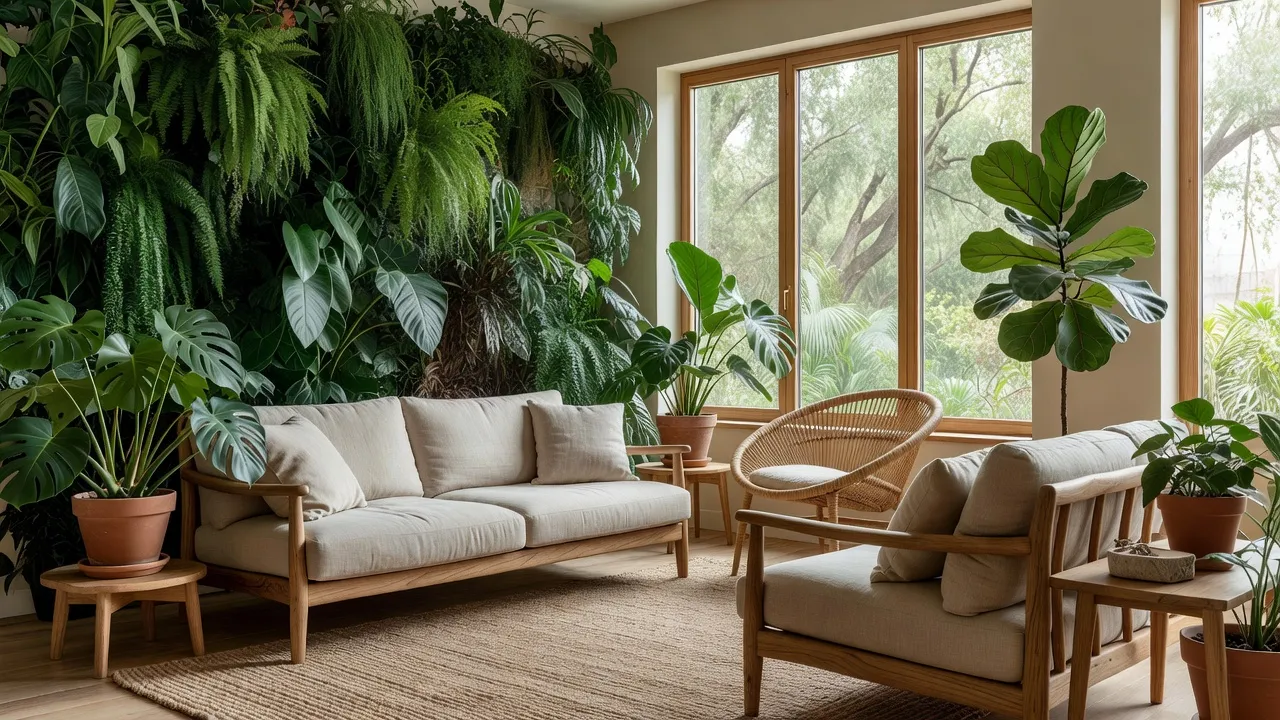
What Is Biophilic Interior Design?
Biophilic interior design is a design approach built around reconnecting indoor spaces with nature — through daylight, live plants, natural material, water, and views of the outdoors — based on the idea that humans have an innate, evolved need for contact with the natural world. The term comes from "biophilia," popularized by biologist E.O. Wilson, and the design movement built on it treats greenery and natural light as functional requirements for wellbeing, not optional decoration. A biophilic room favors raw, textured, and living materials over anything glossy or synthetic — a rough-hewn wood beam, an unglazed clay pot, and an actual window view are more central to the style than a printed leaf pattern could ever be.
It overlaps with a few related styles without being identical to any of them. Our guides to AI Scandinavian interior design and AI Japandi interior design cover neighboring styles that share biophilic design's love of natural light and wood — Scandinavian leans toward pale, minimal wood and Japandi blends in Japanese restraint, while biophilic design specifically centers living plants, natural airflow, and a direct connection to the outdoors as its organizing principle rather than a supporting note.
What Defines a Biophilic Room?
Biophilic interiors share a recognizable set of ingredients grounded in decades of environmental design research. Get these right and a room reads as genuinely alive rather than a plant shop that wandered indoors.
Living plants and greenery at multiple scales
A single oversized fiddle-leaf fig or monstera works as a focal point, but real biophilic rooms layer greenery at several scales — a tall floor plant, a cluster of tabletop pots, and trailing vines on a shelf — the way plants actually grow in nature rather than in one uniform row. A living wall or vertical planter is the signature move when floor space is limited.
Maximized natural light and outdoor views
Unobstructed windows, sheer rather than heavy blackout curtains, and furniture arranged to preserve a sightline to a window or view are core biophilic choices, not afterthoughts. Where a real view is not available, a large mirror positioned to reflect greenery or a window can visually extend the connection to the outdoors.
Natural, raw-edged materials
Unfinished or lightly finished wood, natural stone, rattan, jute, linen, and clay carry the biophilic feeling into rooms and seasons where live plants alone cannot. The point is visible texture and imperfection — a live-edge wood table or a rough stone tile reads as more biophilic than a smooth, uniform surface ever will.
Water and air as design elements
A small tabletop fountain, an open window for real airflow, or even the sound of water from a nearby space reinforces the sensory side of biophilic design, which is built around more than just what a room looks like. These elements are optional accents rather than requirements, but they push a room from "plant-filled" toward genuinely biophilic.
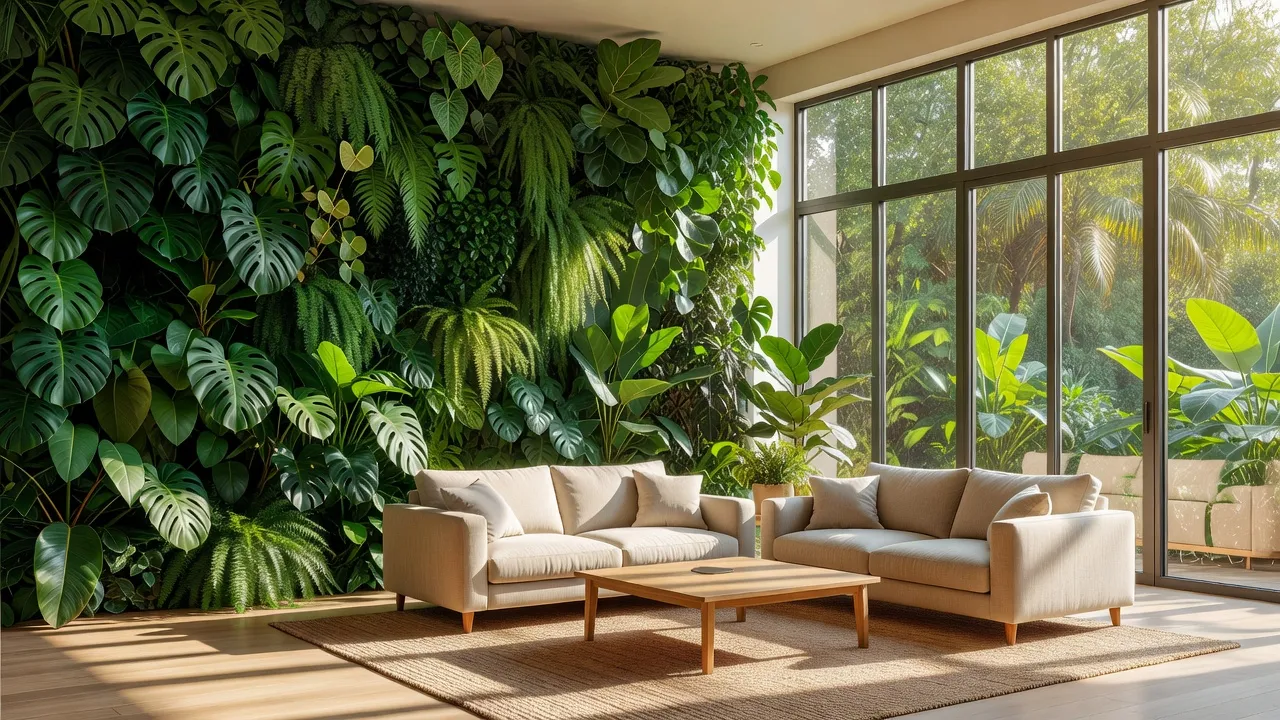
Which Colors and Materials Work Best?
Start a biophilic palette with a warm neutral base — sand, stone gray, or unbleached linen — then layer in shades of green ranging from sage to deep forest, plus warm wood tones that read as raw rather than lacquered. Keep the palette muted enough that it reads as an extension of a garden or forest rather than a competing pattern; the plants themselves should supply most of the color intensity in the room. Our guide to AI color palette room design covers how to test a full palette against your actual walls before committing to paint.
For materials, mix at least two natural textures with visible grain or grit in every room — raw wood with woven jute, linen with unglazed clay, stone with rattan — so the space carries tactile warmth even in seasons when plants are dormant or fewer. Reclaimed and natural-edge pieces do more for the look than anything mass-produced in a faux-organic shape; a single live-edge shelf often outweighs several matching new ones.
How Do You Apply Biophilic Design Room by Room?
Biophilic design adapts across the home, but the specific plants, materials, and light strategies shift depending on the room.
Living room
Anchor the space with one large floor plant near the brightest window, a jute or wool rug in a natural fiber, and a wood-framed sofa with linen upholstery. A living wall or a cluster of shelved plants against one accent wall gives the room a clear focal point without crowding walkways. Keep window treatments sheer so daylight and outdoor views stay unobstructed through the day.
Home office and bedroom
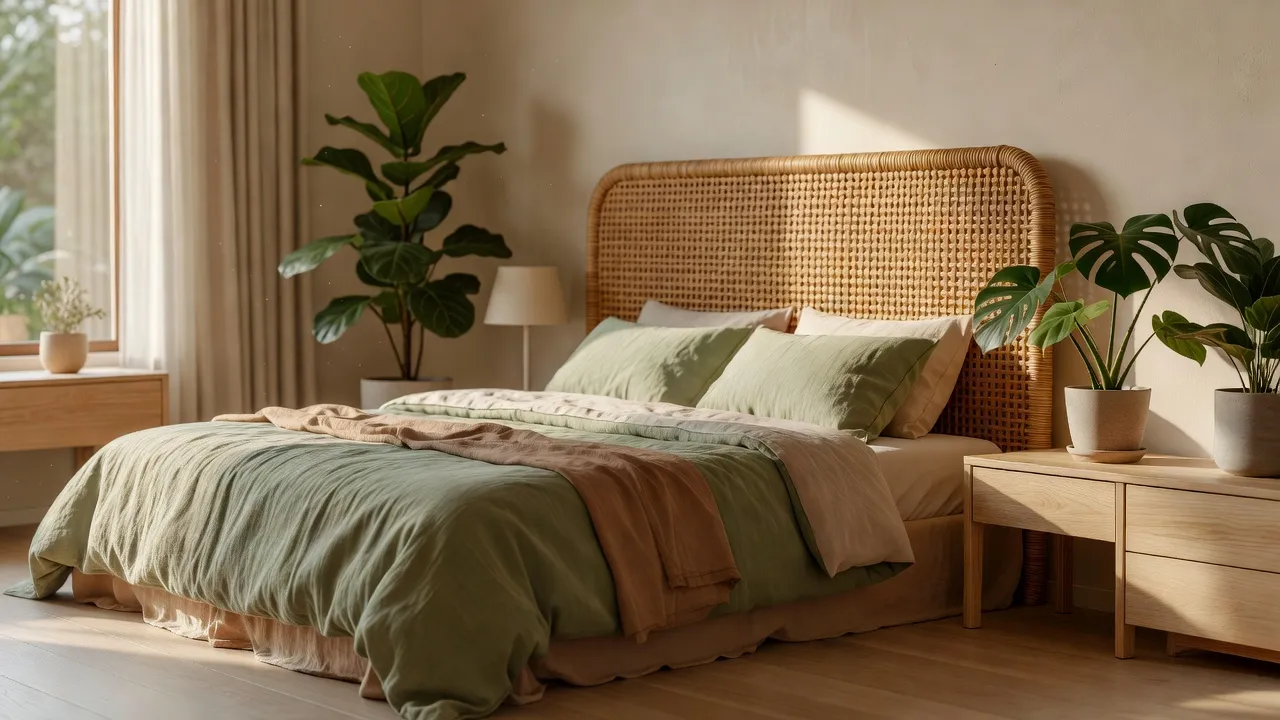
A desk positioned to face or sit near a window, paired with a low-maintenance plant like a pothos or snake plant, supports focus without demanding constant care. In a bedroom, a wood or rattan headboard, linen bedding in a muted green or clay tone, and one or two air-purifying plants create a calming, nature-adjacent space suited to rest. If you are working with furniture you already own, our guide to AI interior design with existing furniture covers how to shift a room's feel through material and plant choices rather than a full replacement.
Kitchen and bathroom
Open wood shelving holding a few potted herbs, stone or wood countertops, and a window box of trailing greenery bring biophilic principles into a kitchen without sacrificing function. In a bathroom, humidity-loving plants like ferns or pothos thrive near a shower, while natural stone tile and a wood-topped vanity reinforce the material palette used elsewhere in the home.
How Can AI Help You Design a Biophilic Room?
The hardest part of biophilic design is judging scale and light before committing — a living wall or a floor-to-ceiling plant arrangement can look completely different once it is scaled against your actual windows and furniture, and a plant-filled showroom photo rarely translates directly to a room with less natural light. That is exactly where AI helps. With DecorAI you upload a photo of your real room and the AI redesigns it in biophilic style photorealistically, keeping your real windows, proportions, and layout intact, so you are judging your own space rather than someone else's greenhouse.
That means you can compare a subtle, few-plants version of the style against a fuller living-wall treatment, test how much natural wood and stone feels right in your specific room, and decide on a plant and material plan before buying anything. Browsing real before-and-after transformations shows how convincing this is, and the full styles gallery lets you compare biophilic against related looks like Scandinavian to find the right balance of greenery and restraint for your home.
See Your Room in Biophilic Style — Free
Stop guessing whether a living wall or natural wood furniture will suit your space. Upload one photo of your room to DecorAI, choose a biophilic-inspired style, and watch the AI redesign your actual room photorealistically in seconds — keeping your real walls, windows, and layout.


What Mistakes Undermine Biophilic Design?
The most common mistake is treating biophilic design as simply "add a lot of plants," which produces a jungle that is hard to maintain rather than a considered room. The fix is to balance greenery with the other pillars of the style — light, natural material, and airflow — so a room with fewer, well-placed plants can still read as fully biophilic if the light and materials are right.
Another frequent problem is choosing high-maintenance plants for low-light rooms, which leads to a room full of dying greenery within a season. Matching plant choice to the room's actual light conditions, and leaning on hardier species like pothos or snake plants where light is limited, keeps the look sustainable. Finally, covering every natural material with a synthetic finish — a laminate "wood-look" surface instead of real wood, or plastic planters instead of clay — undercuts the tactile, raw-material feeling that makes biophilic design work in the first place. Previewing the room with AI first makes it easy to see whether a plant plan and material mix will actually feel cohesive before you spend money correcting it.
AI Biophilic Interior Design — FAQ
What is biophilic interior design in simple terms?
It is a design approach that reconnects indoor spaces with nature through live plants, maximized natural light, natural materials like wood and stone, and views of the outdoors, based on research suggesting humans feel calmer and think more clearly around natural elements.
Do I need a lot of plants for a biophilic room?
No. Natural light, raw materials like wood and stone, and airflow carry much of the biophilic feeling on their own. A few well-placed plants matched to the room's actual light conditions usually work better than crowding a space with greenery that will struggle to survive.
How is biophilic design different from Scandinavian or Japandi style?
Scandinavian and Japandi styles share biophilic design's love of natural light and wood, but they treat nature as one design influence among several. Biophilic design makes greenery, daylight, and a direct connection to the outdoors the central organizing principle of the room, not a supporting note.
Can biophilic design work in a room with little natural light?
Yes — lean on natural materials like wood, stone, and rattan to carry the style, choose hardier low-light plants such as pothos or snake plants, and use mirrors to reflect whatever light is available. The material and texture choices matter as much as live plants do.
How can I try biophilic design before buying plants or furniture?
Upload a photo of your actual room to an AI design tool like DecorAI and generate a biophilic-inspired version of that same room. Because your real layout, windows, and proportions are preserved, you get an honest preview of scale and light instead of a generic plant-shop inspiration photo.
Conclusion
Biophilic interior design rewards restraint and material honesty over sheer volume of greenery — natural light, raw wood, and a few well-placed plants do more for the feeling of the style than an overgrown room ever could. The fastest way to find out whether it suits your home is to see it on your actual space rather than in a plant-shop catalog. DecorAI lets you upload a photo of your room and preview a photorealistic biophilic redesign in seconds, so you can judge plant scale and material choices confidently before buying anything. Explore the styles gallery or start from the DecorAI homepage to try it on your own space.
Redesign Your Room in Biophilic Style — Free
Open DecorAI's web app, upload a photo of your room, and let the AI redesign your real space in warm, light-filled biophilic style in seconds. Your first designs are completely free.
Try the DecorAI Web App Free →No credit card required · Works on any device with a browser
Visualize Your Dream Home Instantly
Don't just read about it. Experience the power of AI interior design with DecorAI's free tool.
Start Designing for FreeWritten by
DecorAI Team
Editorial Team