AI Wabi-Sabi Interior Design: Embracing Imperfect Beauty at Home
A complete guide to wabi-sabi interior design with AI — raw materials, asymmetry, muted earthy tones, and handmade imperfection. Learn the principles, see the difference from Japandi and minimalism, and preview a wabi-sabi redesign of your real room with AI.
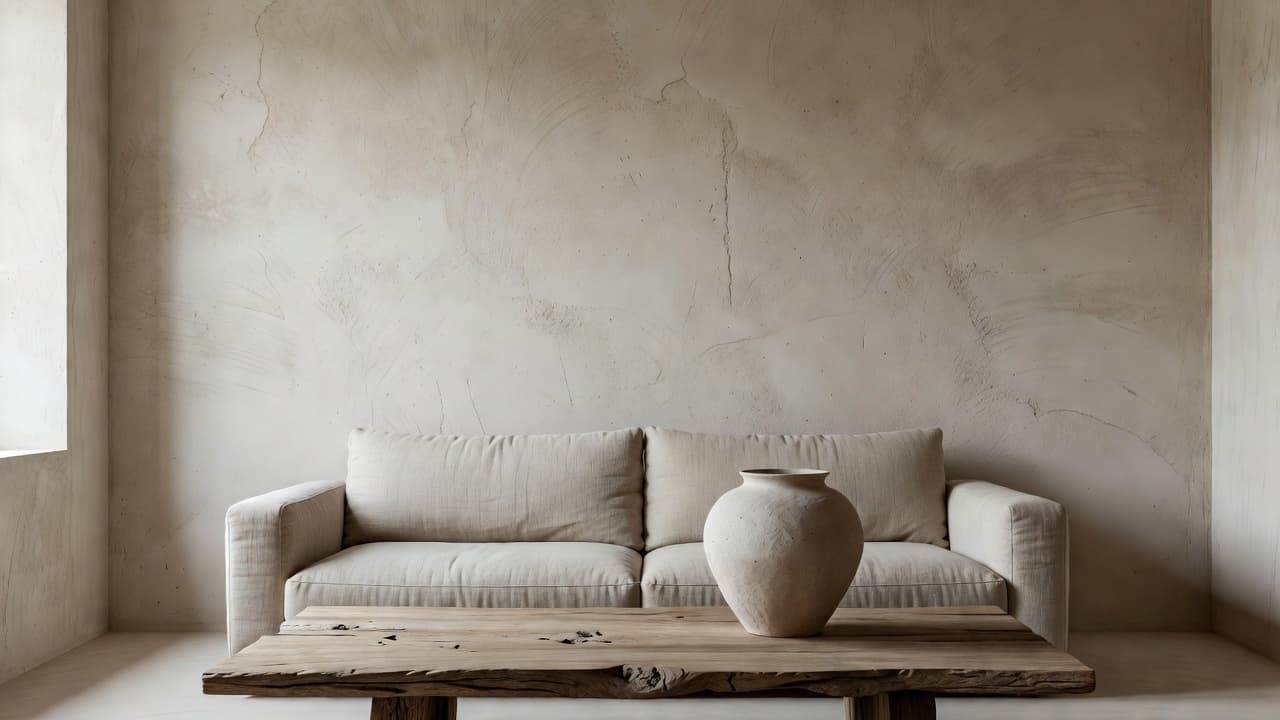
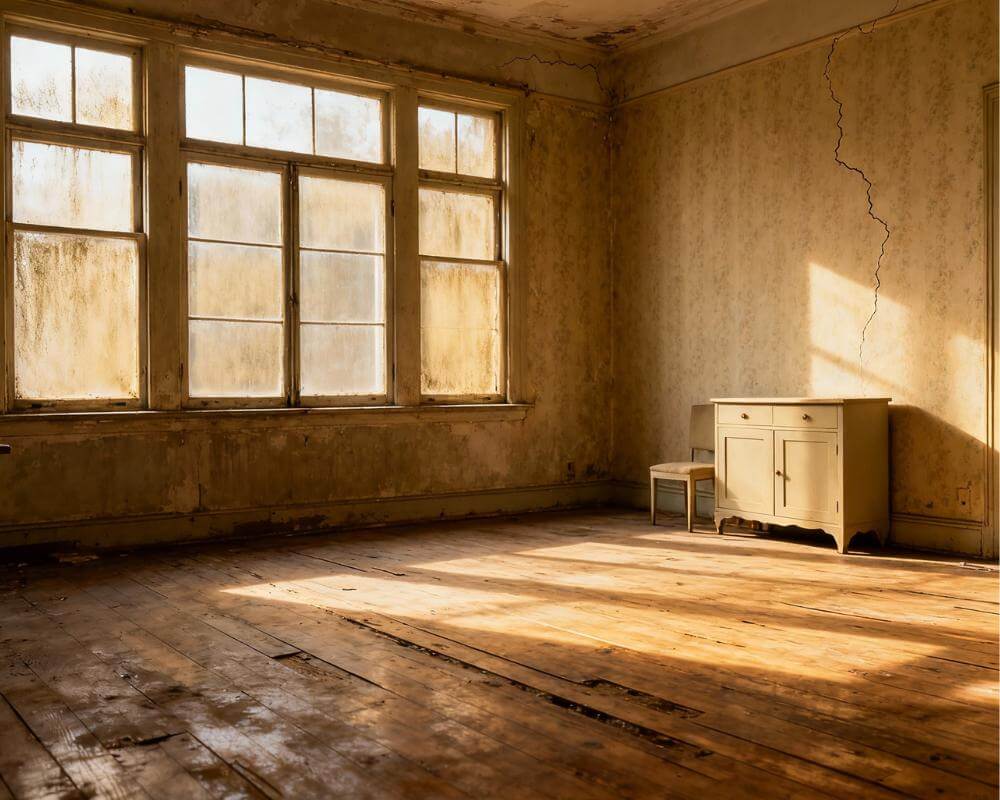
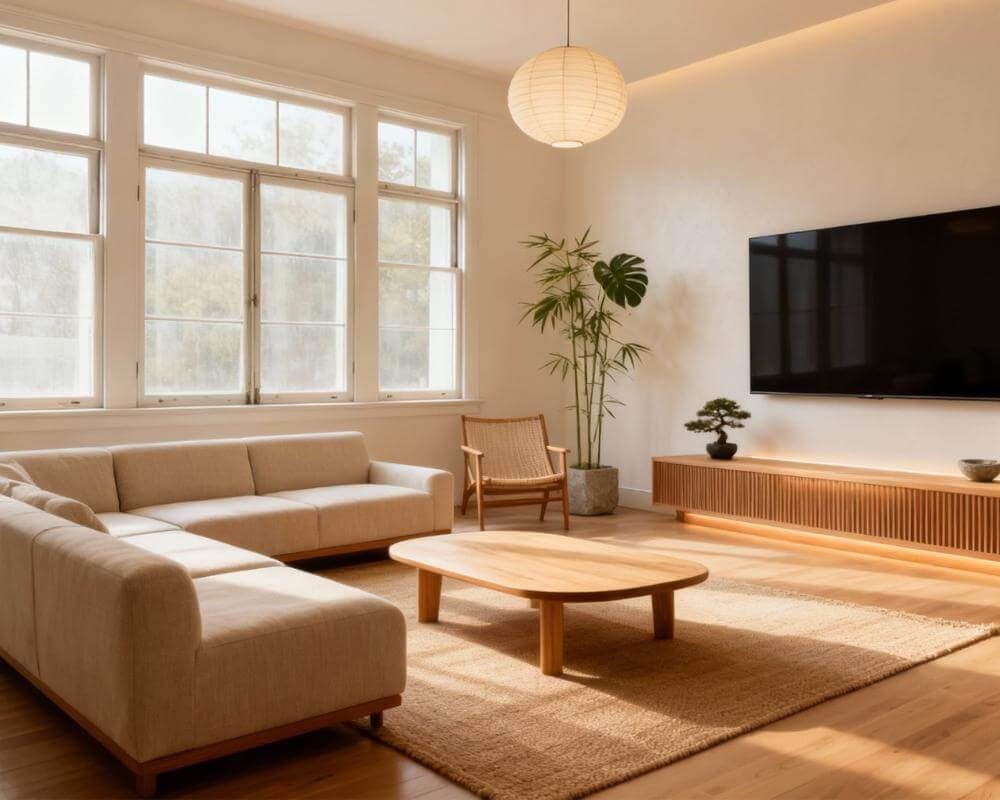
AI wabi-sabi interior design takes a centuries-old Japanese aesthetic built around imperfection, impermanence, and natural materials, and makes it far easier to test in your own home. Wabi-sabi rejects glossy, symmetrical perfection in favor of raw plaster, handmade ceramics, weathered wood, and rooms that feel lived-in rather than staged. With DecorAI, you can upload a photo of your actual room and preview how a wabi-sabi redesign would look — the textures, the muted palette, the deliberate asymmetry — before buying a single piece of furniture. This guide covers what wabi-sabi actually means, how to apply its principles room by room, how it differs from Japandi and minimalism, and how to preview the look with AI first.
Key Takeaways
- Wabi-sabi is a philosophy of imperfection, not a strict decorating formula — it values things that show their age, their making, and their natural irregularity.
- Raw, unfinished materials — exposed plaster, unlacquered wood, unglazed or hand-thrown ceramics, raw linen — do most of the visual work.
- A muted, earthy palette of clay, stone, moss, and warm neutrals replaces the crisp whites and grays common in generic minimalism.
- Wabi-sabi is not the same as Japandi — Japandi blends Japanese minimalism with Scandinavian function and clean lines, while wabi-sabi leans further into rawness, asymmetry, and visible imperfection.
- AI makes the style easy to preview — upload a photo of your real room and see a wabi-sabi redesign before committing to new furniture or finishes.
What Is Wabi-Sabi Interior Design?
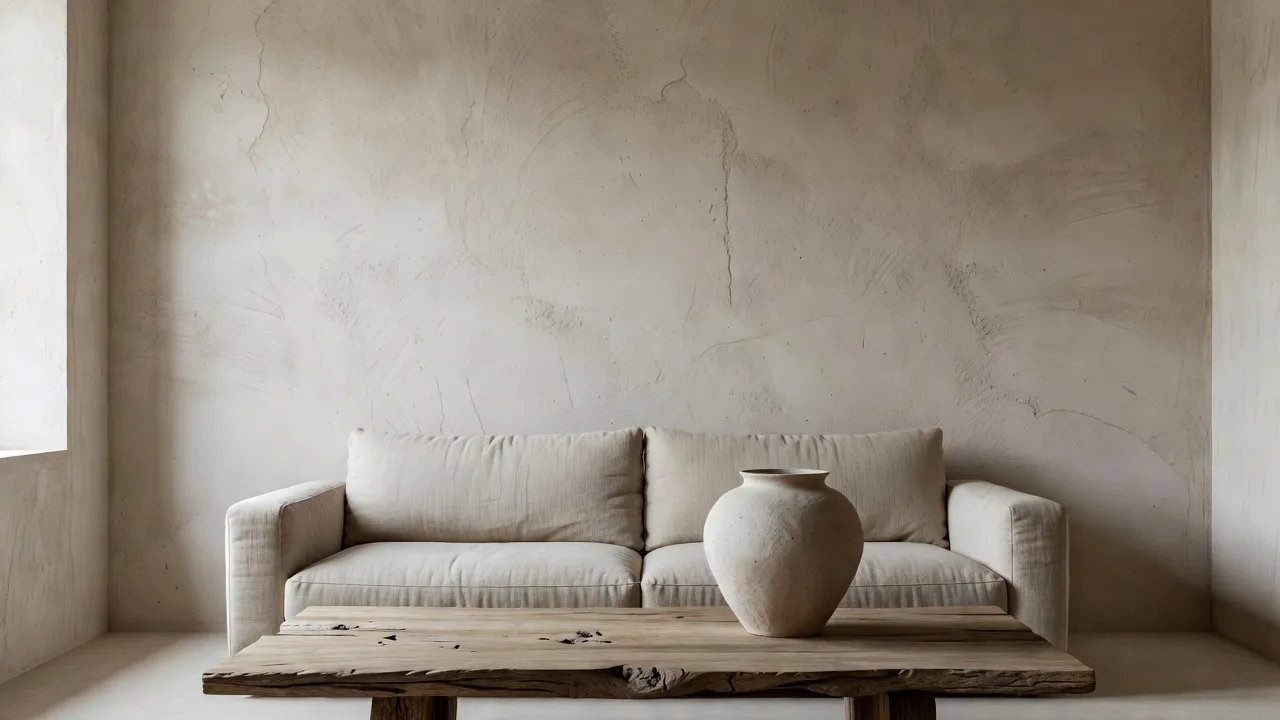
Wabi-sabi is a Japanese aesthetic philosophy centered on finding beauty in imperfection, impermanence, and incompleteness. In interiors, that translates into rooms built around raw, honest materials rather than flawless, factory-finished surfaces: a hand-thrown ceramic bowl with a slightly uneven rim, a wooden table that shows its grain and knots, a wall left with visible plaster texture instead of a perfectly smooth finish. The style values the marks of time and use — a worn leather chair, a patinated metal fixture, a linen throw that softens with washing — over anything that looks brand new or mass-produced.
The concept traces back to Japanese tea ceremony culture and Zen Buddhist thought, and the term itself combines wabi (rustic simplicity, quiet melancholy) with sabi (the beauty of age and wear). Wabi-sabi as a design philosophy has influenced everything from ceramics to architecture, and its appeal in interiors has grown as a counterpoint to overly polished, showroom-perfect spaces.
What Are the Core Principles of Wabi-Sabi Decor?
A handful of recurring principles separate genuine wabi-sabi spaces from generic "earthy minimalism."
Raw and unfinished materials
Exposed plaster or lime-washed walls, unlacquered and unsealed wood, unglazed stoneware, and raw linen or wool textiles all read as wabi-sabi because they show their own material honestly rather than being polished into uniformity.
Asymmetry over perfect symmetry
Where a lot of interior design leans on symmetrical furniture pairs and centered arrangements, wabi-sabi favors slightly off-center groupings, a single statement piece instead of a matched pair, and layouts that feel organic rather than measured.
A muted, earthy palette
Think unbleached linen, clay, stone gray, moss green, charcoal, and warm off-whites — colors pulled from natural materials rather than a paint chip labeled "greige." Our AI color palette guide covers how to build a cohesive earthy scheme from a photo of your room.
Handmade over mass-produced
A hand-thrown mug, a hand-woven basket, or a piece of furniture with visible joinery carries more wabi-sabi character than a flawless, identical-to-every-other-unit factory piece — the visible hand of the maker is part of the appeal, not a flaw to disguise.
Negative space and restraint
Wabi-sabi rooms rarely feel cluttered. Empty wall space and uncrowded surfaces let the few objects in the room — a single ceramic vessel, a worn wooden stool — actually be seen and appreciated.
How Is Wabi-Sabi Different From Japandi or Minimalism?
These three styles get grouped together often, but they diverge in a few clear ways. Japandi blends Japanese minimalism with Scandinavian warmth and function — it's still fairly clean-lined and cohesive, with an emphasis on functional simplicity. Our AI Japandi interior design guide covers that style in depth. Generic minimalism, meanwhile, tends to prioritize a pared-back, often monochrome look with crisp lines and minimal texture, as covered in our AI minimalist interior design guide.
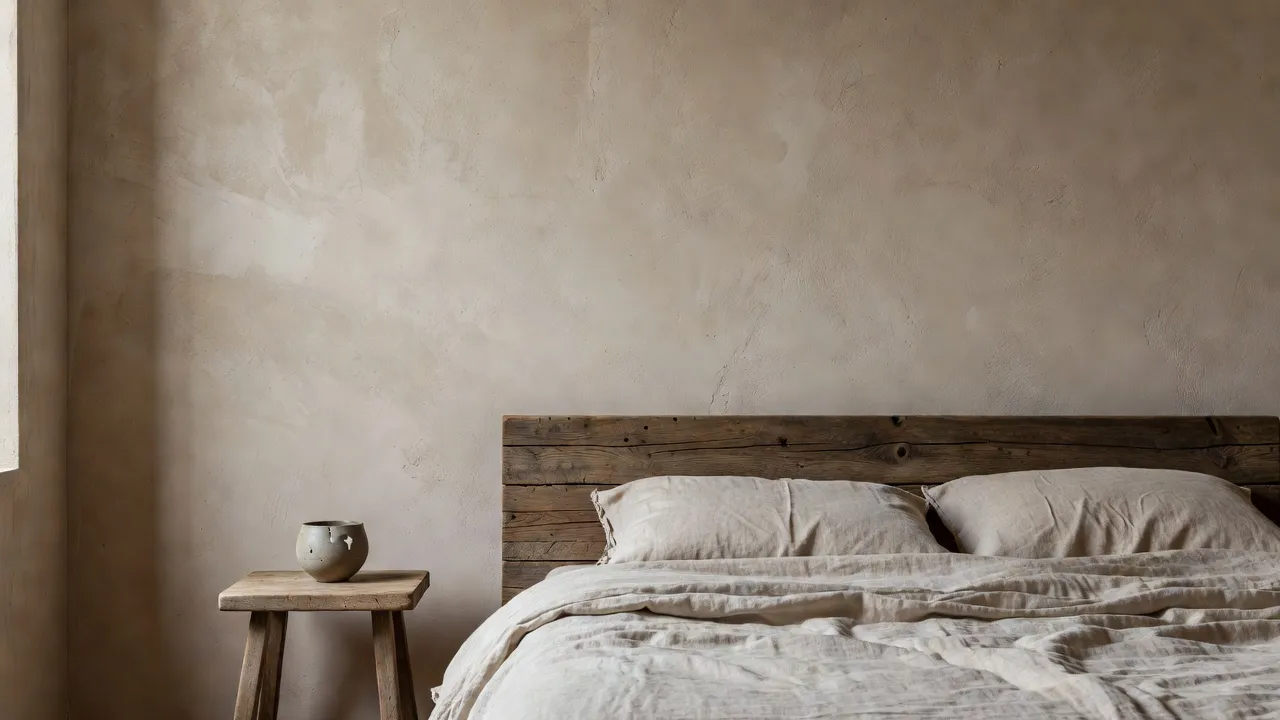
Wabi-sabi sits apart from both because it actively embraces visible imperfection, asymmetry, and age — a chipped ceramic bowl or a scuffed wooden surface fits a wabi-sabi room, but would likely be considered a flaw in a strictly minimalist or Japandi space. If Japandi is "clean and functional" and minimalism is "pared back and uniform," wabi-sabi is "raw, textured, and unapologetically imperfect."
How Do You Apply Wabi-Sabi Room by Room?
The principles translate differently depending on the room.
Living room
A low-profile linen sofa in an undyed or muted tone, a raw wood coffee table with visible grain, and a single large handmade ceramic or stoneware piece as a focal point. Skip matched furniture sets in favor of pieces that feel individually chosen.
Bedroom
A low wooden bed frame, unbleached linen bedding that's meant to wrinkle, and a textured plaster or lime-wash accent wall. Keep nightstands minimal — a single small object rather than a cluttered surface.
Kitchen and dining
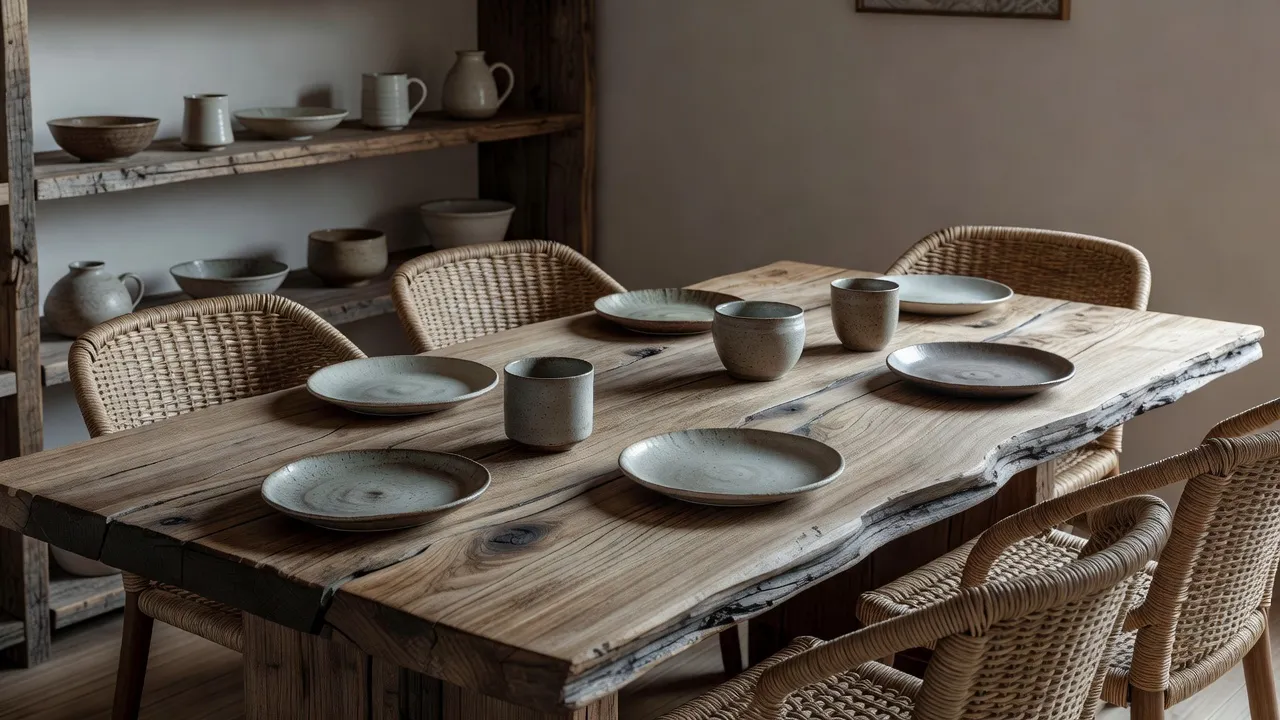
Open shelving with visibly handmade stoneware instead of matching dish sets, a live-edge or reclaimed wood table, and woven natural-fiber seating. Our AI dining room design guide has more layout ideas that pair well with this look.
Bathroom
Stone or concrete surfaces left with natural texture, a wooden stool, and linen towels instead of glossy tile and chrome fixtures throughout.
Preview Wabi-Sabi in Your Own Room — Free
Wondering if raw plaster and a muted earthy palette would actually work in your space? Upload a photo of your real room to DecorAI and see a photorealistic wabi-sabi redesign before you commit to new materials or furniture.


What Mistakes Turn Wabi-Sabi Into Just "Neutral and Bare"?
The most common mistake is treating wabi-sabi as an excuse to buy nothing and call empty rooms intentional — restraint is part of the style, but the few objects present still need to be deliberately chosen for their texture and character. A second mistake is reaching for anything that looks distressed purely for the sake of looking distressed, like mass-produced "faux weathered" furniture, which misses the point that wabi-sabi values genuine, honest materials rather than a manufactured imitation of age. A third mistake is over-polishing the palette into a flat, uniform beige — real wabi-sabi rooms have tonal variation between materials, not one matching shade of "greige" across every surface. Testing a redesign with AI first helps catch a palette or furniture choice that reads as generic rather than genuinely wabi-sabi before you've bought anything.
Can AI Show Me Wabi-Sabi Design in My Own Room?
Yes. Wabi-sabi depends heavily on how raw materials, muted color, and asymmetry actually look together in a specific space — something that's hard to judge from a mood board alone. With DecorAI, you upload a photo of your real room and the AI generates a photorealistic redesign in a wabi-sabi style, using your room's actual layout, windows, and proportions rather than a generic staged photo. That makes it possible to compare a lime-washed accent wall against your existing floors, or see whether a low linen sofa suits your living room's proportions, before buying anything. If you're furnishing around pieces you already own, our guide to AI interior design with existing furniture covers how to blend a new style into a room that isn't starting from empty.
AI Wabi-Sabi Interior Design — FAQ
What does wabi-sabi mean in interior design?
Wabi-sabi in interior design means embracing imperfection, impermanence, and natural aging — raw materials, handmade objects, and asymmetrical layouts are favored over flawless, mass-produced, symmetrical decor.
Is wabi-sabi the same as Japandi?
No. Japandi blends Japanese minimalism with Scandinavian function and clean lines, while wabi-sabi leans further into raw texture, visible imperfection, and asymmetry. Japandi is tidier and more cohesive; wabi-sabi is rawer and more irregular.
What colors are used in wabi-sabi decor?
Wabi-sabi palettes are muted and earthy — unbleached linen, clay, stone gray, moss green, charcoal, and warm off-whites drawn from natural materials rather than bright or highly saturated colors.
Can I mix wabi-sabi with furniture I already own?
Yes. Wabi-sabi doesn't require replacing everything — swapping in a few raw or handmade pieces, softening a wall's finish, and simplifying what's on display often does more than a full furniture replacement.
Can AI show me what wabi-sabi style would look like in my room?
Yes — upload a photo of your actual room to a tool like DecorAI and it generates a photorealistic wabi-sabi redesign based on your room's real layout and proportions, rather than a generic staged example.
Conclusion
Wabi-sabi interior design offers a genuinely different approach from polished, symmetrical decorating: raw plaster instead of smooth drywall, handmade ceramics instead of matched sets, and rooms that are allowed to show their age. DecorAI lets you preview the style on a photo of your actual room before committing to new materials or furniture, so you can judge whether the earthy, imperfect palette actually suits your space. Explore the styles gallery or start from the DecorAI homepage to try it yourself.
See Wabi-Sabi Style in Your Room — Free
Open DecorAI's web app, upload a photo of your room, and see a photorealistic wabi-sabi redesign with raw materials and an earthy palette. Your first designs are completely free.
Try the DecorAI Web App Free →No credit card required · Works on any device with a browser
Visualize Your Dream Home Instantly
Don't just read about it. Experience the power of AI interior design with DecorAI's free tool.
Start Designing for FreeWritten by
DecorAI Team
Editorial Team