AI Organic Modern Interior Design: The Warm Minimalist Style Guide
A complete guide to AI organic modern interior design — the warm, curved, texture-first style built on natural wood, plaster, stone, and soft neutral color rather than the stark lines of minimalism. Learn the palette, materials, and layout rules that define the look, then preview it on your real room with AI.
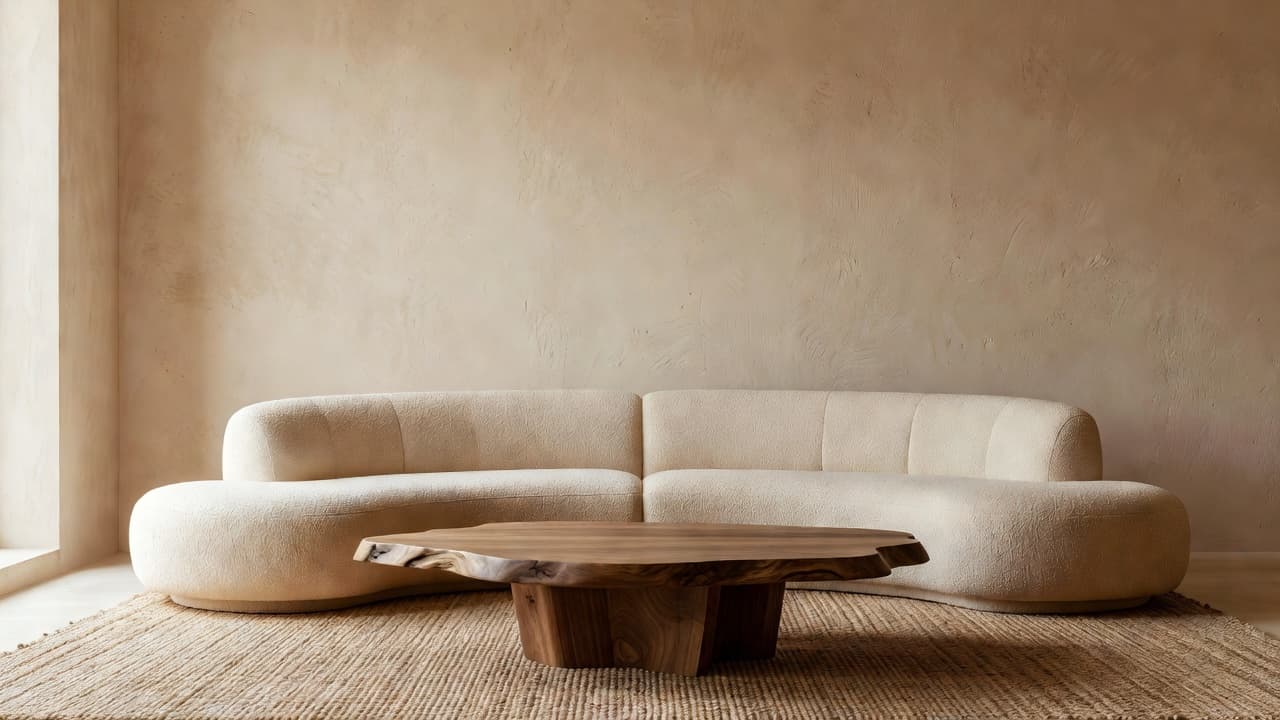
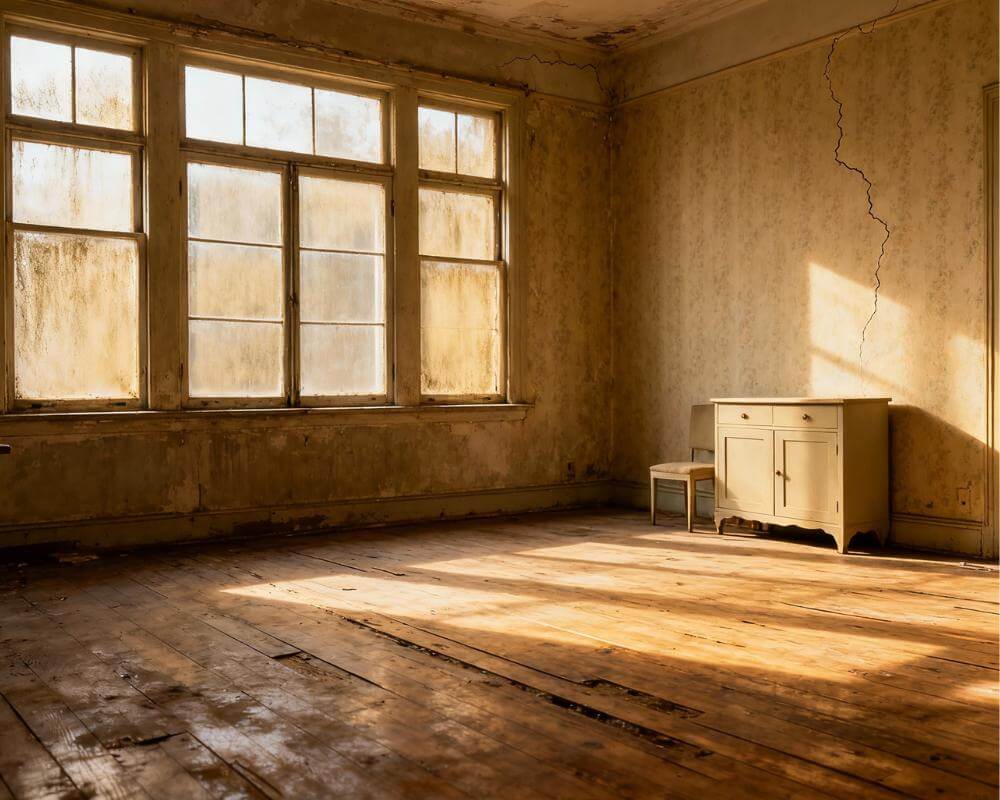
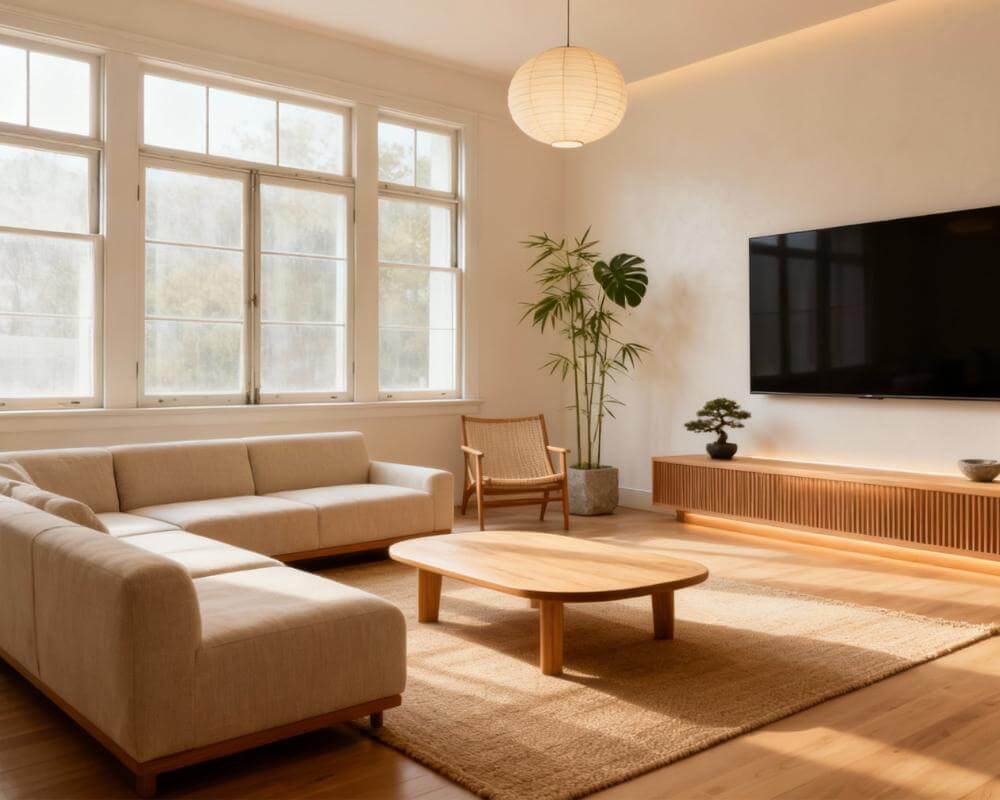
AI organic modern interior design takes the clean lines of minimalism and softens every edge: curved furniture instead of sharp angles, natural wood and stone instead of glass and chrome, and a warm neutral palette instead of stark white. DecorAI is an AI interior design app that lets users transform photos of existing rooms into realistic redesign concepts, so instead of guessing whether a curved bouclé sofa and a live-edge coffee table would actually feel warm rather than empty in your own space, you upload a photo and see the whole look rendered on your real walls and windows in seconds.
The style grew out of a reaction to two extremes at once — the cold, hard-edged minimalism of the 2010s and the maximalist, pattern-heavy interiors that followed it — and settled somewhere calmer than both: still uncluttered, but built from materials that show grain, texture, and imperfection rather than flawless, factory-smooth surfaces. This guide covers what actually defines organic modern, the palette and materials that make it convincing, how it differs from plain minimalism, Scandinavian, and Japandi styles it's often confused with, how to apply it room by room, and how to preview the whole thing on your own room with AI before buying anything.
Key Takeaways
- Organic modern interior design softens minimalism with curved furniture, natural materials, and a warm neutral palette rather than sharp lines and stark white.
- Texture replaces pattern and color as the main visual interest — plaster, boucle, raw wood grain, and stone do the work that a bold print or accent wall would do in other styles.
- It's not the same as plain minimalism, Scandinavian, or Japandi — organic modern is warmer and curvier than minimalism, less bright and pared-back than Scandinavian, and less rule-bound than Japandi's balance of Japanese and Nordic form.
- Curves are the fastest visual signal: an arched mirror, a rounded sofa arm, or a curved cabinet front reads as organic modern almost on sight.
- AI lets you preview curved, texture-heavy furniture on your real room before buying pieces that are hard to picture from a product photo alone.
- Try DecorAI free to test the organic modern look in your own room before buying anything.
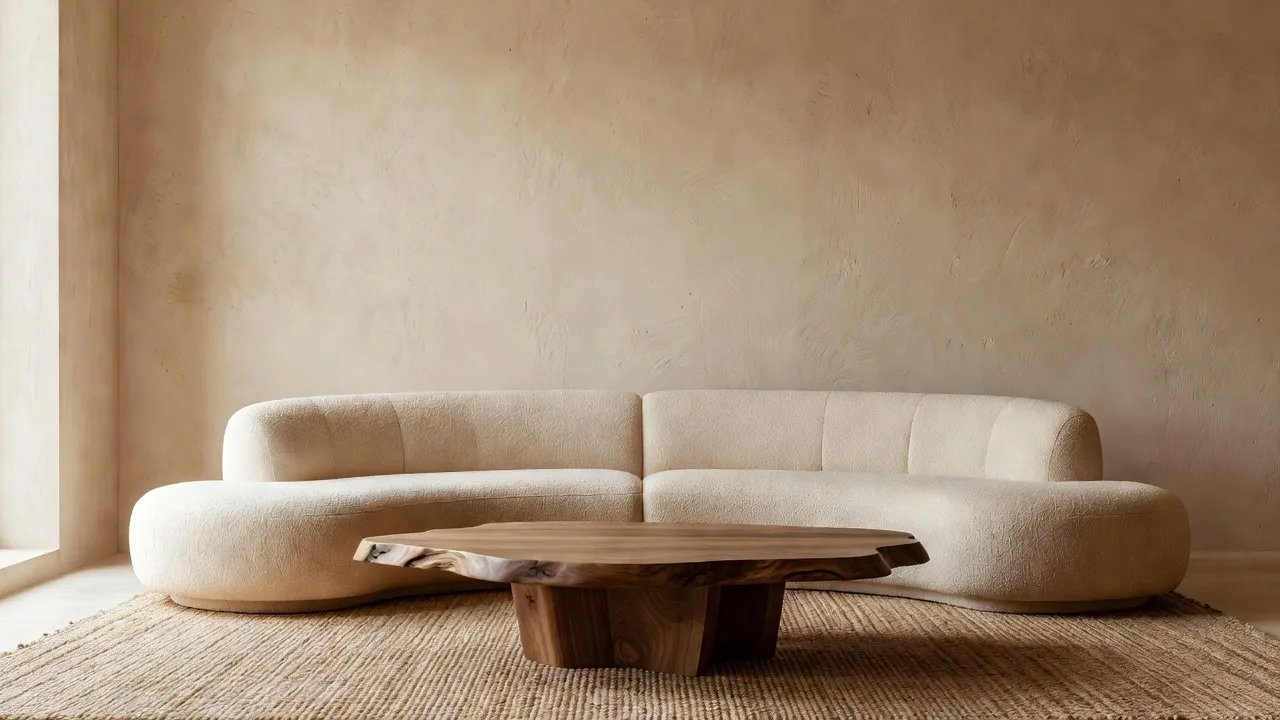
What Is Organic Modern Interior Design?
Organic modern interior design keeps minimalism's uncluttered instincts — few pieces, no unnecessary decoration, plenty of breathing room — but replaces its hard edges and cool finishes with curves, natural materials, and warmth. Where a strictly minimalist room might lean on glass, chrome, and crisp right angles, an organic modern room reaches for raw wood, plaster, linen, and stone, and lets a sofa arm or a mirror frame curve rather than stay perfectly square. The result reads as calm and considered rather than sparse or clinical.
It shares its restraint with minimalist interior design and its love of natural material with biophilic design, but it isn't trying to do either of those jobs exactly: it's not as spare as minimalism, and it doesn't center on living plants or daylight the way biophilic design does. Organic modern's specific signature is the combination of a pared-back layout with soft, curved forms and visibly textured, imperfect materials.
What Colors Work in an Organic Modern Palette?
The palette stays warm and low-contrast, closer to the color of raw materials than to any manufactured paint chip. For a broader guide to building a room-wide scheme, see our AI color palette room design guide.
- Warm white and putty: the base wall and ceiling tone, always with a hint of beige or gray rather than a stark, cool white.
- Greige and taupe: the most common mid-tone, used on larger upholstered pieces and rugs to keep the room feeling soft rather than empty.
- Terracotta and clay: a warm, earthy accent used sparingly on a vase, a throw, or a single wall rather than as a dominant color.
- Honey and walnut wood tones: visible, natural wood grain on furniture and flooring, never painted over or heavily lacquered.
- Soft charcoal and stone gray: a grounding dark accent on a lamp base or a piece of stone, used in small doses to keep the palette from reading flat.
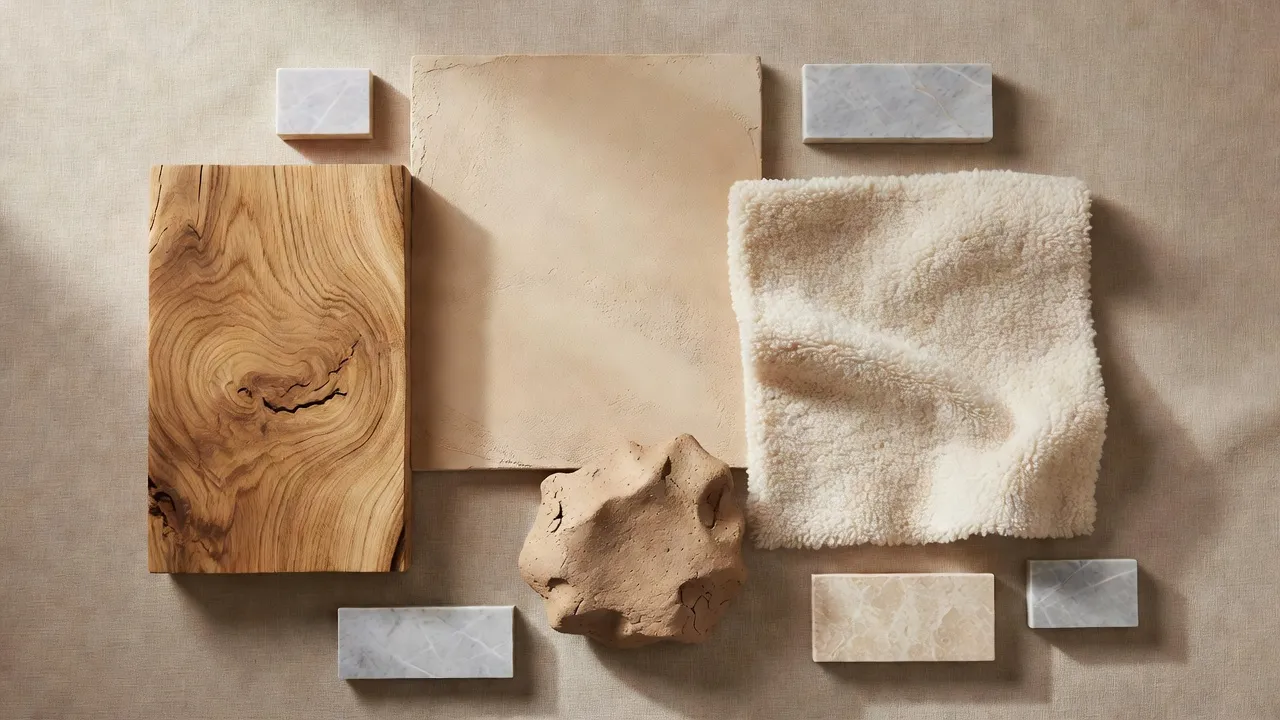
The rule that keeps it from tipping into plain beige: every color in the room should trace back to a real material — wood, clay, plaster, linen, stone — rather than a paint color chosen on its own. If a tone doesn't exist somewhere as an actual material in the space, it usually doesn't belong in an organic modern palette.
What Furniture and Materials Define Organic Modern?
Shape and texture do the work in an organic modern room — a piece earns its place by curving where a conventional piece would be square, or by showing the grain, weave, or imperfection of its material rather than hiding it.
Curved silhouettes
A rounded-arm sofa, an arched doorway or mirror, a curved cabinet front, or a pill-shaped coffee table are the fastest way to read as organic modern rather than plain minimalist. The rule of thumb: at least one large piece in the room should curve rather than have a hard right angle.
Raw and honest wood
Live-edge tables, unlacquered oak or walnut furniture, and wood left visibly grained rather than painted or high-gloss finished are the material backbone of the style. A wood surface with visible knots or grain variation reads as more authentically organic modern than a perfectly uniform veneer.
Plaster, clay, and stone
Lime-plaster or limewash walls with a slightly uneven, hand-troweled finish, a clay table lamp, and a honed stone side table or hearth bring in the texture that flat drywall and glossy tile can't. These finishes photograph best in soft, warm light, which is part of why organic modern rooms so often look best around midday or with warm-toned lamps.
Boucle, linen, and jute
Nubbly bouclé upholstery, heavyweight linen curtains and cushions, and a jute or wool rug with visible weave add tactile softness without introducing pattern or bold color, keeping the room quiet while still feeling touchable rather than austere.
See Your Room Go Organic Modern — Free
Upload one photo and watch DecorAI restyle your actual room with curved furniture, natural wood, and a warm neutral palette in seconds, keeping your real windows and layout. Test the curves and texture before you commit to furniture that's hard to picture from a product photo.


How Is Organic Modern Different From Minimalism, Scandinavian, or Japandi?
All four styles share a preference for calm, uncluttered rooms, but they land in different places. Minimalism is the sparest of the group — hard edges, a very limited palette, and often cool tones, with function taking priority over warmth. Scandinavian design is brighter and more pared-back, built around light wood and white to counter long, dark winters. Japandi blends Japanese and Scandinavian restraint into a more rule-bound, symmetrical calm. Organic modern is the warmest and curviest of the four: it borrows the uncluttered layout all of them share but adds rounded silhouettes, deeper earthy tones, and visibly imperfect, textured materials that the other three tend to smooth away. The simplest way to tell them apart in a photo: minimalism reads as spare, Scandinavian reads as bright, Japandi reads as balanced, organic modern reads as warm and rounded.
How Do I Apply Organic Modern Room by Room?
The core ingredients — curved silhouettes, raw wood, plaster or stone texture, and a warm neutral palette — stay constant. Only the anchor pieces change by room.
Organic modern living room
A curved bouclé sofa, a live-edge or round wood coffee table, a jute rug, and a plaster-finish accent wall or fireplace surround give the room its warmth without a single bold color. Our AI living room design ideas guide has more ways to layer a room like this.
Organic modern bedroom
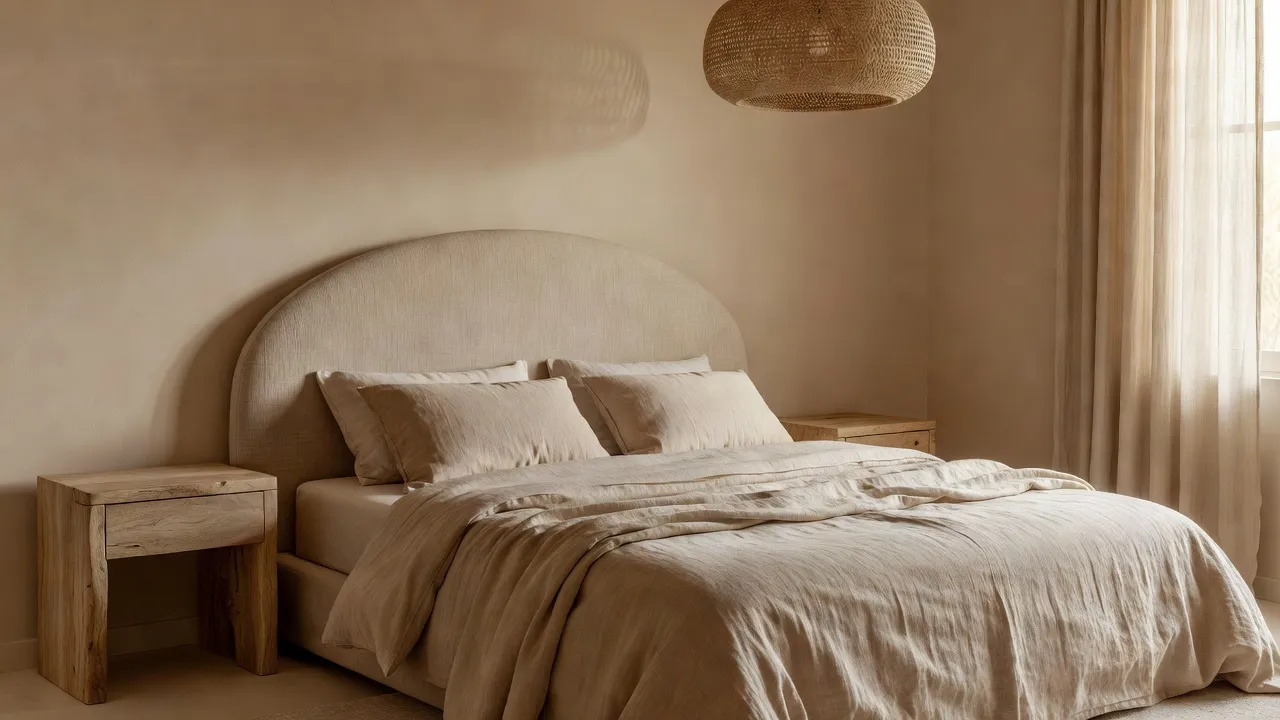
A curved or arched upholstered headboard, unlacquered wood nightstands, heavyweight linen bedding in warm putty or clay tones, and a woven pendant or table lamp keep the room soft and quiet rather than stark. See our AI bedroom design guide for more layout and lighting options.
Organic modern kitchen
Curved cabinet edges or a rounded island corner, honed stone countertops with visible veining, and open shelving in raw or lightly stained wood swap out the flat-front, high-gloss cabinetry that dominates most modern kitchens for something that feels handmade instead of manufactured.
What Are Common Organic Modern Mistakes to Avoid?
- Going too beige. A room built entirely from flat, uniform neutrals with no visible material texture reads as plain and forgettable rather than organic modern.
- Skipping the curves entirely. A room with the right materials and palette but no curved silhouette anywhere just reads as warm minimalism, not the full style — add at least one rounded piece.
- Using faux finishes. Printed "wood grain" laminate or a flat paint faux-plaster effect reads as artificial up close; the style depends on materials that actually show real texture.
- Overdoing the stone or wood. Matching wood tone across every piece of furniture in a room can tip into a "showroom" look — mix a couple of wood tones and finishes rather than one uniform material throughout.
- Skipping the preview. Curved, texture-heavy furniture is hard to judge from a single product photo — visualize it on your real room with AI before buying anything large or hard to return.
Organic Modern Interior Design FAQ
What is organic modern interior design?
Organic modern interior design is a style that keeps minimalism's uncluttered layout but softens it with curved furniture, natural materials like raw wood, plaster, and stone, and a warm neutral color palette rather than sharp lines and stark white.
What colors are used in organic modern rooms?
A warm, low-contrast palette — warm white, greige, taupe, terracotta, and honey or walnut wood tones — with every color tracing back to a real material like clay, wood, or stone rather than a standalone paint choice.
Is organic modern the same as minimalism or Scandinavian design?
No. Minimalism is sparer and often cooler-toned, Scandinavian design is brighter and more pared-back, and Japandi blends Japanese and Scandinavian restraint into a rule-bound calm. Organic modern is the warmest and curviest of the group, adding rounded silhouettes and visibly textured, imperfect materials that the other three tend to smooth away.
Can AI design an organic modern room from my photo?
Yes. Upload a photo of your room to DecorAI, choose a warm or nature-inspired style, and the AI redesigns your real space photorealistically in seconds — keeping your actual windows and layout while applying the curved furniture, natural materials, and warm palette the style depends on.
Does organic modern work in a small apartment?
Yes — the style doesn't require large statement furniture. A single curved chair, a raw-wood side table, a plaster-effect accent wall, and linen textiles translate the look into a small space just as well as a larger home; texture and warmth do most of the work regardless of square footage.
Conclusion
AI organic modern interior design takes minimalism's calm and adds back the warmth and texture that stark, hard-edged rooms can lack: curved furniture, raw wood, plaster, and stone, previewed on your real room instead of guessed from a product photo. Start with one curved anchor piece — a sofa or a mirror — and let AI show you how the warmer palette and material mix actually look on your walls before you spend on furniture that's hard to return. Upload a photo to DecorAI to see your room transformed for free, browse the full styles gallery, or head back to the DecorAI homepage to get started.
Visualize Your Dream Home Instantly
Don't just read about it. Experience the power of AI interior design with DecorAI's free tool.
Start Designing for FreeWritten by
DecorAI Team
Editorial Team