AI Curtain Visualizer App: See Window Treatments Before You Buy
A practical guide to using an AI curtain visualizer app to preview curtains, drapes, and blinds on your actual window before you order anything — how the technology works, curtains versus blinds versus shades, choosing length, fullness, and color, and the most common window treatment mistakes.

An AI curtain visualizer app lets you upload a photo of your actual window and preview curtain fabrics, colors, lengths, and even blinds or shades rendered at true scale in your room's real light, before you order a single panel. Window treatments are one of the hardest home decor decisions to make from a store display or a tiny fabric swatch, because color, drape, and opacity all read completely differently once a curtain is hanging eight feet up against your actual wall and window trim. With DecorAI, you can test a curtain color against your real sofa, compare sheer versus blackout fabric, or see how blinds would look next to drapery on the same photo of your room. This guide covers how AI window treatment visualization works, curtains versus blinds versus shades, choosing length, fullness, and color correctly, and the most common mistakes people make buying window treatments sight-unseen.
Key Takeaways
- Fabric swatches are unreliable at window scale — a color or pattern that looks right as a small sample can shift dramatically once it's hanging across a full window in natural light.
- AI visualization uses your real window and room — a photo of your actual wall, trim, and furniture produces a far more useful preview than a showroom display or a stock photo room.
- Curtain length and fullness change a room's proportions — floor-length panels hung close to the ceiling make a window look taller, while too little fabric width reads as skimpy regardless of color.
- Curtains, blinds, and shades solve different problems — light control, privacy, and style each favor a different treatment, and many rooms benefit from combining two.
- AI lets you compare fabric, color, and hardware options on your actual window before ordering custom or made-to-measure treatments, which are expensive to return or remake.
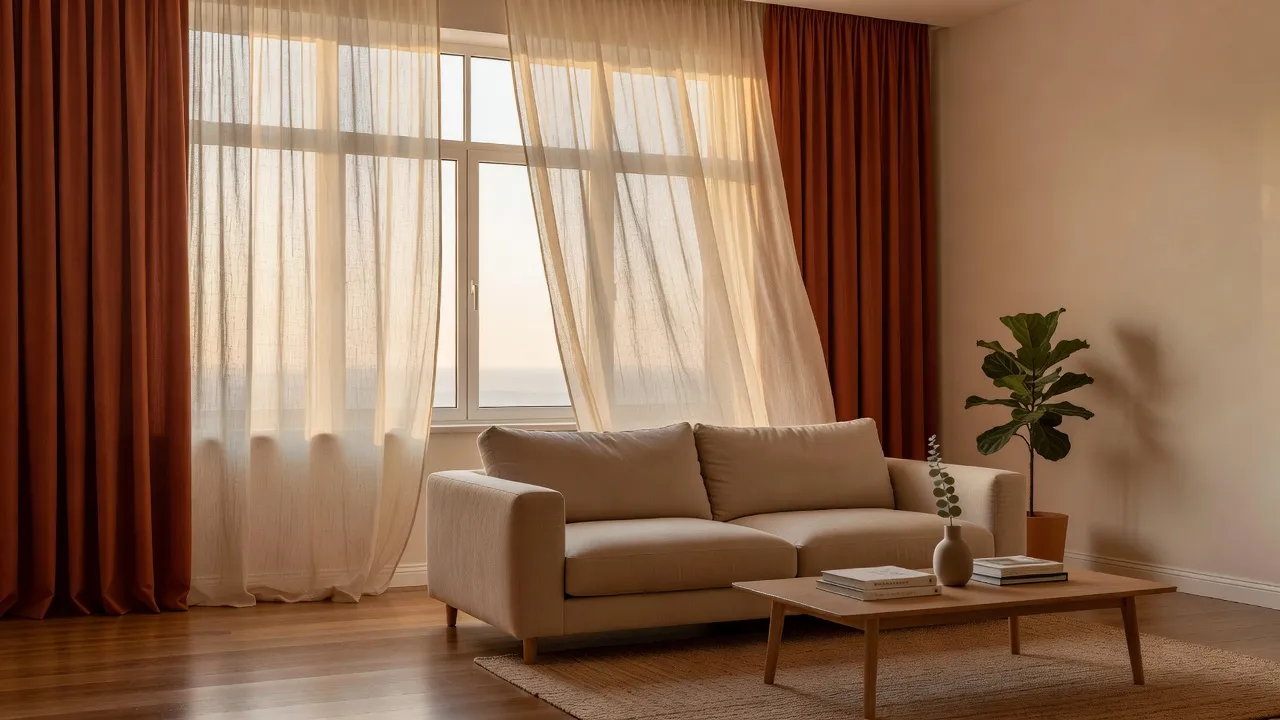
What Is an AI Curtain Visualizer, and How Is It Different From a Fabric Swatch?
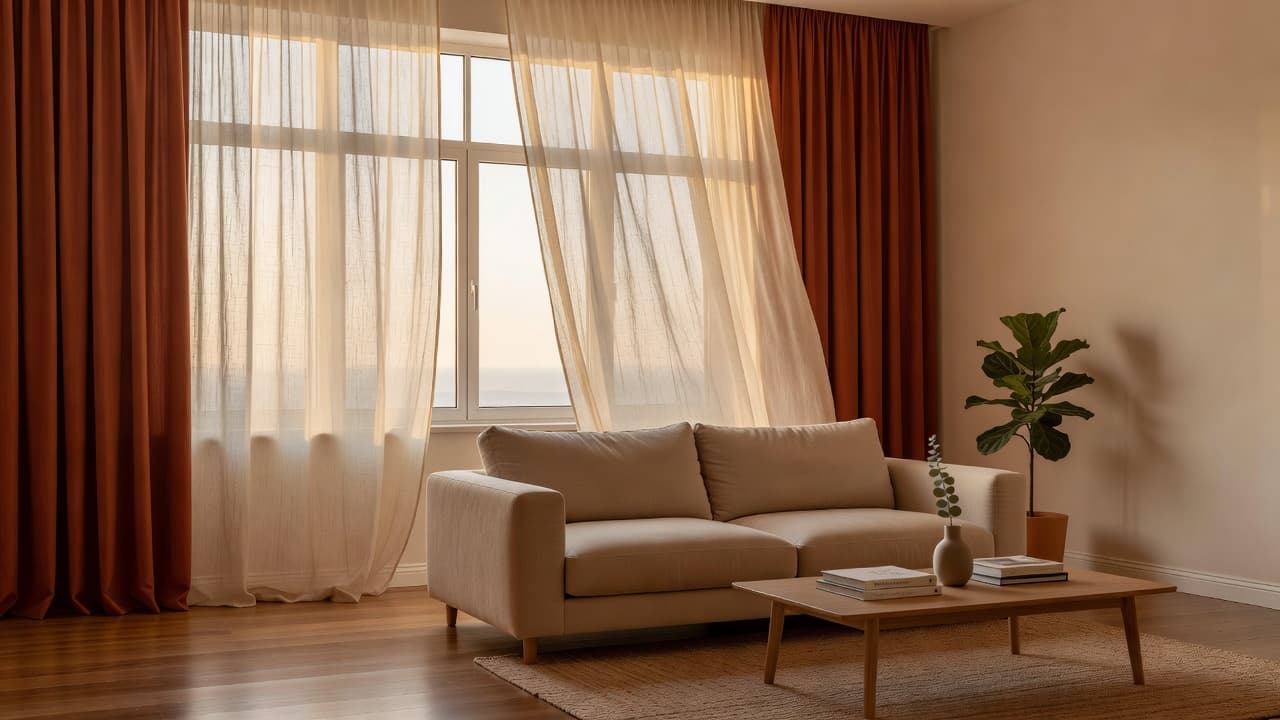
A fabric swatch shows a curtain material in isolation, usually a piece a few centimeters across, disconnected from your window's actual height, your wall color, your existing furniture, and the specific quality of light that hits that spot in your home. An AI curtain visualizer instead works from a photo of the real window the treatment will hang on, then generates a photorealistic version of that same space with the fabric, color, and style applied at the correct scale, hanging the way real curtains or blinds actually would against your trim and floor. The difference matters because color and opacity both shift enormously with scale and light — a warm terracotta linen that reads as subtle on a small sample can look saturated and bold once it's covering a full window wall in afternoon sun, and a swatch alone can't show you that.
How Does AI Window Treatment Visualization Actually Work?
The process breaks down into three steps, and getting each one right produces a far more accurate preview.
1. Upload a Photo of Your Actual Window
Start with a well-lit, straight-on photo of the window and the wall around it, taken during the day in the room's normal light rather than with flash. The AI reads the window's real height, width, trim, and any furniture nearby, which is what makes the resulting preview useful instead of generic.
2. Choose or Describe a Curtain, Blind, or Shade Style
From there you can specify a treatment — flowing linen drapery, blackout curtains, woven wood blinds, roman shades, or sheer panels — along with a color or pattern, and the AI renders it onto your specific window. This replaces guessing from a swatch or a manufacturer's stock photo of a completely different room.
3. Preview at Real Scale and in Your Room's Actual Light
The finished render accounts for your room's real light direction and intensity, which changes how a color or fabric reads — a saturated color looks noticeably different under bright south-facing light than it does in a north-facing room with softer, cooler light most of the day. Comparing a few colors or fabrics against the same photo, in the same light, is what makes the final decision reliable rather than a guess.
Curtains vs. Blinds vs. Shades: Which Should You Preview First?
Each window treatment category solves a different combination of light control, privacy, and style, and many rooms genuinely benefit from combining two rather than picking just one.
- Curtains and drapery — the softest, most decorative option, best for adding color, texture, and a sense of height to a room; sheer panels filter light without blocking it, while lined or blackout curtains control both light and privacy.
- Blinds — horizontal or vertical slats that give precise, adjustable light control and a cleaner, more architectural look; well suited to kitchens, home offices, and rooms where moisture or grease make fabric impractical.
- Shades — roman, roller, or cellular shades sit flatter against the window than curtains and offer a simpler silhouette; cellular shades in particular add meaningful insulation value in rooms with older or drafty windows.
A common combination is a functional blind or shade underneath for daily light and privacy control, paired with decorative curtains on either side purely for color, texture, and framing — the curtains may never fully close, but they do most of the visual work in the room. Our AI living room design ideas guide covers how window treatments fit into a room's overall layout and focal points.
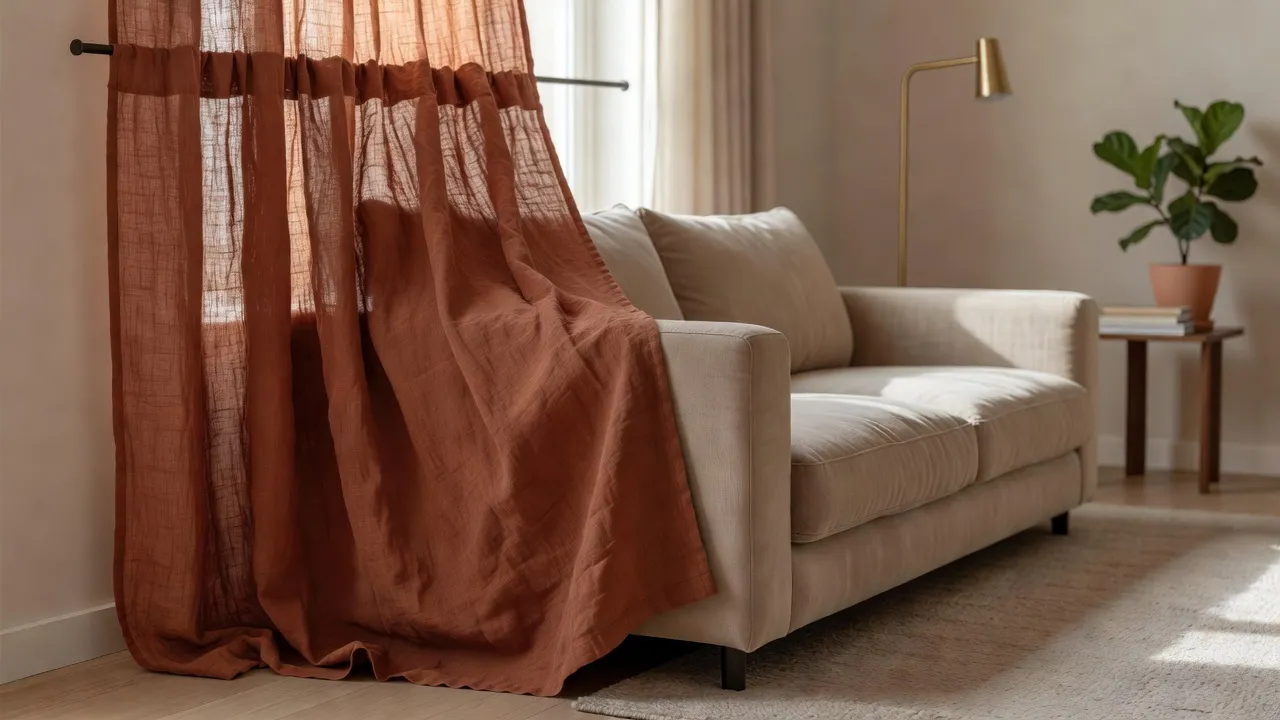
How Do You Choose Curtain Length, Fullness, and Color?
Length and fullness affect a room's proportions more than most people expect, and getting them wrong is the most common reason a finished curtain job looks slightly off even with the right fabric. Floor-length panels, hung as close to the ceiling as the wall allows rather than directly above the window frame, make the window and the room read as taller — this is one of the simplest, lowest-cost ways to improve a room's proportions. Panels that stop a few centimeters above the floor or, worse, hover well above the sill, tend to make a room look unfinished rather than intentional. Fullness matters just as much as length: curtain rods should typically extend well past the window frame on each side, and the fabric width should be roughly double the rod's width when gathered, so the curtains read as generous rather than thin and stretched. On color, curtains that pick up an existing tone already in the room — a wall color, a rug, or upholstery — tend to feel cohesive, while a curtain in a completely unrelated color can fight with the rest of the space even if it looks good in isolation. Our AI color palette for room design guide covers matching a new element's color to a room's existing palette in more depth, and color theory is a useful background read on why certain tones read as cohesive together and others clash.
Preview Curtains on Your Real Window — Free
Stop guessing from a swatch. Upload a photo of your actual window to DecorAI and preview curtain fabrics, colors, and blinds at true scale before you order anything.


What Mistakes Do People Make When Choosing Window Treatments Without Previewing Them?
- Hanging curtains too low or right above the window frame. This is the single most common mistake and the one that makes windows and ceilings look shorter than they are.
- Buying based on a swatch color alone. A color that looks neutral as a small sample can read far warmer or cooler once it covers a full window in real light.
- Choosing fabric that's too thin for the desired light control. A sheer panel bought for privacy in a street-facing bedroom rarely does the job it was bought for.
- Ignoring existing hardware and trim color. A rod or bracket finish that clashes with door hinges or other fixed metal in the room stands out more than expected.
- Underestimating fullness. Ordering exactly window-width fabric instead of roughly double that width is why many curtains look thin and flat once hung.
Should Window Treatments Match the Room's Style, or Contrast With It?
Both approaches work, but they solve different problems. Matching — a curtain color pulled from the wall, rug, or a major upholstery piece — creates a calm, cohesive room where the eye isn't drawn to any single element, which suits rooms that already have a lot of pattern or color elsewhere. Contrasting — a bold color or pattern against an otherwise neutral room — turns the window treatment into a focal point, which works well in a room that's otherwise fairly plain and could use one confident design move. The riskiest middle ground is a treatment that's almost-but-not-quite matching the room's existing palette, close enough to look like an attempted match but off enough to read as a mistake; if a full match isn't the goal, a clear contrast tends to look more deliberate than a near-miss. Previewing the exact fabric against a photo of the actual room removes most of the guesswork about which side of that line a specific color or pattern falls on. Our AI interior design for small spaces guide covers how window treatment choices affect a small room's sense of scale specifically.
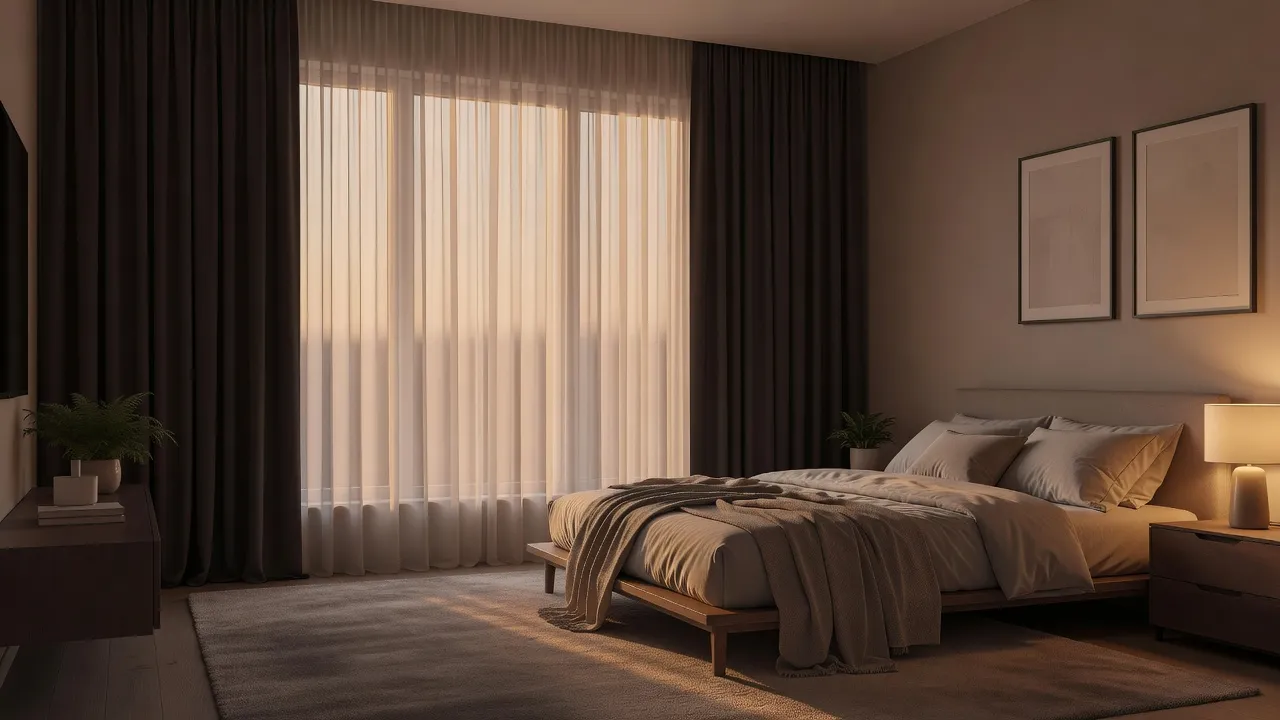
Can AI Show Me Exactly How Curtains or Blinds Will Look Before I Buy?
Yes. Because the render is generated from a photo of your actual window rather than a stock image, an AI curtain visualizer accounts for your room's real proportions, trim, existing furniture, and light — the details that make the difference between a genuinely useful preview and a nicer-looking swatch. With DecorAI, you upload a photo of your window and compare several fabrics, colors, and hardware styles side by side before ordering anything, which matters most for custom or made-to-measure curtains, since a wrong color or length choice is expensive and slow to remake. If you're weighing a full window treatment change against a broader room refresh, our AI mood board creator guide is useful for collecting fabric, color, and furniture ideas in one place before you commit to any of them.
AI Curtain Visualizer — FAQ
Can an AI curtain visualizer show blinds and shades as well as curtains?
Yes. The same photo of your window can be used to preview curtains, drapery, roman or roller shades, and horizontal or vertical blinds, which makes it easy to compare fundamentally different treatment types on the exact same space before deciding.
How long should curtains be for the best look?
Floor-length panels, hung as close to the ceiling as the wall allows rather than directly above the window frame, generally make a window and room look taller. Panels that stop noticeably short of the floor tend to make a finished room look unintentional.
Should I match my curtain color to my walls or my furniture?
Either can work well. Matching a wall or a major upholstery color creates a calm, cohesive look, while a deliberate contrast turns the window into a focal point. The riskiest choice is a color that's close to matching without quite getting there.
Is an AI preview accurate enough to order custom curtains from?
It's a strong guide to color, scale, and overall look, since it's generated from your window's actual proportions and your room's real light. Fine details like fabric texture, sheen, or exact seam finishing will still vary slightly with the physical product, so treat it as a decision-making tool rather than a guaranteed pixel-for-pixel match.
Do I need different window treatments for different rooms in the same house?
Often, yes. Bedrooms typically benefit from blackout or heavily lined curtains for privacy and light control, kitchens and bathrooms usually favor blinds or shades that handle moisture better than fabric, and living rooms have the most flexibility to prioritize style over strict light control.
Conclusion
Window treatments are one of the easiest home decor decisions to get wrong from a swatch alone, because color, opacity, and scale all shift once fabric or blinds are actually hanging in your room's real light. Preview the exact color and style on a photo of your own window first, and choices between curtains and blinds, matching and contrasting, floor-length and cropped all become far easier calls. DecorAI lets you see exactly how curtains, drapery, or blinds will look on your actual window before you order anything. Explore the styles gallery for more design directions, read our AI wallpaper visualizer guide for another way to preview a wall before committing, or start from the DecorAI homepage to try it on your own space.
Visualize Your Dream Home Instantly
Don't just read about it. Experience the power of AI interior design with DecorAI's free tool.
Start Designing for FreeWritten by
DecorAI Team
Editorial Team