AI Ceiling Design Visualizer: Statement Ceiling Ideas
How to use an AI ceiling design visualizer to preview tray ceilings, coffered panels, exposed beams, shiplap, painted "fifth walls," and ceiling wallpaper on your real room before you commit — plus the color and material choices that make a statement ceiling work.
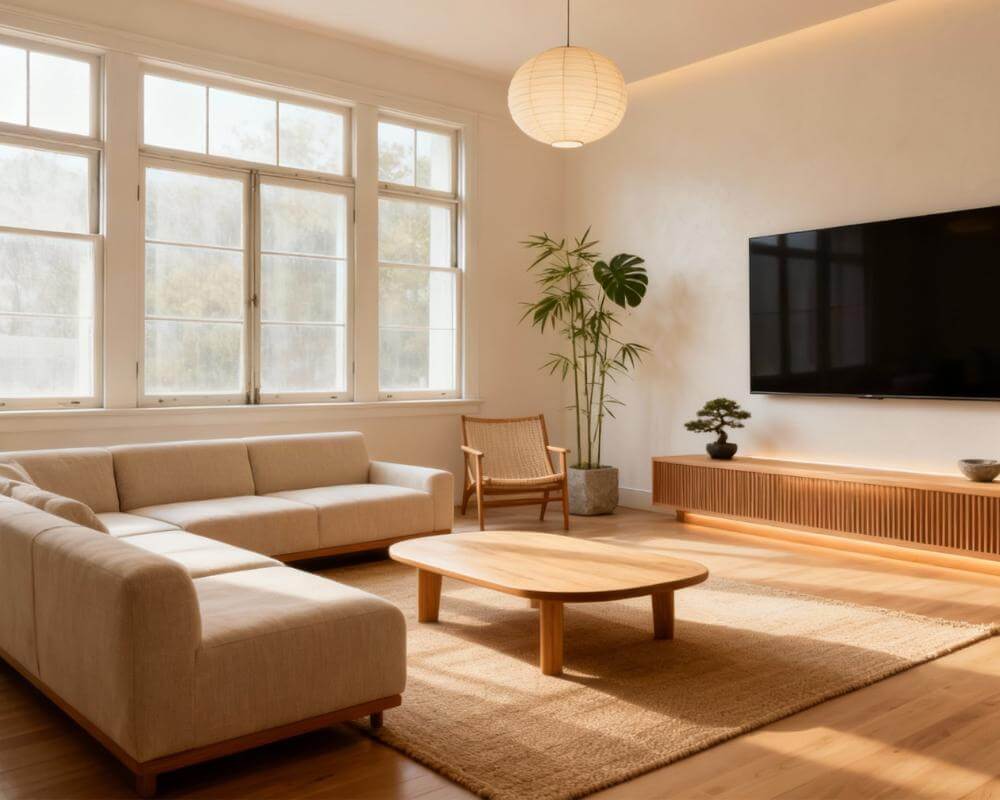
An AI ceiling design visualizer lets you preview a tray ceiling, exposed beams, shiplap, a bold paint color, or wallpaper on your actual ceiling before you touch a paintbrush or hire a contractor — upload a photo of your room and a tool like DecorAI generates a photorealistic version of that same room with the new ceiling treatment applied at true scale. Ceilings are the most overlooked surface in most homes — painted a flat, forgettable white and never touched again — but they're also the single largest uninterrupted plane in a room, sometimes called the "fifth wall" by designers. This guide covers the ceiling design ideas worth considering in 2026, how to pick a color or material that actually suits your room, and how to see the whole thing on your own ceiling before committing to anything permanent.
Key Takeaways
- The ceiling is the "fifth wall" — the largest uninterrupted surface in most rooms, and one of the most underused for color, texture, or architectural detail.
- Popular 2026 ceiling treatments include tray ceilings, coffered panels, exposed or faux beams, shiplap and wood paneling, color-drenched paint, and statement wallpaper.
- Ceiling color affects perceived room height — darker tones can make a tall room feel cozier, while the wrong dark color in a low room can feel oppressive.
- An AI ceiling design visualizer shows a treatment on your actual ceiling height, beams, and light fixtures instead of a generic showroom photo.
- Try DecorAI free to preview a new ceiling on your real room before you buy paint or panels.
Why Is the Ceiling Called the "Fifth Wall"?
Interior designers call the ceiling the "fifth wall" because it's structurally identical to the other four in terms of design potential — it's a large, flat, uninterrupted plane — but it's almost always left plain white while every other wall gets paint, art, or wallpaper. That default isn't neutral so much as invisible: a flat white ceiling doesn't hurt a room, but it also does nothing to help it. Treating the ceiling as a real design surface, even with something as simple as a single bold color, adds a sense of intention that a room otherwise painted floor-to-trim in one plane can't achieve on its own.
The tradeoff is that a ceiling mistake is more expensive to live with than a wall mistake, since it sits directly over furniture, light fixtures, and vents that are harder to work around than a bare wall. That's exactly the kind of decision worth testing with AI before committing paint or panels to the space.
What Are the Most Popular Ceiling Design Ideas for 2026?
A handful of ceiling treatments come up again and again in current design, each suited to a different room type, ceiling height, and budget.
Tray ceilings
A tray ceiling steps the center of the ceiling up a few inches above the surrounding perimeter, creating a shallow inverted "tray" shape. It reads as a subtle architectural upgrade in bedrooms and dining rooms, works especially well with a contrasting paint color or recessed lighting in the inset, and suits rooms with at least 9 feet of ceiling height so the step doesn't eat too much headroom.
Coffered ceilings
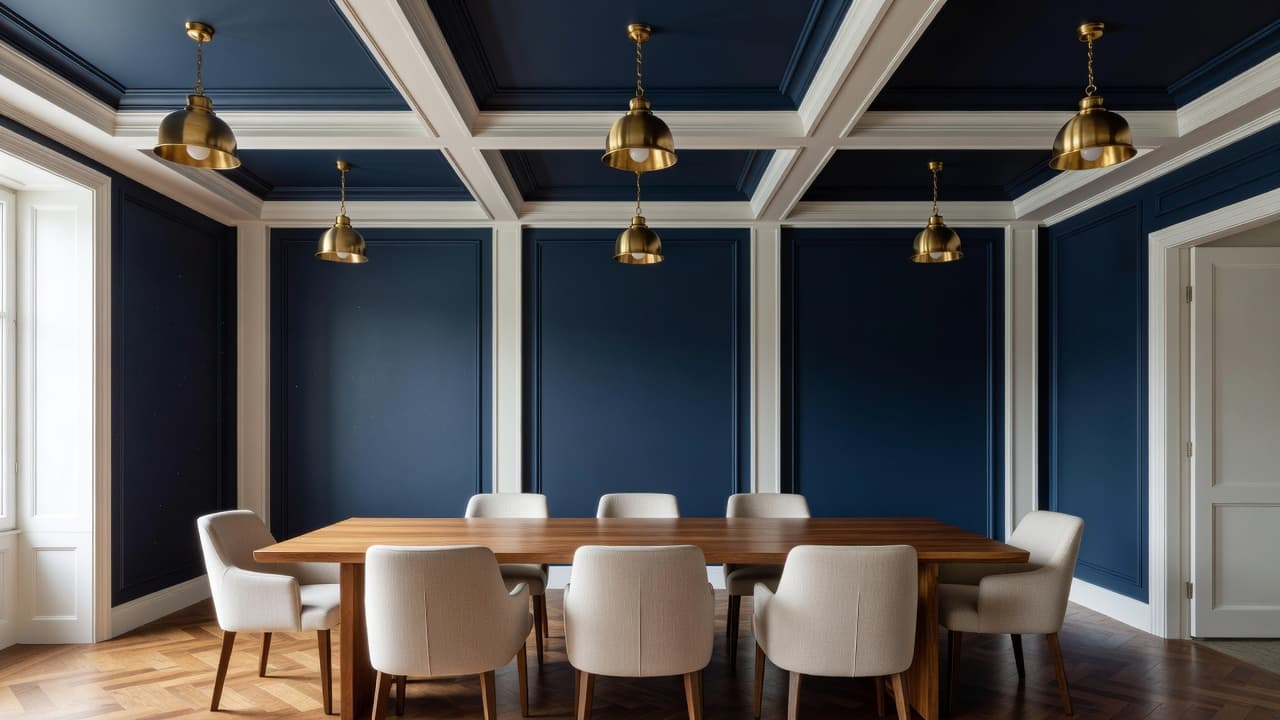
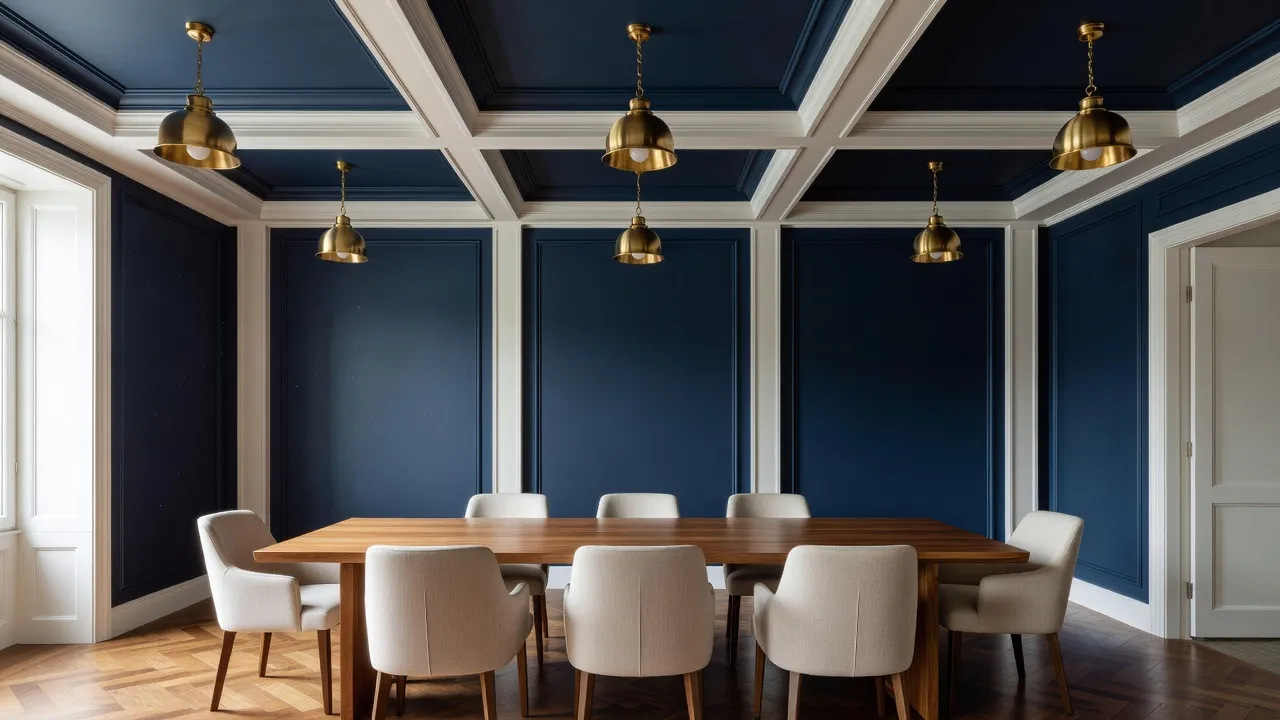
A coffered ceiling uses a grid of recessed or beam-framed panels to add real depth and a formal, architectural feel — historically found in grand halls and libraries, now a popular way to dress up a dining room or home office ceiling. Painting the recessed panels a deep color while keeping the beams lighter (or the reverse) is the detail that makes a coffered ceiling read as designed rather than just "boxes on the ceiling."
Exposed and faux beams
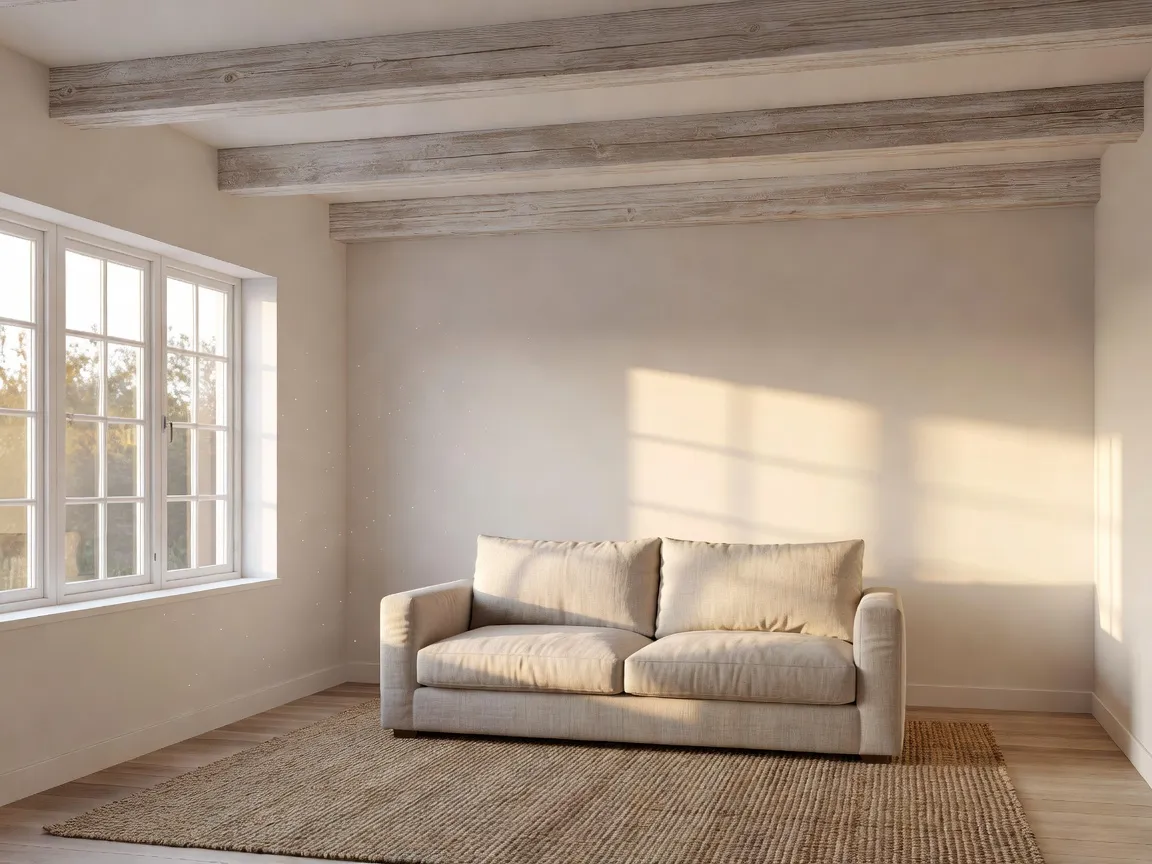
Real or faux wood beams add warmth and a sense of structure, especially in farmhouse, French country, or rustic-modern rooms. Stained dark beams against a white ceiling create strong contrast; whitewashed or natural-tone beams blend in more and suit a softer, more relaxed look. Our AI industrial interior design guide covers a related exposed-structure approach if you want ceiling ductwork and beams to read as a deliberate style choice rather than an unfinished one.
Shiplap and wood paneling
Horizontal shiplap boards or vertical tongue-and-groove paneling on a ceiling add texture without color, and work in almost any style from coastal to modern farmhouse to Scandinavian. A stained or natural wood ceiling also warms up a room that leans too cool or clinical from the walls and floor alone.
Color-drenched ceilings
"Color drenching," painting the ceiling, walls, and trim all in the same or closely related color, is one of the most popular current techniques precisely because it removes the hard line where wall meets ceiling, making a room feel taller and more enveloping rather than boxed in. It's a strong option in a small or oddly proportioned room, and pairs well with the color-matching approach in our AI color palette for room design guide.
Ceiling wallpaper
A patterned or metallic wallpaper on the ceiling is a high-impact, lower-permanence option than paneling, especially suited to a small room like a powder room, entry, or reading nook where the pattern doesn't overwhelm. Our AI wallpaper visualizer guide covers picking and previewing patterns in more depth, and the same principles apply directly to a ceiling application.
How Do You Choose a Ceiling Color?
Ceiling color changes how tall or intimate a room feels more than almost any other single decision, so it's worth thinking through deliberately rather than defaulting to "ceiling white."
- Tall rooms (9.5+ feet): a darker or color-drenched ceiling brings the scale down to a cozier, more intimate feel without any structural change.
- Standard rooms (8-9 feet): a slightly lighter tint of the wall color, or a soft neutral, keeps the room open while still feeling intentional.
- Low ceilings (under 8 feet): stick to white, off-white, or a very light tone, and use a matte or flat finish rather than gloss, which draws more attention to a low plane.
- North-facing or low-light rooms: a warm white or soft tint keeps a dark room from feeling gloomy; save deep, saturated colors for rooms with strong natural or artificial light.
Sheen matters as much as hue: a flat or matte finish hides imperfections and minimizes glare from light fixtures, while anything above eggshell on a ceiling tends to highlight every seam, popcorn texture, or uneven patch a wall finish would otherwise hide.
How Does an AI Ceiling Design Visualizer Work?
An AI ceiling design visualizer works from a straight-on or angled photo of your actual room, ceiling included, and generates a photorealistic version of that same room with the new ceiling color, beams, panels, or wallpaper applied at true scale — positioned around your real light fixtures, vents, and ceiling height rather than a generic stock photo. This matters more for ceilings than almost any other surface, because a coffered grid or a set of beams that looks proportional in a magazine photo can look completely wrong once it's scaled to your specific room dimensions and light fixture placement.
To get a usable result with DecorAI, take the photo from a spot that shows as much of the ceiling as possible along with enough of the walls and furniture for the AI to understand the room's proportions, then choose a style or describe the specific ceiling treatment you want to test. The result shows the whole room redesigned around that ceiling change, not just the ceiling in isolation, which is what actually tells you whether a dark navy coffered ceiling or a full color-drench will work with your existing furniture and flooring.
Preview Your Ceiling — Free
Upload one photo and watch DecorAI redesign your actual room, ceiling included, in seconds — beams, color, panels, or wallpaper, applied at true scale to your real space. Test it before you commit to paint or panels.


What Are Common Ceiling Design Mistakes to Avoid?
- Going glossy. A high-sheen finish on a ceiling exaggerates every imperfection and creates distracting glare under light fixtures; matte or flat almost always looks better overhead.
- Ignoring ceiling height before adding depth. Tray ceilings, beams, and coffered panels all reduce headroom; in a room under 8-9 feet, a flatter treatment like color or wallpaper reads better than anything three-dimensional.
- Mismatching undertones. A ceiling color with a different undertone than the walls (cool white ceiling with warm-toned walls, for example) creates a visible, unintentional-looking clash.
- Forgetting light fixtures in the plan. A busy wallpaper pattern or a heavily coffered grid can compete with an ornate chandelier; simplify one or the other.
- Skipping the preview. A ceiling change is one of the most disruptive and expensive to redo — visualize it on your actual room with AI before committing to paint, panels, or a contractor.
Can You Do a Statement Ceiling in a Small Room?
Yes, and a statement ceiling is often a better move in a small room than a bold accent wall, since it adds drama without eating into the limited wall space you need for furniture, art, or storage. A color-drenched ceiling in a small room tends to blur the boundary between wall and ceiling, which can make the room feel larger and more cohesive rather than smaller, and ceiling wallpaper is a low-commitment way to add pattern to a room too small for a full accent wall. Our AI interior design for small spaces guide covers more strategies that pair well with a ceiling-first approach.
AI Ceiling Design Visualizer FAQ
What is an AI ceiling design visualizer?
An AI ceiling design visualizer is a tool that generates a photorealistic preview of your actual ceiling with a new color, beams, panels, or wallpaper applied, based on a photo of your real room, so you can see the change before committing to paint or construction.
What color should I paint my ceiling?
It depends on ceiling height and light: a darker or color-drenched ceiling suits tall, well-lit rooms and adds coziness, while low or north-facing rooms generally look best with white, off-white, or a very light warm tone in a matte or flat finish.
Are tray ceilings out of style in 2026?
No. Tray ceilings remain popular in 2026, especially in primary bedrooms and dining rooms, and are increasingly paired with a contrasting paint color or recessed lighting in the inset rather than left a plain single white throughout.
Can AI show a coffered or beamed ceiling on my actual room?
Yes. Upload a photo of your room to DecorAI and the AI generates a photorealistic version of that same space with beams, coffered panels, or another ceiling treatment applied at true scale, positioned around your real light fixtures and ceiling height.
Does a dark ceiling make a room feel smaller?
Not necessarily. In a tall room, a darker ceiling usually makes the space feel cozier and more proportional rather than smaller. In a low-ceilinged room, though, a dark color can feel heavy or oppressive, so lighter tones generally work better there.
Conclusion
An AI ceiling design visualizer turns the most overlooked surface in your home into an easy, low-risk design decision: tray ceilings, coffered panels, exposed beams, shiplap, bold paint, or wallpaper, all previewed on your real room before you touch a paintbrush or call a contractor. Start with a photo of the room where a ceiling change would matter most, and let AI show you the color or treatment on your actual walls and light fixtures before you commit. Upload a photo to DecorAI to see your ceiling transformed for free, browse the full styles gallery, or head back to the DecorAI homepage to get started.
Visualize Your Dream Home Instantly
Don't just read about it. Experience the power of AI interior design with DecorAI's free tool.
Start Designing for FreeWritten by
DecorAI Team
Editorial Team