
AI Sunroom Design: Turn a Three-Season Room Into Everyday Space
A complete guide to AI sunroom design — furniture layout, flooring, glare and temperature control, and the real difference between a three-season room, a screened porch, and a four-season sunroom. Learn what actually makes a sunroom work, then preview the redesign on a photo of your real space with AI before you buy anything.
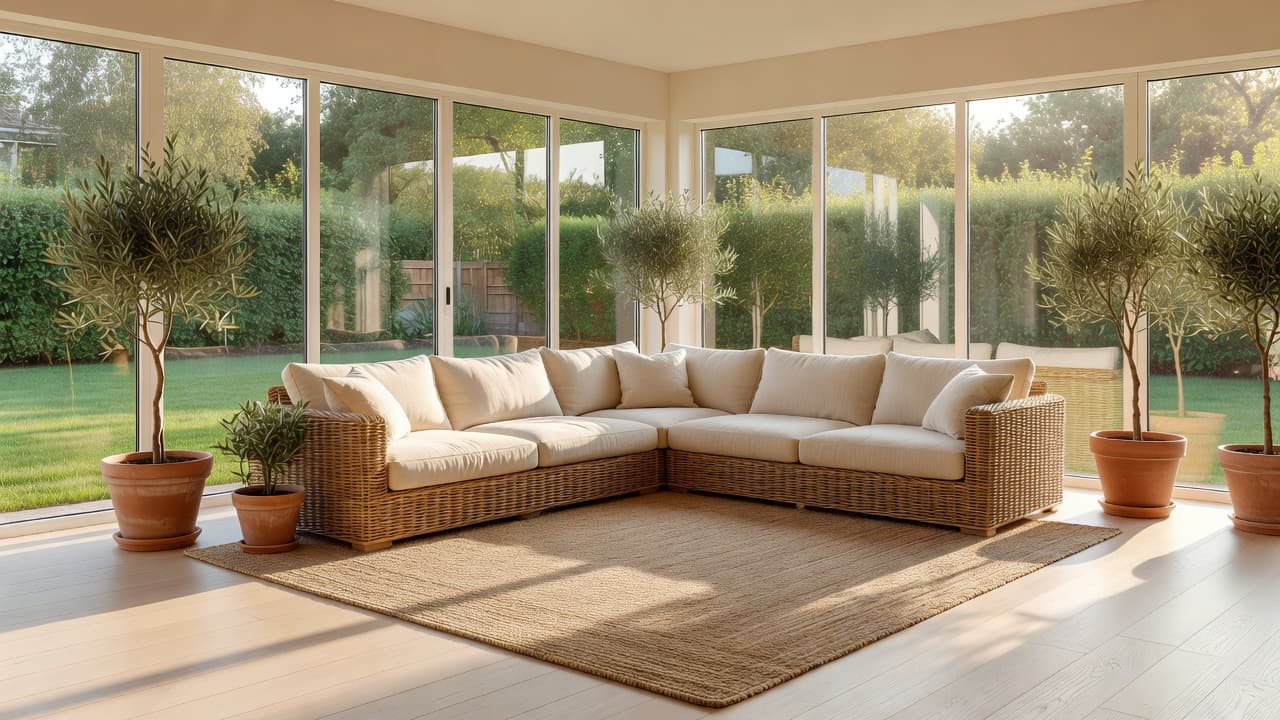

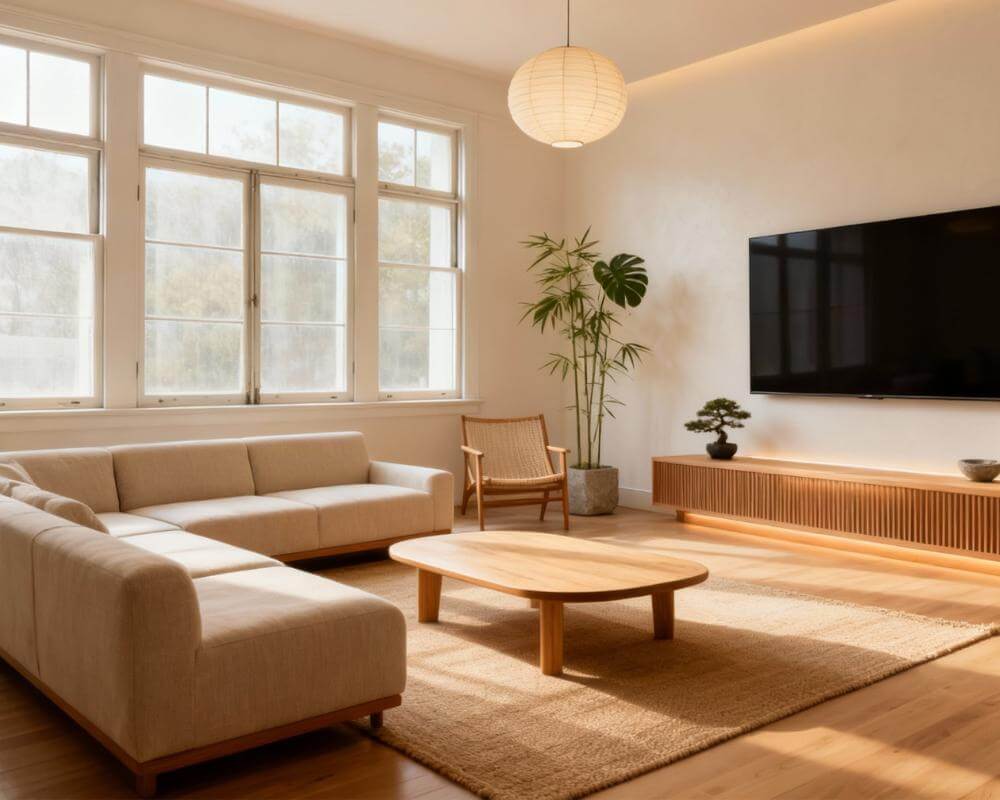
AI sunroom design makes it possible to see exactly how a bare three-season room, screened porch, or patio enclosure would look furnished and finished before you spend a dollar on furniture, flooring, or shades. A sunroom lives or dies on how well it balances light, temperature, and furniture layout — problems that are genuinely hard to judge by staring at an empty glass box. With DecorAI, you upload a photo of your actual sunroom, porch, or patio and preview a redesigned space — furniture, flooring, window treatments, and color palette — before buying anything. This guide covers what actually separates a sunroom from a porch or patio, three-season versus four-season construction, furniture layout, flooring choices, and how to manage sun, glare, and temperature swings.
Key Takeaways
- Glazing is what defines a sunroom — floor-to-ceiling or near-floor-to-ceiling windows on most walls are what separate it from a covered porch or open patio.
- Three-season rooms and four-season sunrooms are built differently — three-season rooms use standard or single-pane glass with no insulated shell, while four-season sunrooms add insulated low-E glazing and a heat/cool source.
- Furniture layout should follow zones, not fill the space — a lounge zone comes first, with dining or office zones added only if the footprint allows.
- Flooring has to survive humidity, UV, and temperature swings — porcelain tile, luxury vinyl plank, and sealed concrete outperform hardwood and wall-to-wall carpet.
- AI can preview the finished room first — upload a photo of your actual porch or sunroom and see a photorealistic redesign before buying furniture, flooring, or shades.
What Is a Sunroom, and How Is It Different From a Porch or Patio?
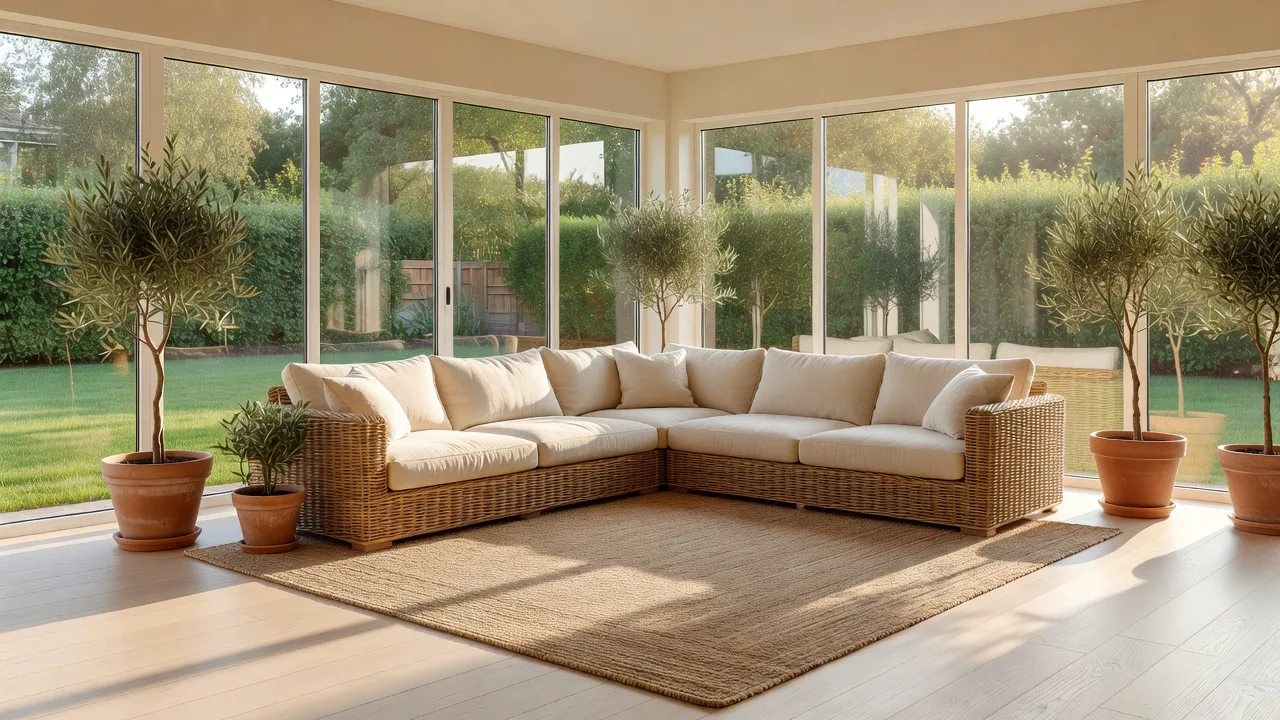
A sunroom is an enclosed living space defined mainly by extensive glazing — typically floor-to-ceiling or near-floor-to-ceiling windows on most walls, plus a solid roof. That glazing is the key distinction: a porch has a roof but is either fully open or enclosed only with screens, so it stays exposed to outdoor air and insects; a patio has no roof or walls at all and is fully outdoors; a sunroom is fully enclosed with glass, which means it can be furnished, heated or cooled to some degree, and used as real interior square footage rather than a seasonal outdoor perch. Many sunrooms start life as one of the other two — a screened porch gets glass panels added, or a patio gets a glass-and-frame addition built over it.
Three-Season Room vs. Four-Season Sunroom: What's the Difference?
The difference comes down to the shell, not just the name. A three-season room typically uses standard or single-pane glass, an uninsulated or minimally insulated roof and wall structure, and no dedicated heating or cooling — it's comfortable in spring, summer, and fall, but too hot or too cold to use through the coldest and hottest weeks of the year. A four-season sunroom upgrades the same footprint with insulated double- or triple-pane glass (often with a low-emissivity coating that reflects heat while still letting light through), insulated roof and knee walls, and a heat/cool source — a mini-split, extended ductwork, or in-floor heat — so it functions as year-round living space. Converting an existing three-season room to four-season use is a common renovation: the structure and footprint usually stay the same, and the work is mostly glazing, insulation, and mechanical upgrades rather than a full rebuild.
How Should You Lay Out Furniture in a Sunroom?
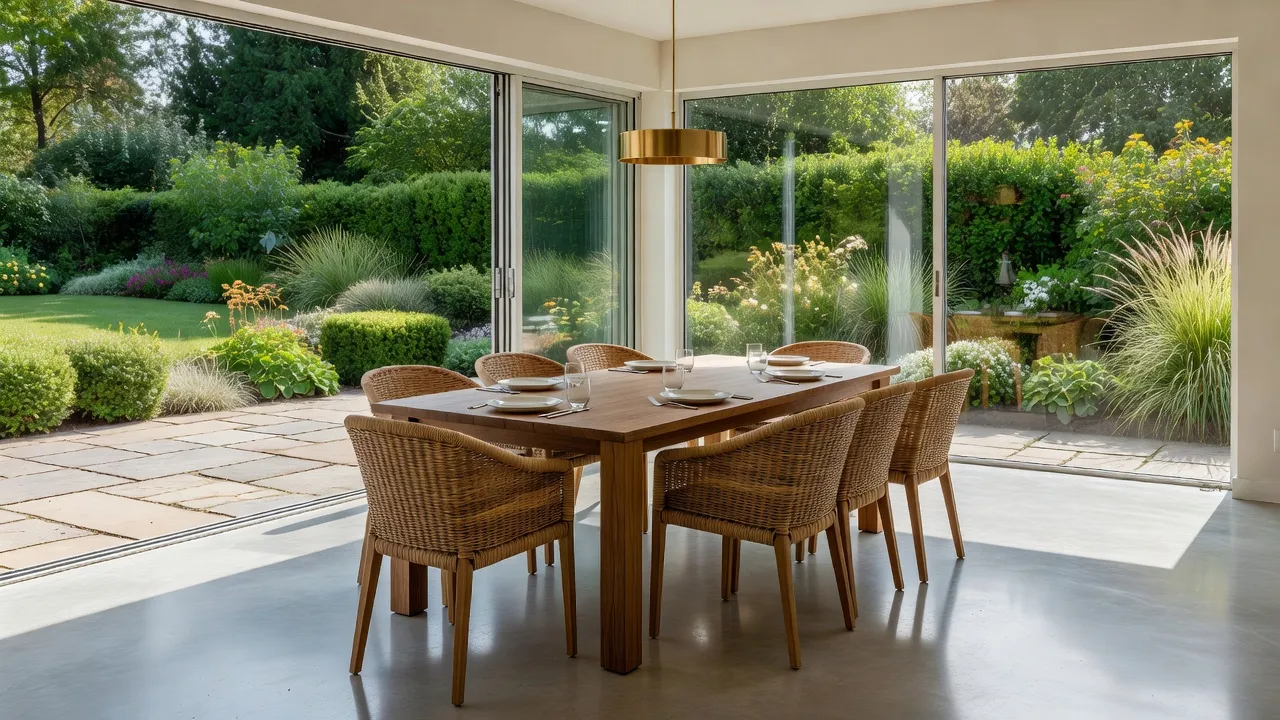
Sunroom layouts work best when you commit to one primary zone and add secondary zones only if the room genuinely has space for them, rather than trying to cram a full living room's worth of furniture into a glass box. Because sunrooms are usually surrounded by windows on two or three sides, floating furniture away from the perimeter — rather than pushing every piece against a wall the way you might in a bedroom — keeps sightlines to the yard or garden open from every seat.
Lounge or Reading Zone
This is the default use for most sunrooms and the easiest to get right: a pair of chairs or a small sofa, a low table, and enough clearance to walk past without squeezing through. Wicker, rattan, and teak hold up far better than upholstered fabric pieces in a room with this much sun and humidity exposure.
Dining Zone
A sunroom dining table works well for a space at least 3 by 3.6 meters, ideally positioned so the table doesn't sit in direct glare during the hours you'd actually eat there. Glass or metal tables shrug off humidity better than solid wood, which can swell and contract with the room's wider temperature swings.
Home Office or Plant Corner
A desk works in a sunroom if you can angle the screen away from direct glare — facing a monitor toward the brightest window almost always causes eye strain within an hour. If the room gets more light than a workspace needs, a dense cluster of plants does more for the room's character than any single piece of furniture; our AI biophilic interior design guide covers how to layer plants and natural materials without the space feeling like a greenhouse.
What Flooring Works Best in a Sunroom?
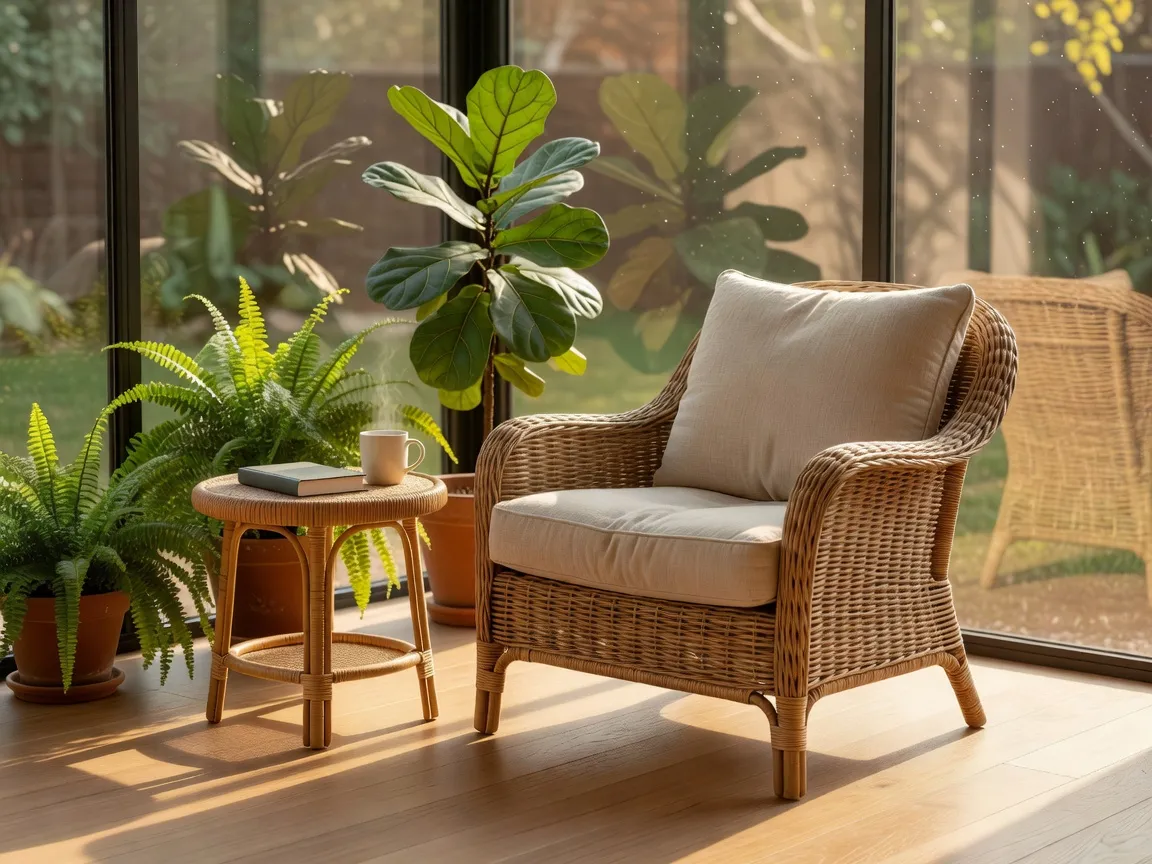
Sunroom flooring has to handle three things most other rooms don't face at the same time: humidity swings, direct UV exposure, and bigger daily temperature changes than an interior room. Porcelain tile is the most durable option — it doesn't fade, doesn't expand or contract meaningfully, and handles moisture without issue. Luxury vinyl plank is a strong second choice, especially UV-stabilized products made for sunroom or three-season use, since standard vinyl can discolor under years of direct sun. Sealed or stained concrete works well if the sunroom sits on a slab foundation. Solid hardwood and wall-to-wall carpet are the two materials to avoid: hardwood cups and gaps as humidity swings through the seasons, and carpet traps moisture and fades unevenly wherever direct sun hits it. If you want softness underfoot, a UV-resistant outdoor-rated area rug over tile or vinyl gets you the comfort without the fading risk.
How Do You Handle Sun, Glare, and Temperature Swings in a Sunroom?
Glazing choice does most of the work before you even add furniture. Low-emissivity, or low-E, glass has a microscopically thin coating that reflects infrared heat while still passing visible light, which is the single biggest factor in whether a sunroom is comfortable through summer afternoons — this is the same passive solar building principle used to manage heat gain and loss through glazing in any structure. Beyond the glass itself, three layers handle the rest: exterior or interior shades (cellular shades and solar screens cut glare without fully blocking the view), a ceiling fan for year-round air movement, and operable windows or vents on opposite walls for cross ventilation during mild weather. In a three-season room without HVAC, those three layers are usually enough to extend comfortable use by several weeks on either end of the season.
Preview Your Sunroom Design — Free
Wondering how a screened porch or bare three-season room would actually look furnished as a sunroom? Upload a photo of your real space to DecorAI and preview a photorealistic sunroom redesign before buying furniture, flooring, or shades.


Sunroom vs. Screened Porch: Which Should You Build or Convert?
A screened porch is the cheaper, faster option: mesh screens keep out insects while leaving the space fully exposed to outdoor temperature and humidity, so it's really an outdoor room with a roof rather than a true interior addition. A sunroom costs more because it involves real glazing, framing, and typically a foundation upgrade, but it earns that cost back in usable months per year and in resale value, since a glazed sunroom generally counts closer to finished square footage than a screened porch does. The middle path many homeowners choose is converting an existing screened porch into a sunroom by adding a glass panel system over the existing screen frame — it's usually far cheaper than building a sunroom from scratch, because the roof, floor, and structural frame are already in place.
How Do You Blend Indoor and Outdoor Living in a Sunroom?
A sunroom works best as a literal transition space, not a room that ignores the yard on the other side of the glass. Sliding or folding glass doors on at least one wall, if the budget allows, dissolve the boundary entirely during good weather. Matching or complementary materials — the same stone or decking that continues from the patio into the sunroom's threshold, or a color palette that echoes the garden beyond the glass — make the room read as connected rather than bolted on. Furniture that would look equally at home on a covered patio, like woven or teak pieces, reinforces the same effect. Our AI exterior design guide and AI landscape and garden design guide both cover the outdoor half of this pairing, which matters more for a sunroom than for almost any other room in the house.
Can AI Show Me How My Porch or Patio Would Look as a Sunroom?
Yes. It's genuinely difficult to judge how a bare, empty three-season room or an unenclosed porch would look once it's glazed, floored, and furnished — most people can't picture proportions, light, and furniture scale accurately from an empty shell. With DecorAI, you upload a photo of your actual sunroom, porch, or patio, and the AI generates a photorealistic redesign using your room's real proportions, window placement, and light, rather than a generic stock photo of an ideal sunroom. That makes it possible to compare a few furniture layouts and flooring options against your real space before committing to a purchase. If you're planning the layout in more detail once the redesign gives you a direction, our AI room layout planner guide covers zoning and furniture placement in more depth, and if the sunroom is on the smaller side, our AI interior design for small spaces guide has layout strategies that translate directly.
AI Sunroom Design — FAQ
How much does it cost to convert a porch into a sunroom?
Converting an existing screened porch into a sunroom by adding a glass panel system is generally far less expensive than building a sunroom addition from scratch, since the roof, floor, and frame already exist. A full sunroom addition costs considerably more because it typically requires a new foundation, framing, and full glazing. Exact costs vary widely by region, size, and glazing quality.
Can a three-season room be used in winter?
Generally not comfortably. Three-season rooms use standard glass and an uninsulated or lightly insulated shell, so they lose heat quickly in cold weather. Making a three-season room usable in winter typically means upgrading to insulated low-E glazing, adding wall and roof insulation, and installing a dedicated heat source.
What's the best flooring for a sunroom with a lot of direct sun?
Porcelain tile and UV-stabilized luxury vinyl plank hold up best under sustained direct sunlight, since they resist fading and don't expand or contract with heat the way solid hardwood does. Avoid wall-to-wall carpet, which fades unevenly and traps humidity.
Do sunrooms need a building permit?
In most areas, yes — because a sunroom is a structural addition with new framing, glazing, and often electrical work, it typically requires a building permit, unlike simply adding screens to an existing covered porch. Requirements vary by municipality, so check with your local building department before starting construction.
Can AI help me plan furniture placement in my sunroom before buying anything?
Yes — upload a photo of your actual sunroom, porch, or patio to a tool like DecorAI, and it generates a photorealistic redesign based on your room's real proportions and light. That makes it much easier to judge furniture scale, flooring, and layout zones before you commit to a purchase.
Conclusion
A sunroom earns its square footage when the glazing, flooring, and furniture layout all account for the same thing a normal room never has to: a wall made almost entirely of glass. Get the glass, flooring, and zoning right, and a three-season room or converted porch becomes one of the most-used rooms in the house rather than a seasonal afterthought. DecorAI lets you preview exactly how your real sunroom, porch, or patio would look furnished and finished before you buy anything. Explore the styles gallery or start from the DecorAI homepage to try it on your own space.
Visualize Your Dream Home Instantly
Don't just read about it. Experience the power of AI interior design with DecorAI's free tool.
Start Designing for FreeWritten by
DecorAI Team
Editorial Team
Related Articles
AI Dorm Room Design: How to Style a Small Shared Space Without Breaking the Rules
9 min read
AI Studio Apartment Design: How to Zone, Furnish and Style One Room That Does Everything
9 min read
AI Playroom Design: How to Plan a Playroom That Stays Tidy and Grows With Your Kids
9 min read